

BLASTOGENESIS AND MORPHOGENESIS
195
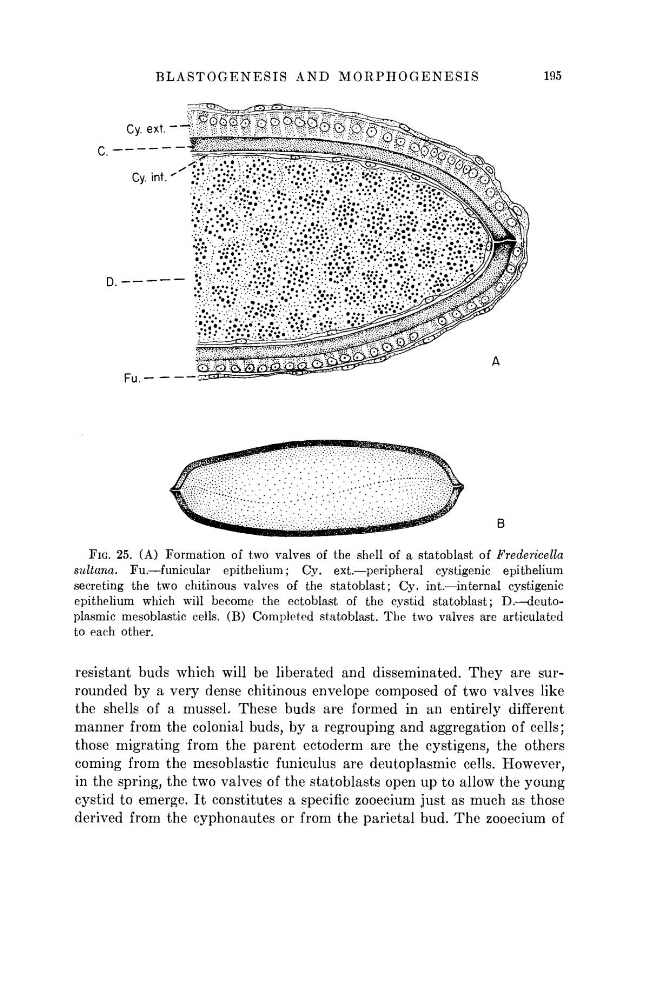
FIG. 25. (A) Formation of two valves of the shell of a statoblast of Fredericella
sultana. Fu.—funicular epithelium; Cy. ext.—peripheral cystigenic epithelium
secreting the two chitinous valves of the statoblast; Cy. int.—internal cystigenic
epithelium which will become the ectoblast of the cystid statoblast; D.—deutoplasmic mesoblastic cells. (B) Completed statoblast. The two valves are articulated
to each other.
resistant buds which will be liberated and disseminated. They are surrounded by a very dense chitinous envelope composed of two valves like
the shells of a mussel. These buds are formed in an entirely different
manner from the colonial buds, by a regrouping and aggregation of cells;
those migrating from the parent ectoderm are the cystigens, the others
coming from the mesoblastic funiculus are deutoplasmic cells. However,
in the spring, the two valves of the statoblasts open up to allow the young
cystid to emerge. It constitutes a specific zooecium just as much as those
derived from the cyphonautes or from the parietal bud. The zooecium of
195
FIG. 25. (A) Formation of two valves of the shell of a statoblast of Fredericella
sultana. Fu.—funicular epithelium; Cy. ext.—peripheral cystigenic epithelium
secreting the two chitinous valves of the statoblast; Cy. int.—internal cystigenic
epithelium which will become the ectoblast of the cystid statoblast; D.—deutoplasmic mesoblastic cells. (B) Completed statoblast. The two valves are articulated
to each other.
resistant buds which will be liberated and disseminated. They are surrounded by a very dense chitinous envelope composed of two valves like
the shells of a mussel. These buds are formed in an entirely different
manner from the colonial buds, by a regrouping and aggregation of cells;
those migrating from the parent ectoderm are the cystigens, the others
coming from the mesoblastic funiculus are deutoplasmic cells. However,
in the spring, the two valves of the statoblasts open up to allow the young
cystid to emerge. It constitutes a specific zooecium just as much as those
derived from the cyphonautes or from the parietal bud. The zooecium of