

184
PAUL BRIEN
M.R
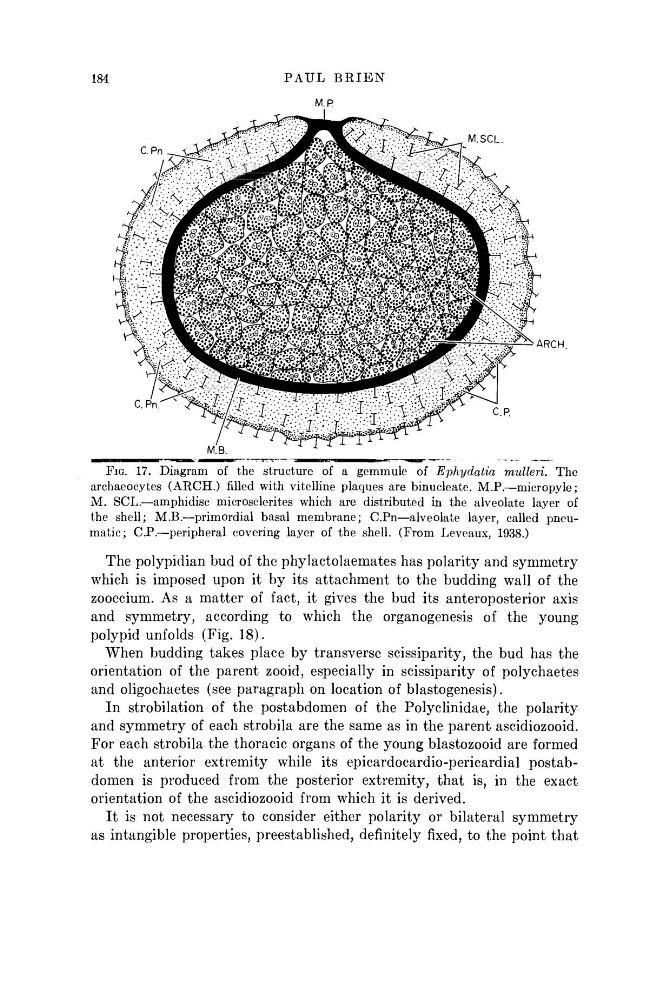
FIG. 17. Diagram of the structure of a gemmule of Ephydatia mulleri. The
archaeocytes (ARCH.) filled with vitelline plaques are binucleate. M.P.—micropyle;
M. SCL.—amphidisc microsclerites which are distributed in the alveolate layer of
the shell; M.B.—primordial basal membrane; C.Pn—alveolate layer, called pneumatic; CP.—peripheral covering layer of the shell. (From Leveaux, 1938.)
The polypidian bud of the phylactolaemates has polarity and symmetry
which is imposed upon it by its attachment to the budding wall of the
zooecium. As a matter of fact, it gives the bud its anteroposterior axis
and symmetry, according to which the organogenesis of the young
polypid unfolds (Fig. 18).
When budding takes place by transverse scissiparity, the bud has the
orientation of the parent zooid, especially in scissiparity of polychaetes
and oligochaetes (see paragraph on location of blastogenesis).
In strobilation of the postabdomen of the Polyclinidae, the polarity
and symmetry of each strobila are the same as in the parent ascidiozooid.
For each strobila the thoracic organs of the young blastozooid are formed
at the anterior extremity while its epicardocardio-pericardial postabdomen is produced from the posterior extremity, that is, in the exact
orientation of the ascidiozooid from which it is derived.
It is not necessary to consider either polarity or bilateral symmetry
as intangible properties, preestablished, definitely fixed, to the point that
PAUL BRIEN
M.R
FIG. 17. Diagram of the structure of a gemmule of Ephydatia mulleri. The
archaeocytes (ARCH.) filled with vitelline plaques are binucleate. M.P.—micropyle;
M. SCL.—amphidisc microsclerites which are distributed in the alveolate layer of
the shell; M.B.—primordial basal membrane; C.Pn—alveolate layer, called pneumatic; CP.—peripheral covering layer of the shell. (From Leveaux, 1938.)
The polypidian bud of the phylactolaemates has polarity and symmetry
which is imposed upon it by its attachment to the budding wall of the
zooecium. As a matter of fact, it gives the bud its anteroposterior axis
and symmetry, according to which the organogenesis of the young
polypid unfolds (Fig. 18).
When budding takes place by transverse scissiparity, the bud has the
orientation of the parent zooid, especially in scissiparity of polychaetes
and oligochaetes (see paragraph on location of blastogenesis).
In strobilation of the postabdomen of the Polyclinidae, the polarity
and symmetry of each strobila are the same as in the parent ascidiozooid.
For each strobila the thoracic organs of the young blastozooid are formed
at the anterior extremity while its epicardocardio-pericardial postabdomen is produced from the posterior extremity, that is, in the exact
orientation of the ascidiozooid from which it is derived.
It is not necessary to consider either polarity or bilateral symmetry
as intangible properties, preestablished, definitely fixed, to the point that