

BLASTOGENESIS AND MORPHOGENESIS
185
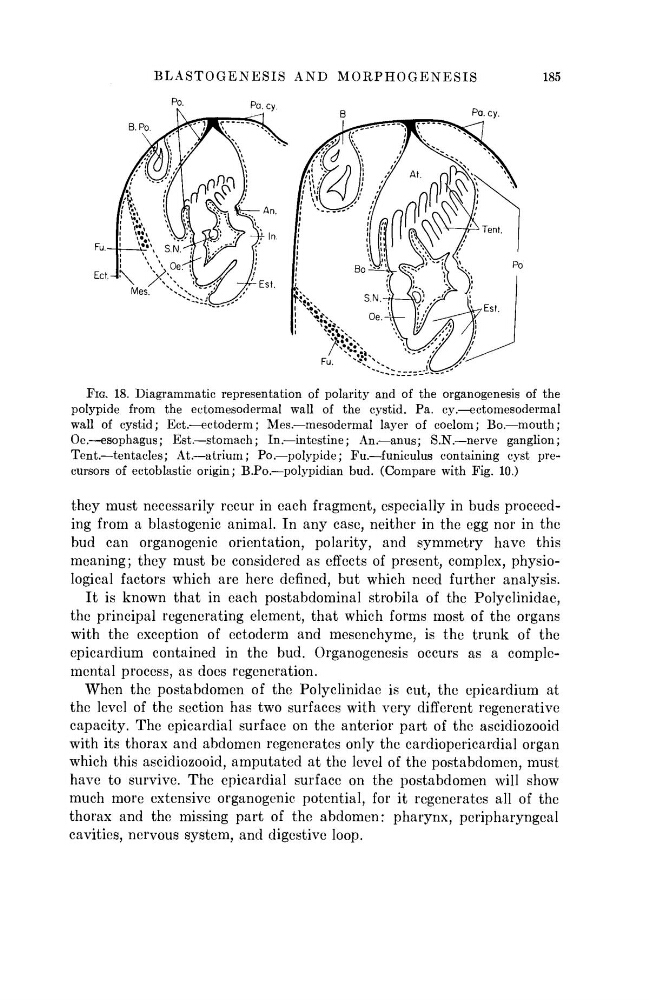
FIG. 18. Diagrammatic representation of polarity and of the organogenesis of the
polypide from the ectomesodermal wall of the cystid. Pa. cy.—ectomesodermal
wall of cystid; Ect.—ectoderm; Mes.—mesodermal layer of coelom; Bo.—mouth;
Oe.—esophagus; Est.—stomach; In.—intestine; An.—anus; S.N.—nerve ganglion;
Tent.—tentacles; At.—atrium; Po.—polypide; Fu.—funiculus containing cyst precursors of ectoblastic origin; B.Po.—polypidian bud. (Compare with Fig. 10.)
they must necessarily recur in each fragment, especially in buds proceeding from a blastogenic animal. In any case, neither in the egg nor in the
bud can organogenic orientation, polarity, and symmetry have this
meaning; they must be considered as effects of present, complex, physiological factors which are here defined, but which need further analysis.
It is known that in each postabdominal strobila of the Polyclinidae,
the principal regenerating element, that which forms most of the organs
with the exception of ectoderm and mesenchyme, is the trunk of the
epicardium contained in the bud. Organogenesis occurs as a complemental process, as does regeneration.
When the postabdomen of the Polyclinidae is cut, the epicardium at
the level of the section has two surfaces with very different regenerative
capacity. The epicardial surface on the anterior part of the ascidiozooid
with its thorax and abdomen regenerates only the cardiopericardial organ
which this ascidiozooid, amputated at the level of the postabdomen, must
have to survive. The epicardial surface on the postabdomen will show
much more extensive organogenic potential, for it regenerates all of the
thorax and the missing part of the abdomen: pharynx, peripharyngeal
cavities, nervous system, and digestive loop.
185
FIG. 18. Diagrammatic representation of polarity and of the organogenesis of the
polypide from the ectomesodermal wall of the cystid. Pa. cy.—ectomesodermal
wall of cystid; Ect.—ectoderm; Mes.—mesodermal layer of coelom; Bo.—mouth;
Oe.—esophagus; Est.—stomach; In.—intestine; An.—anus; S.N.—nerve ganglion;
Tent.—tentacles; At.—atrium; Po.—polypide; Fu.—funiculus containing cyst precursors of ectoblastic origin; B.Po.—polypidian bud. (Compare with Fig. 10.)
they must necessarily recur in each fragment, especially in buds proceeding from a blastogenic animal. In any case, neither in the egg nor in the
bud can organogenic orientation, polarity, and symmetry have this
meaning; they must be considered as effects of present, complex, physiological factors which are here defined, but which need further analysis.
It is known that in each postabdominal strobila of the Polyclinidae,
the principal regenerating element, that which forms most of the organs
with the exception of ectoderm and mesenchyme, is the trunk of the
epicardium contained in the bud. Organogenesis occurs as a complemental process, as does regeneration.
When the postabdomen of the Polyclinidae is cut, the epicardium at
the level of the section has two surfaces with very different regenerative
capacity. The epicardial surface on the anterior part of the ascidiozooid
with its thorax and abdomen regenerates only the cardiopericardial organ
which this ascidiozooid, amputated at the level of the postabdomen, must
have to survive. The epicardial surface on the postabdomen will show
much more extensive organogenic potential, for it regenerates all of the
thorax and the missing part of the abdomen: pharynx, peripharyngeal
cavities, nervous system, and digestive loop.