

BLASTOGENESIS AND MORPHOGENESIS
183
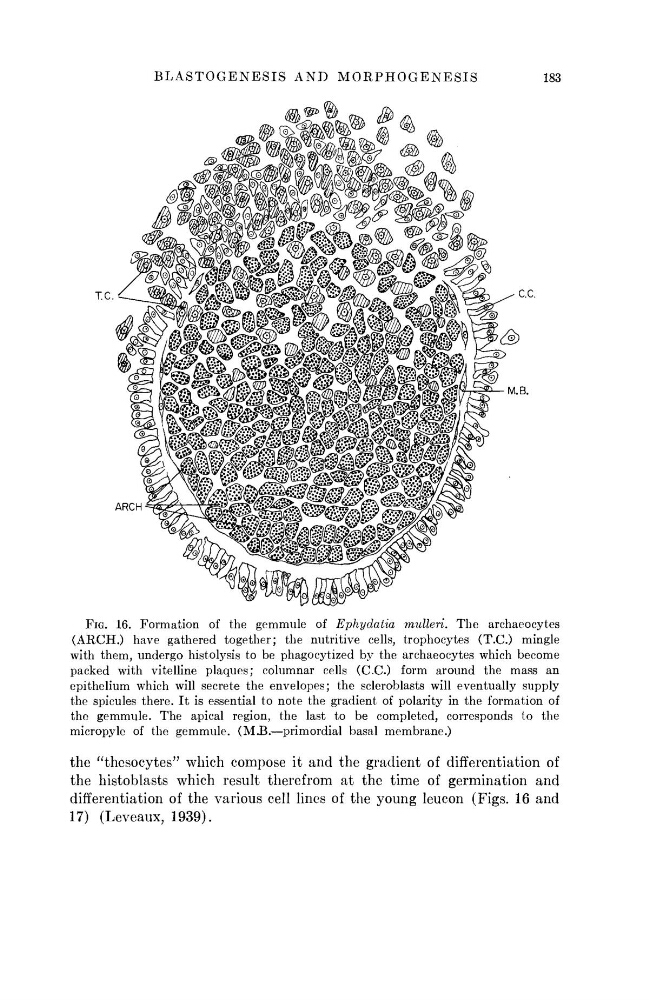
FIG. 16. Formation of the gemmule of Ephydatia
mulleri. The archaeocytes
(ARCH.) have gathered together; the nutritive cells, trophocytes (T.C.) mingle
with them, undergo histolysis to be phagocytized by the archaeocytes which become
packed with vitelline plaques; columnar cells (C.C.) form around the mass an
epithelium which will secrete the envelopes; the scleroblasts will eventually supply
the spicules there. It is essential to note the gradient of polarity in the formation of
the gemmule. The apical region, the last to be completed, corresponds to the
micropyle of the gemmule. (M.B.—primordial basal membrane.)
the "thesocytes" which compose it and the gradient of differentiation of
the histoblasts which result therefrom at the time of germination and
differentiation of the various cell lines of the young leucon (Figs. 16 and
17) (Leveaux, 1939).
183
FIG. 16. Formation of the gemmule of Ephydatia
mulleri. The archaeocytes
(ARCH.) have gathered together; the nutritive cells, trophocytes (T.C.) mingle
with them, undergo histolysis to be phagocytized by the archaeocytes which become
packed with vitelline plaques; columnar cells (C.C.) form around the mass an
epithelium which will secrete the envelopes; the scleroblasts will eventually supply
the spicules there. It is essential to note the gradient of polarity in the formation of
the gemmule. The apical region, the last to be completed, corresponds to the
micropyle of the gemmule. (M.B.—primordial basal membrane.)
the "thesocytes" which compose it and the gradient of differentiation of
the histoblasts which result therefrom at the time of germination and
differentiation of the various cell lines of the young leucon (Figs. 16 and
17) (Leveaux, 1939).