

P A T T E R N S IN T H E I N T E G U M E N T OF I N S E C T S
71
Growth in a trachéal system is treelike, with new tracheoles and small
tracheae being added for the most part terminally at each molt, while
the main trunk increases in diameter (Wigglesworth, 1954a). This implies
that the increase in diameter at molting is related in main and peripheral
tracheae. The simplest hypothesis to account for the coordination such
that the increase in cross section of a main trachea is equal to the increase in cross section of its terminal branches, would suppose that
trachea! growth is determined by the tissues.
Fourth
Fifth
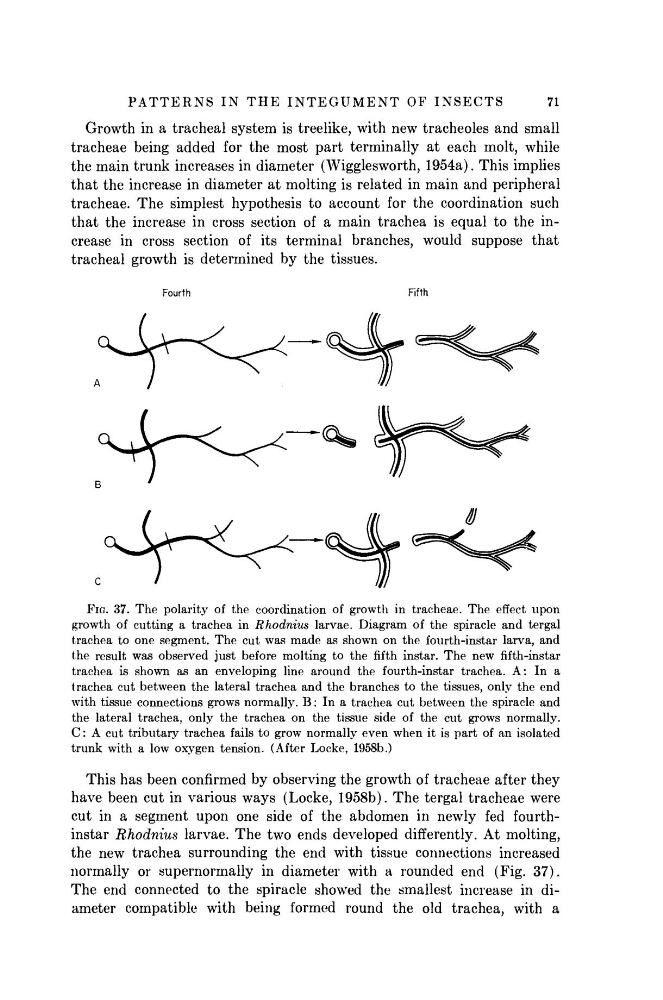
FIG. 37. The polarity of the coordination of growth in tracheae. The effect upon
growth of cutting a trachea in Rhodnius larvae. Diagram of the spiracle and tergal
trachea to one segment. The cut was made as shown on the fourth-instar larva, and
the result was observed just before molting to the fifth instar. The new fifth-instar
trachea is shown as an enveloping line around the fourth-instar trachea. A: In a
trachea cut between the lateral trachea and the branches to the tissues, only the end
with tissue connections grows normally. B : In a trachea cut between the spiracle and
the lateral trachea, only the trachea on the tissue side of the cut grows normally.
C : A cut tributary trachea fails to grow normally even when it is part of an isolated
trunk with a low oxygen tension. (After Locke, 1958b.)
This has been confirmed by observing the growth of tracheae after they
have been cut in various ways (Locke, 1958b). The tergal tracheae were
cut in a segment upon one side of the abdomen in newly fed fourthinstar Rhodnius larvae. The two ends developed differently. At molting,
the new trachea surrounding the end with tissue connections increased
normally or supernormally in diameter with a rounded end (Fig. 37).
The end connected to the spiracle showed the smallest increase in diameter compatible with being formed round the old trachea, with a
71
Growth in a trachéal system is treelike, with new tracheoles and small
tracheae being added for the most part terminally at each molt, while
the main trunk increases in diameter (Wigglesworth, 1954a). This implies
that the increase in diameter at molting is related in main and peripheral
tracheae. The simplest hypothesis to account for the coordination such
that the increase in cross section of a main trachea is equal to the increase in cross section of its terminal branches, would suppose that
trachea! growth is determined by the tissues.
Fourth
Fifth
FIG. 37. The polarity of the coordination of growth in tracheae. The effect upon
growth of cutting a trachea in Rhodnius larvae. Diagram of the spiracle and tergal
trachea to one segment. The cut was made as shown on the fourth-instar larva, and
the result was observed just before molting to the fifth instar. The new fifth-instar
trachea is shown as an enveloping line around the fourth-instar trachea. A: In a
trachea cut between the lateral trachea and the branches to the tissues, only the end
with tissue connections grows normally. B : In a trachea cut between the spiracle and
the lateral trachea, only the trachea on the tissue side of the cut grows normally.
C : A cut tributary trachea fails to grow normally even when it is part of an isolated
trunk with a low oxygen tension. (After Locke, 1958b.)
This has been confirmed by observing the growth of tracheae after they
have been cut in various ways (Locke, 1958b). The tergal tracheae were
cut in a segment upon one side of the abdomen in newly fed fourthinstar Rhodnius larvae. The two ends developed differently. At molting,
the new trachea surrounding the end with tissue connections increased
normally or supernormally in diameter with a rounded end (Fig. 37).
The end connected to the spiracle showed the smallest increase in diameter compatible with being formed round the old trachea, with a