

70
M I C H A E L L O C K E
Adult
Burned at
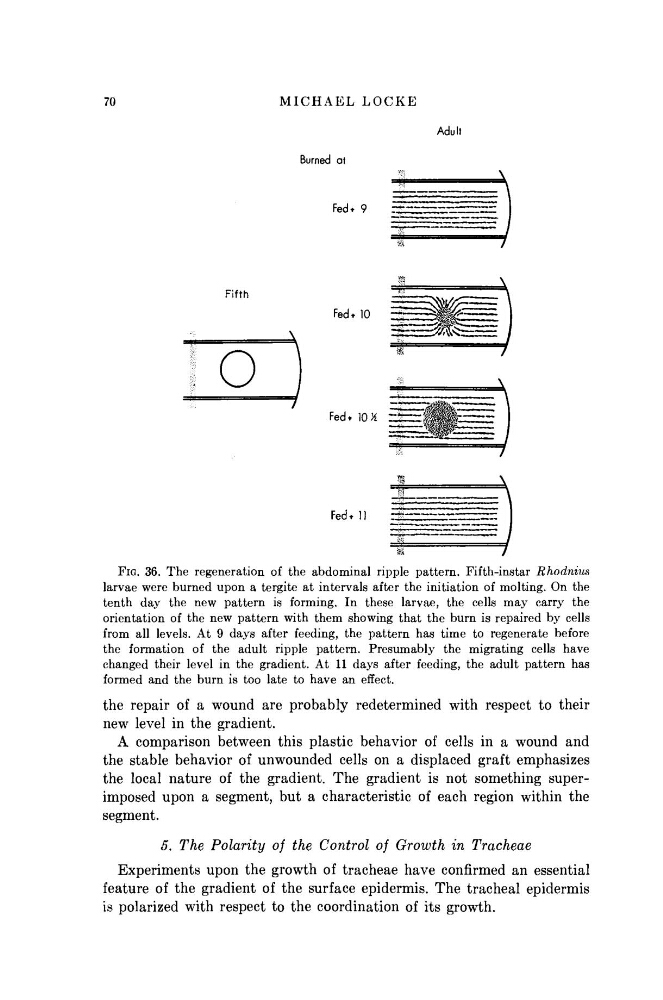
FIG. 36. The regeneration of the abdominal ripple pattern. Fifth-instar Rhodnius
larvae were burned upon a tergite at intervals after the initiation of molting. On the
tenth day the new pattern is forming. In these larvae, the cells may carry the
orientation of the new pattern with them showing that the burn is repaired by cells
from all levels. At 9 days after feeding, the pattern has time to regenerate before
the formation of the adult ripple pattern. Presumably the migrating cells have
changed their level in the gradient. At 11 days after feeding, the adult pattern has
formed and the burn is too late to have an effect.
the repair of a wound are probably redetermined with respect to their
new level in the gradient.
A comparison between this plastic behavior of cells in a wound and
the stable behavior of unwounded cells on a displaced graft emphasizes
the local nature of the gradient. The gradient is not something superimposed upon a segment, but a characteristic of each region within the
segment.
5. The Polarity of the Control of Growth in Tracheae
Experiments upon the growth of tracheae have confirmed an essential
feature of the gradient of the surface epidermis. The trachéal epidermis
is polarized with respect to the coordination of its growth.
M I C H A E L L O C K E
Adult
Burned at
FIG. 36. The regeneration of the abdominal ripple pattern. Fifth-instar Rhodnius
larvae were burned upon a tergite at intervals after the initiation of molting. On the
tenth day the new pattern is forming. In these larvae, the cells may carry the
orientation of the new pattern with them showing that the burn is repaired by cells
from all levels. At 9 days after feeding, the pattern has time to regenerate before
the formation of the adult ripple pattern. Presumably the migrating cells have
changed their level in the gradient. At 11 days after feeding, the adult pattern has
formed and the burn is too late to have an effect.
the repair of a wound are probably redetermined with respect to their
new level in the gradient.
A comparison between this plastic behavior of cells in a wound and
the stable behavior of unwounded cells on a displaced graft emphasizes
the local nature of the gradient. The gradient is not something superimposed upon a segment, but a characteristic of each region within the
segment.
5. The Polarity of the Control of Growth in Tracheae
Experiments upon the growth of tracheae have confirmed an essential
feature of the gradient of the surface epidermis. The trachéal epidermis
is polarized with respect to the coordination of its growth.