

184
SAUL W I S C H N I T Z E R
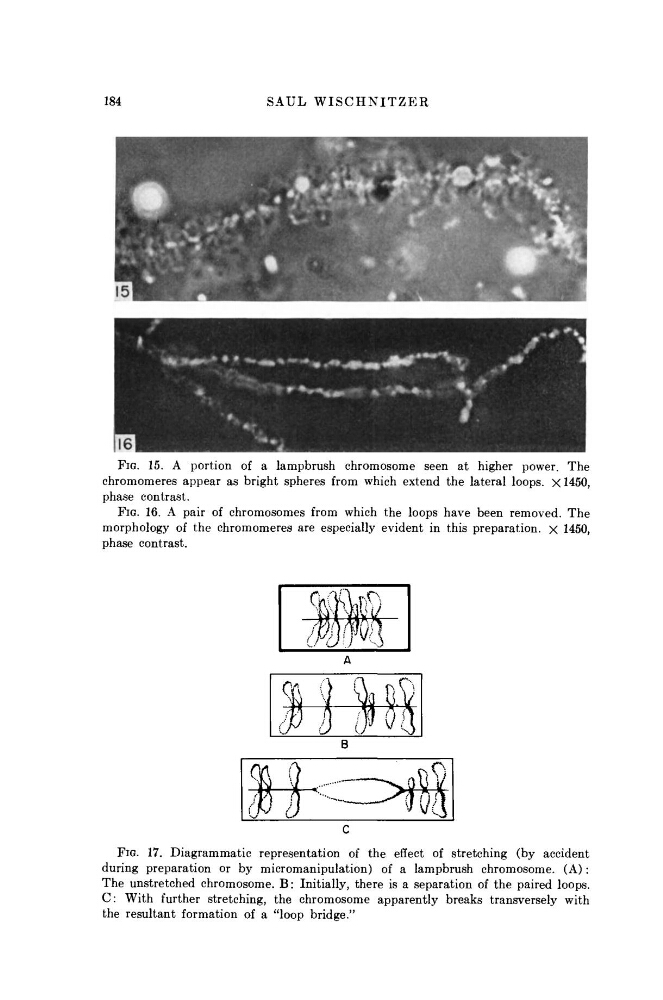
FIG. 15. A portion of a lampbrush chromosome seen at higher power. The
chromomeres appear as bright spheres from which extend the lateral loops, χ 1450,
phase contrast.
FIG. 16. A pair of chromosomes from which the loops have been removed. The
morphology of the chromomeres are especially evident in this preparation, χ 1450,
phase contrast.
C
FIG. 17. Diagrammatic representation of the effect of stretching (by accident
during preparation or by micromanipulation) of a lampbrush chromosome. (A) :
The unstretched chromosome. B: Initially, there is a separation of the paired loops.
C: With further stretching, the chromosome apparently breaks transversely with
the resultant formation of a "loop bridge."
SAUL W I S C H N I T Z E R
FIG. 15. A portion of a lampbrush chromosome seen at higher power. The
chromomeres appear as bright spheres from which extend the lateral loops, χ 1450,
phase contrast.
FIG. 16. A pair of chromosomes from which the loops have been removed. The
morphology of the chromomeres are especially evident in this preparation, χ 1450,
phase contrast.
C
FIG. 17. Diagrammatic representation of the effect of stretching (by accident
during preparation or by micromanipulation) of a lampbrush chromosome. (A) :
The unstretched chromosome. B: Initially, there is a separation of the paired loops.
C: With further stretching, the chromosome apparently breaks transversely with
the resultant formation of a "loop bridge."