

U L T R A S T R U C T U R E OF T H E A M P H I B I A N EGG
179
III. Nuclear Development
The intranuclear changes that occur during the various stages of the
extended prophase of the first meiotic division is diagrammatically illustrated in Fig. 6. The onset of oogenesis is characterized by a slight
increase in the diameter of the oogonia (Fig. 7). In the preleptotene
oocyte, the nucleus is about 15 μ in diameter; it is filled with a coarse
chromatin network and does not contain nucleoli (Fig. 8). During the
leptotene stage, there is a further increase in nuclear diameter and the
chromosomes are randomly distributed as thin, chromomere-containing
strands.
During the next two stages, the nuclear diameter remains constant.
In zygotene stage, conjugation and polarization of the chromosomes take
place and as a result, the chromosomes assume a "bouquet" formation.
The pachytene stage is characterized by longitudinal contraction of the
paired homologous chromosomes. One or several nucleoli are now present
in the nucleus.
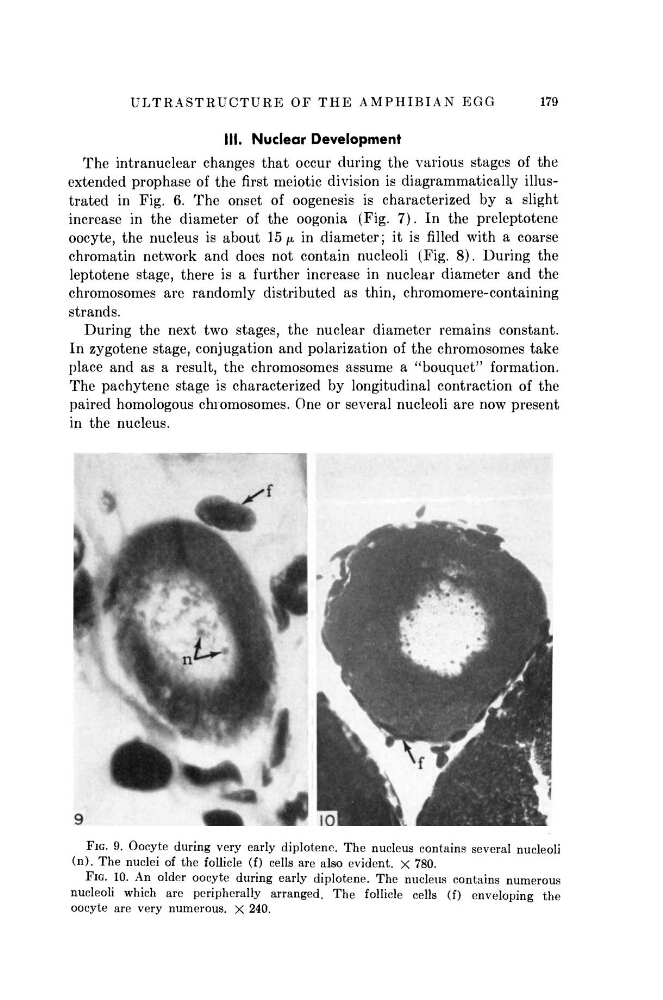
FIG. 9. Oocyte during very early diplotene. The nucleus contains several nucleoli
(n). The nuclei of the follicle (f) cells are also evident, χ 780.
FIG. 10. An older oocyte during early diplotene. The nucleus contains numerous
nucleoli which are peripherally arranged. The follicle cells (f) enveloping the
oocyte are very numerous. X 240.
179
III. Nuclear Development
The intranuclear changes that occur during the various stages of the
extended prophase of the first meiotic division is diagrammatically illustrated in Fig. 6. The onset of oogenesis is characterized by a slight
increase in the diameter of the oogonia (Fig. 7). In the preleptotene
oocyte, the nucleus is about 15 μ in diameter; it is filled with a coarse
chromatin network and does not contain nucleoli (Fig. 8). During the
leptotene stage, there is a further increase in nuclear diameter and the
chromosomes are randomly distributed as thin, chromomere-containing
strands.
During the next two stages, the nuclear diameter remains constant.
In zygotene stage, conjugation and polarization of the chromosomes take
place and as a result, the chromosomes assume a "bouquet" formation.
The pachytene stage is characterized by longitudinal contraction of the
paired homologous chromosomes. One or several nucleoli are now present
in the nucleus.
FIG. 9. Oocyte during very early diplotene. The nucleus contains several nucleoli
(n). The nuclei of the follicle (f) cells are also evident, χ 780.
FIG. 10. An older oocyte during early diplotene. The nucleus contains numerous
nucleoli which are peripherally arranged. The follicle cells (f) enveloping the
oocyte are very numerous. X 240.