

180
S A U L W I S C H N I T Z E R
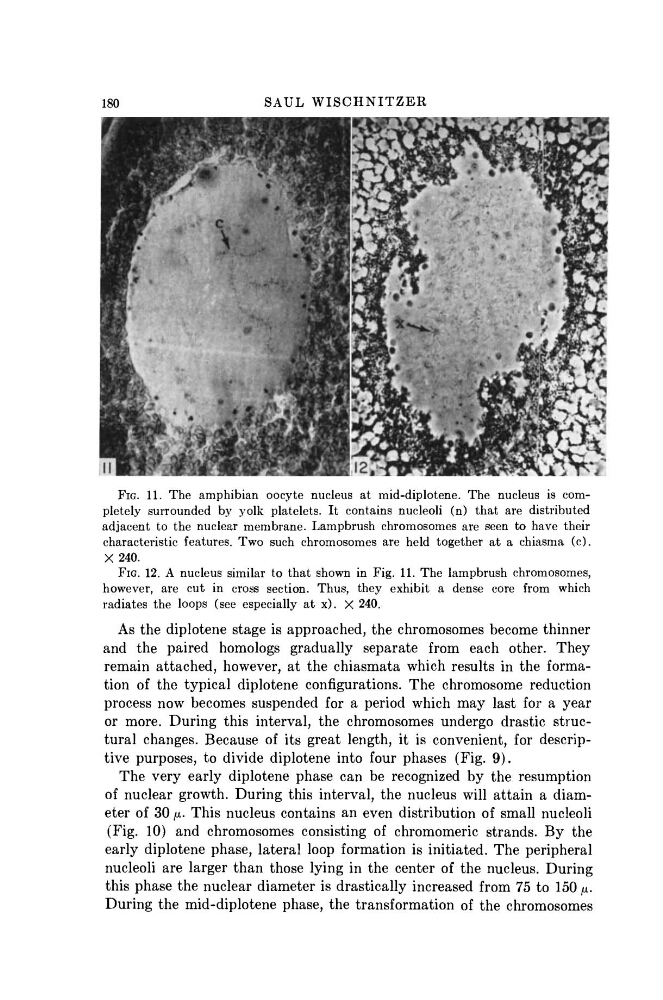
FIG. 11. The amphibian oocyte nucleus at mid-diplotene. The nucleus is completely surrounded by yolk platelets. It contains nucleoli (n) that are distributed
adjacent to the nuclear membrane. Lampbrush chromosomes are seen to have their
characteristic features. Two such chromosomes are held together at a chiasma (c).
X 240.
FIG. 12. A nucleus similar to that shown in Fig. 11. The lampbrush chromosomes,
however, are cut in cross section. Thus, they exhibit a dense core from which
radiates the loops (see especially at x). X 240.
As the diplotene stage is approached, the chromosomes become thinner
and the paired homologs gradually separate from each other. They
remain attached, however, at the chiasmata which results in the formation of the typical diplotene configurations. The chromosome reduction
process now becomes suspended for a period which may last for a year
or more. During this interval, the chromosomes undergo drastic structural changes. Because of its great length, it is convenient, for descriptive purposes, to divide diplotene into four phases (Fig. 9).
The very early diplotene phase can be recognized by the resumption
of nuclear growth. During this interval, the nucleus will attain a diameter of 30 μ. This nucleus contains an even distribution of small nucleoli
(Fig. 10) and chromosomes consisting of chromomeric strands. By the
early diplotene phase, lateral loop formation is initiated. The peripheral
nucleoli are larger than those lying in the center of the nucleus. During
this phase the nuclear diameter is drastically increased from 75 to 150 μ.
During the mid-diplotene phase, the transformation of the chromosomes
S A U L W I S C H N I T Z E R
FIG. 11. The amphibian oocyte nucleus at mid-diplotene. The nucleus is completely surrounded by yolk platelets. It contains nucleoli (n) that are distributed
adjacent to the nuclear membrane. Lampbrush chromosomes are seen to have their
characteristic features. Two such chromosomes are held together at a chiasma (c).
X 240.
FIG. 12. A nucleus similar to that shown in Fig. 11. The lampbrush chromosomes,
however, are cut in cross section. Thus, they exhibit a dense core from which
radiates the loops (see especially at x). X 240.
As the diplotene stage is approached, the chromosomes become thinner
and the paired homologs gradually separate from each other. They
remain attached, however, at the chiasmata which results in the formation of the typical diplotene configurations. The chromosome reduction
process now becomes suspended for a period which may last for a year
or more. During this interval, the chromosomes undergo drastic structural changes. Because of its great length, it is convenient, for descriptive purposes, to divide diplotene into four phases (Fig. 9).
The very early diplotene phase can be recognized by the resumption
of nuclear growth. During this interval, the nucleus will attain a diameter of 30 μ. This nucleus contains an even distribution of small nucleoli
(Fig. 10) and chromosomes consisting of chromomeric strands. By the
early diplotene phase, lateral loop formation is initiated. The peripheral
nucleoli are larger than those lying in the center of the nucleus. During
this phase the nuclear diameter is drastically increased from 75 to 150 μ.
During the mid-diplotene phase, the transformation of the chromosomes