

HETEROBLASTIC DEVELOPMENT IN PLANTS
141
had evidently been depleted. There was a more rapid reversion, however,
when only short apical lengths of the rhizome were transferred. In such
materials there was a complete reversal of the normal leaf sequence
(Fig. 6). Anatomical examination of the rhizomes also revealed that
there had been a gradual reduction to a protostele from the original
solenostele.
Smaller rhizome apices formed only simple primary leaves when transferred to mineral media, but even in sugar media they frequently formed
simple leaves before finally returning to the production of quadrisect
J
1 i
.
.
i
I
.
.
.
.
L
5
10
15
Successive leaves-numbered from base
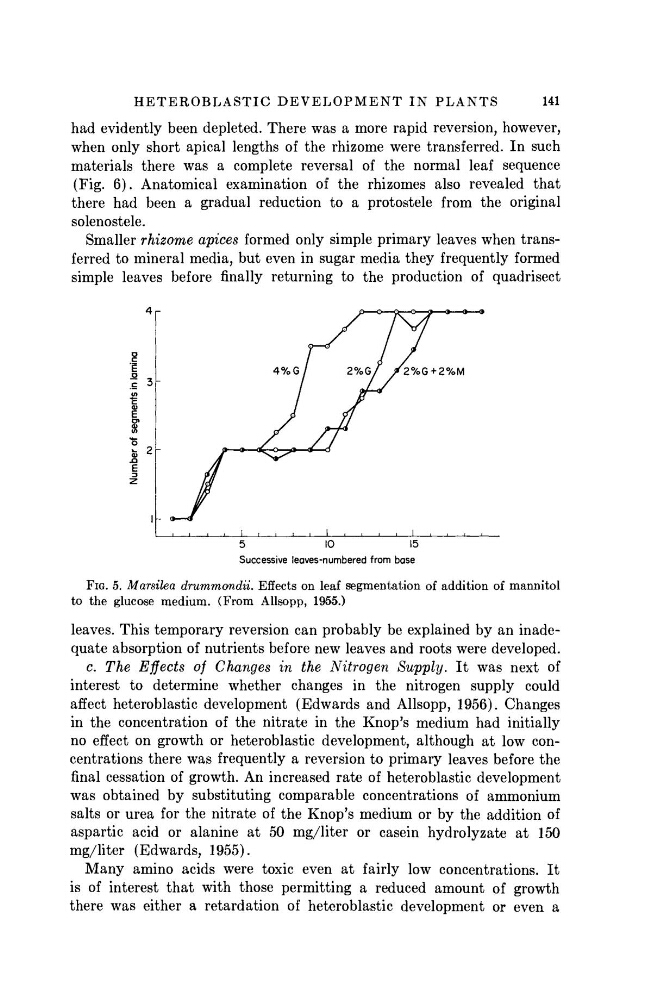
FIG. 5. Marsilea drummondii. Effects on leaf segmentation of addition of mannitol
to the glucose medium. (From Allsopp, 1955.)
leaves. This temporary reversion can probably be explained by an inadequate absorption of nutrients before new leaves and roots were developed.
c. The Effects of Changes in the Nitrogen Supply. It was next of
interest to determine whether changes in the nitrogen supply could
affect heteroblastic development (Edwards and Allsopp, 1956). Changes
in the concentration of the nitrate in the Knop's medium had initially
no effect on growth or heteroblastic development, although at low concentrations there was frequently a reversion to primary leaves before the
final cessation of growth. An increased rate of heteroblastic development
was obtained by substituting comparable concentrations of ammonium
salts or urea for the nitrate of the Knop's medium or by the addition of
aspartic acid or alanine at 50 mg/liter or casein hydrolyzate at 150
mg/liter (Edwards, 1955).
Many amino acids were toxic even at fairly low concentrations. It
is of interest that with those permitting a reduced amount of growth
there was either a retardation of heteroblastic development or even a
141
had evidently been depleted. There was a more rapid reversion, however,
when only short apical lengths of the rhizome were transferred. In such
materials there was a complete reversal of the normal leaf sequence
(Fig. 6). Anatomical examination of the rhizomes also revealed that
there had been a gradual reduction to a protostele from the original
solenostele.
Smaller rhizome apices formed only simple primary leaves when transferred to mineral media, but even in sugar media they frequently formed
simple leaves before finally returning to the production of quadrisect
J
1 i
.
.
i
I
.
.
.
.
L
5
10
15
Successive leaves-numbered from base
FIG. 5. Marsilea drummondii. Effects on leaf segmentation of addition of mannitol
to the glucose medium. (From Allsopp, 1955.)
leaves. This temporary reversion can probably be explained by an inadequate absorption of nutrients before new leaves and roots were developed.
c. The Effects of Changes in the Nitrogen Supply. It was next of
interest to determine whether changes in the nitrogen supply could
affect heteroblastic development (Edwards and Allsopp, 1956). Changes
in the concentration of the nitrate in the Knop's medium had initially
no effect on growth or heteroblastic development, although at low concentrations there was frequently a reversion to primary leaves before the
final cessation of growth. An increased rate of heteroblastic development
was obtained by substituting comparable concentrations of ammonium
salts or urea for the nitrate of the Knop's medium or by the addition of
aspartic acid or alanine at 50 mg/liter or casein hydrolyzate at 150
mg/liter (Edwards, 1955).
Many amino acids were toxic even at fairly low concentrations. It
is of interest that with those permitting a reduced amount of growth
there was either a retardation of heteroblastic development or even a