

142
A. ALLSOPP
reversion to a simple type of leaf, as for example, with serine or threonine.
Apart from cytokinins, which are considered later, the purines or
pyrimides supplied, namely adenine, guanine, and uracil, had little effect
on morphogenesis unless present at a toxic level (Allsopp, 1952).
d. The Effects of Metabolic Inhibitors. All the above evidence suggested that leaf segmentation in Marsilea was probably greatly influenced
by protein synthesis at the shoot apex. It therefore seemed of interest
to study the effects of various metabolic inhibitors on the development
of Marsilea. In the first series of experiments (Allsopp, unpublished
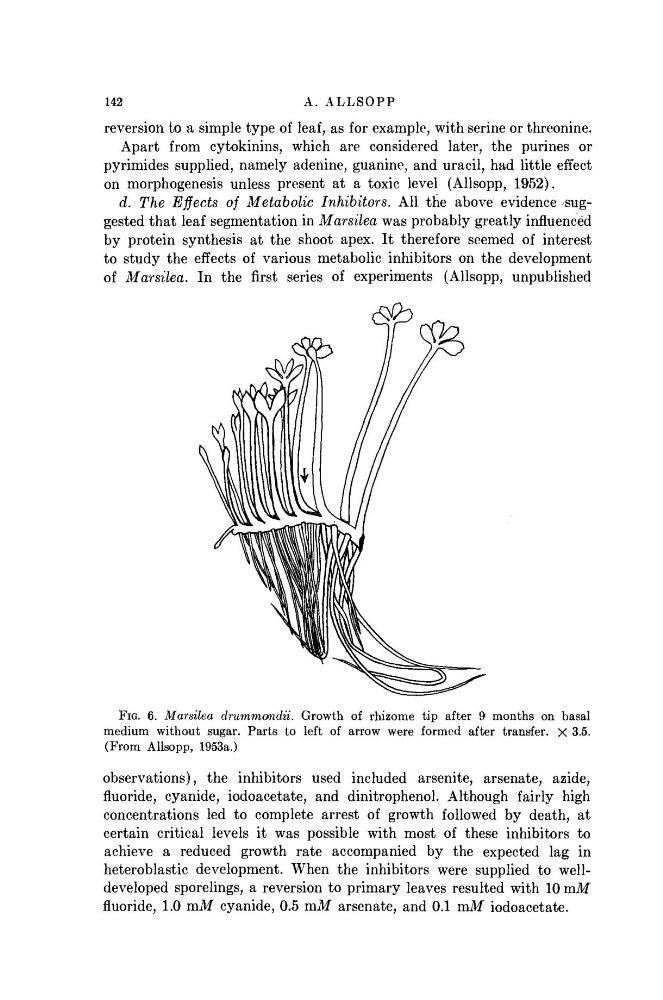
FIG. 6. Marsilea drummcmdii. Growth of rhizome tip after 9 months on basal
medium without sugar. Parts to left of arrow were formed after transfer. X 3.5.
(From Allsopp, 1953a.)
observations), the inhibitors used included arsenite, arsenate, azide,
fluoride, cyanide, iodoacetate, and dinitrophenol. Although fairly high
concentrations led to complete arrest of growth followed by death, at
certain critical levels it was possible with most of these inhibitors to
achieve a reduced growth rate accompanied by the expected lag in
heteroblastic development. When the inhibitors were supplied to welldeveloped sporelings, a reversion to primary leaves resulted with 10 mM
fluoride, 1.0 mM cyanide, 0.5 mM arsenate, and 0.1 mM iodoacetate.
A. ALLSOPP
reversion to a simple type of leaf, as for example, with serine or threonine.
Apart from cytokinins, which are considered later, the purines or
pyrimides supplied, namely adenine, guanine, and uracil, had little effect
on morphogenesis unless present at a toxic level (Allsopp, 1952).
d. The Effects of Metabolic Inhibitors. All the above evidence suggested that leaf segmentation in Marsilea was probably greatly influenced
by protein synthesis at the shoot apex. It therefore seemed of interest
to study the effects of various metabolic inhibitors on the development
of Marsilea. In the first series of experiments (Allsopp, unpublished
FIG. 6. Marsilea drummcmdii. Growth of rhizome tip after 9 months on basal
medium without sugar. Parts to left of arrow were formed after transfer. X 3.5.
(From Allsopp, 1953a.)
observations), the inhibitors used included arsenite, arsenate, azide,
fluoride, cyanide, iodoacetate, and dinitrophenol. Although fairly high
concentrations led to complete arrest of growth followed by death, at
certain critical levels it was possible with most of these inhibitors to
achieve a reduced growth rate accompanied by the expected lag in
heteroblastic development. When the inhibitors were supplied to welldeveloped sporelings, a reversion to primary leaves resulted with 10 mM
fluoride, 1.0 mM cyanide, 0.5 mM arsenate, and 0.1 mM iodoacetate.