

IX. DEVELOPMENT OF THE TELEOSTEAN EGG
381
The yolk is pure (Salmo) or mixed with cytoplasm (Brachydanio) and
forms the greater part of the ovum. The latter is very generally
covered by a thin layer of cytoplasm (periblast) often with a local lensshaped thickening representing the future blastoderm (Fig. 1).
In the cytoplasmic covering we can distinguish a cortex or 'membrane'
proper of the egg cell, and the cytoplasm which spreads towards the
interior, mobilized by the bipolar differentiation (see Section III, A).
Alveolae are enclosed in the cortex, and sometimes oil drops as in Salmo.
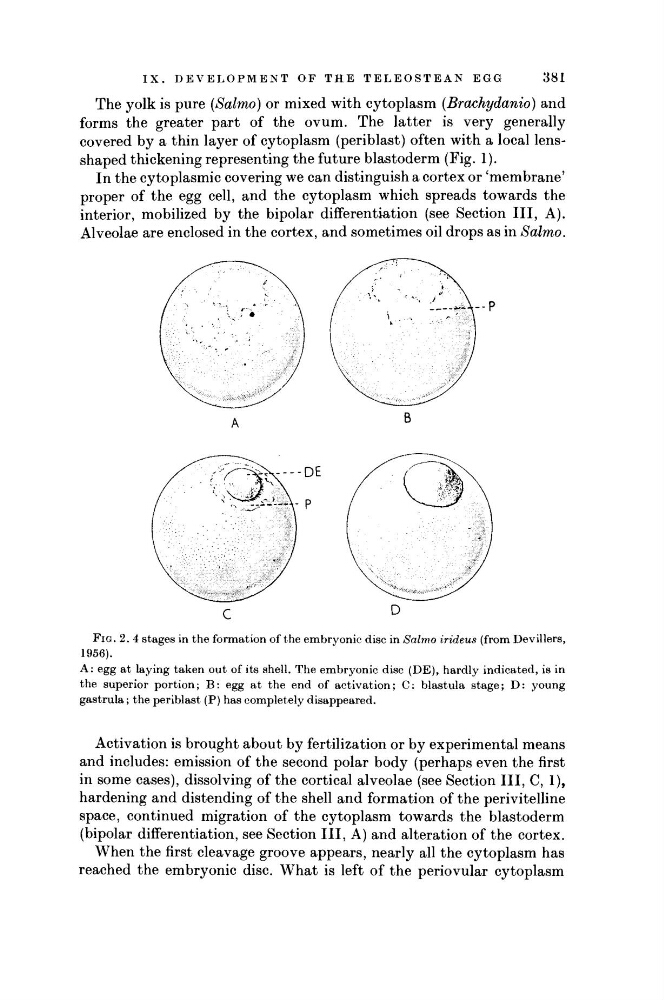
FIG. 2. 4 stages in the formation of the embryonic disc in Salmo irideus (from Devillers,
1956).
A: egg at laying taken out of its shell. The embryonic disc (DE), hardly indicated, is in
the superior portion; B: egg at the end of activation; C: blástula stage; D: young
gastrula; the periblast (P) has completely disappeared.
Activation is brought about by fertilization or by experimental means
and includes: emission of the second polar body (perhaps even the first
in some cases), dissolving of the cortical alveolae (see Section III, C, 1),
hardening and distending of the shell and formation of the perivitelline
space, continued migration of the cytoplasm towards the blastoderm
(bipolar differentiation, see Section III, A) and alteration of the cortex.
When the first cleavage groove appears, nearly all the cytoplasm has
reached the embryonic disc. What is left of the periovular cytoplasm
A
Β
381
The yolk is pure (Salmo) or mixed with cytoplasm (Brachydanio) and
forms the greater part of the ovum. The latter is very generally
covered by a thin layer of cytoplasm (periblast) often with a local lensshaped thickening representing the future blastoderm (Fig. 1).
In the cytoplasmic covering we can distinguish a cortex or 'membrane'
proper of the egg cell, and the cytoplasm which spreads towards the
interior, mobilized by the bipolar differentiation (see Section III, A).
Alveolae are enclosed in the cortex, and sometimes oil drops as in Salmo.
FIG. 2. 4 stages in the formation of the embryonic disc in Salmo irideus (from Devillers,
1956).
A: egg at laying taken out of its shell. The embryonic disc (DE), hardly indicated, is in
the superior portion; B: egg at the end of activation; C: blástula stage; D: young
gastrula; the periblast (P) has completely disappeared.
Activation is brought about by fertilization or by experimental means
and includes: emission of the second polar body (perhaps even the first
in some cases), dissolving of the cortical alveolae (see Section III, C, 1),
hardening and distending of the shell and formation of the perivitelline
space, continued migration of the cytoplasm towards the blastoderm
(bipolar differentiation, see Section III, A) and alteration of the cortex.
When the first cleavage groove appears, nearly all the cytoplasm has
reached the embryonic disc. What is left of the periovular cytoplasm
A
Β