

380
CH.
D Ε VILLERS
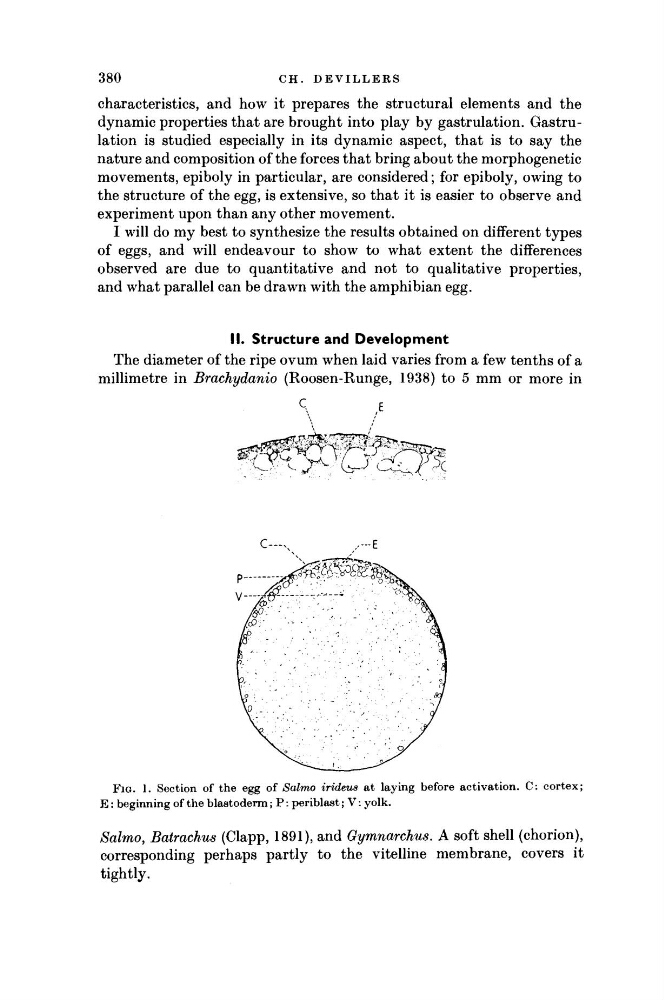
FIG. 1. Section of the egg of Salmo irideus at laying before activation. C: cortex;
Ε: beginning of the blastoderm; Ρ: periblast; V: yolk.
Salmo, Batrachus (Clapp, 1891), and Gymnarchus. A soft shell (chorion),
corresponding perhaps partly to the vitelline membrane, covers it
tightly.
characteristics, and how it prepares the structural elements and the
dynamic properties that are brought into play by gastrulation. Gastrulation is studied especially in its dynamic aspect, that is to say the
nature and composition of the forces that bring about the morphogenetic
movements, epiboly in particular, are considered; for epiboly, owing to
the structure of the egg, is extensive, so that it is easier to observe and
experiment upon than any other movement.
I will do my best to synthesize the results obtained on different types
of eggs, and will endeavour to show to what extent the differences
observed are due to quantitative and not to qualitative properties,
and what parallel can be drawn with the amphibian egg.
II. Structure and Development
The diameter of the ripe ovum when laid varies from a few tenths of a
millimetre in Brachydanio (Roosen-Runge, 1938) to 5 mm or more in
CH.
D Ε VILLERS
FIG. 1. Section of the egg of Salmo irideus at laying before activation. C: cortex;
Ε: beginning of the blastoderm; Ρ: periblast; V: yolk.
Salmo, Batrachus (Clapp, 1891), and Gymnarchus. A soft shell (chorion),
corresponding perhaps partly to the vitelline membrane, covers it
tightly.
characteristics, and how it prepares the structural elements and the
dynamic properties that are brought into play by gastrulation. Gastrulation is studied especially in its dynamic aspect, that is to say the
nature and composition of the forces that bring about the morphogenetic
movements, epiboly in particular, are considered; for epiboly, owing to
the structure of the egg, is extensive, so that it is easier to observe and
experiment upon than any other movement.
I will do my best to synthesize the results obtained on different types
of eggs, and will endeavour to show to what extent the differences
observed are due to quantitative and not to qualitative properties,
and what parallel can be drawn with the amphibian egg.
II. Structure and Development
The diameter of the ripe ovum when laid varies from a few tenths of a
millimetre in Brachydanio (Roosen-Runge, 1938) to 5 mm or more in