

16. A C T I O N S OF H O R M O N E S
623
The addition of testosterone propionate (50 /xg/ml) to the medium of
such young organs preserved the structural pattern and function of the
epithelial elements and prevented the increase in stroma; the explants
closely resembled glands of the same age in vivo (Fig. 14). Prolongation
of the treatment, however, led to a considerable proliferation of the
lining epithelium. At 3 weeks the epithelium in most alveoli consisted of
4-6 rows of densely-packed cells showing many, but normal divisions.
The cells gradually increased in size as a result of cytoplasmic enlargement; the nuclei remained constant in size.
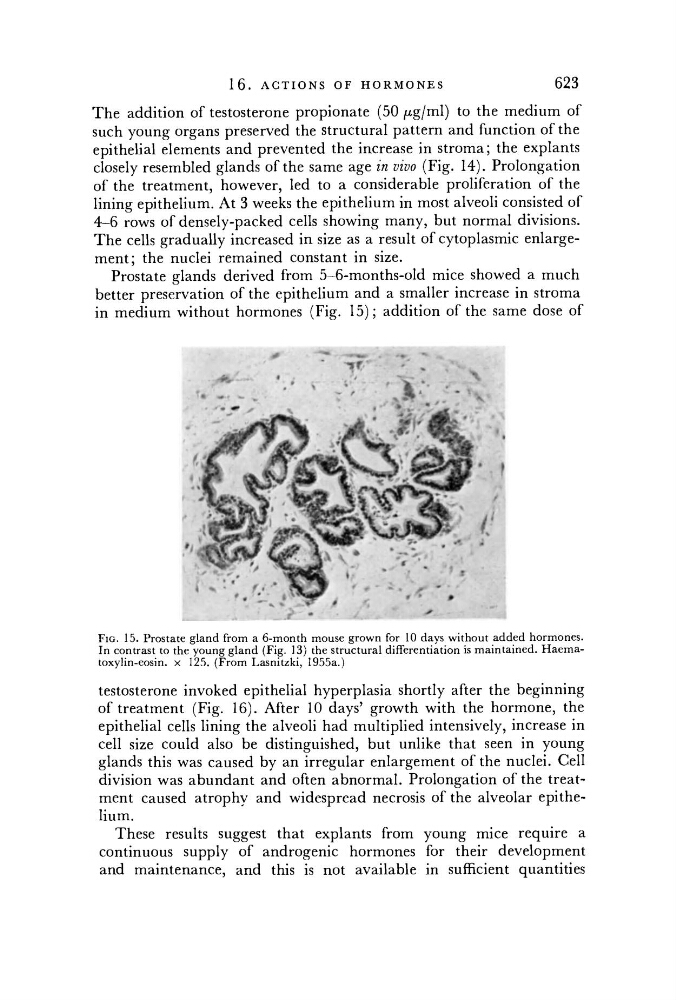
Prostate glands derived from 5-6-months-old mice showed a much
better preservation of the epithelium and a smaller increase in stroma
in medium without hormones (Fig. 15); addition of the same dose of
j #
• *****
- s *'^km„
"*
FIG. 15. Prostate gland from a 6-month mouse grown for 10 days without added hormones.
In contrast to the young gland (Fig. 13) the structural differentiation is maintained. Haematoxylin-eosin. x 125. (From Lasnitzki, 1955a.)
testosterone invoked epithelial hyperplasia shortly after the beginning
of treatment (Fig. 16). After 10 days' growth with the hormone, the
epithelial cells lining the alveoli had multiplied intensively, increase in
cell size could also be distinguished, but unlike that seen in young
glands this was caused by an irregular enlargement of the nuclei. Cell
division was abundant and often abnormal. Prolongation of the treatment caused atrophy and widespread necrosis of the alveolar epithelium.
These results suggest that explants from young mice require a
continuous supply of androgenic hormones for their development
and maintenance, and this is not available in sufficient quantities