

624
I L S E
L A S N I T Z K I
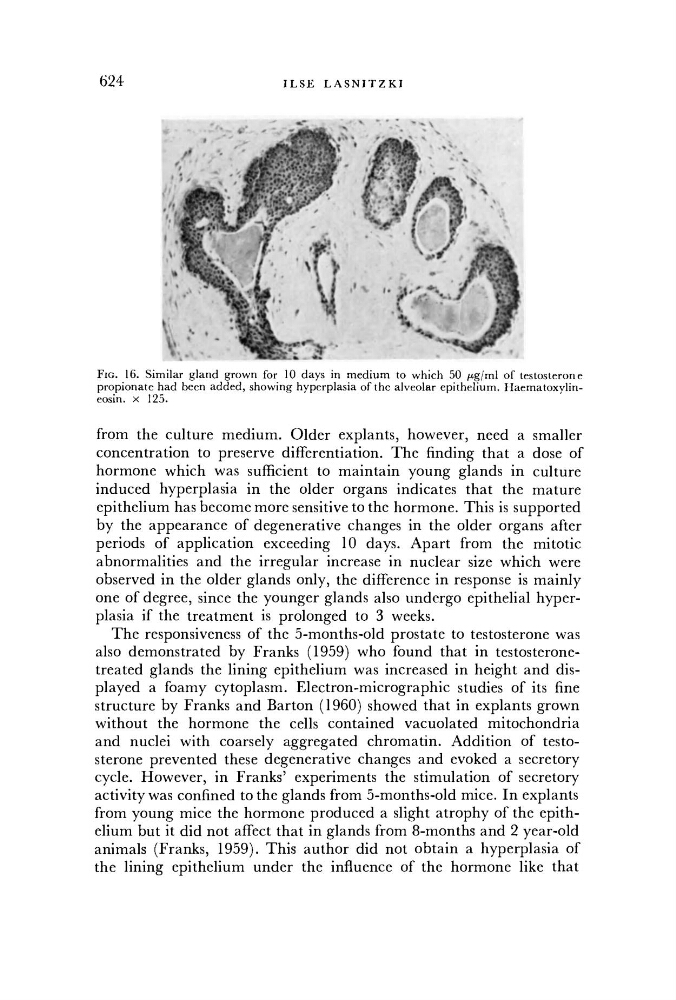
FIG. 16. Similar gland grown for 10 days in medium to which 50 fig/'ml of testosterone
propionate had been added, showing hyperplasia of the alveolar epithelium. Haematoxylineosin. x 125.
from the culture medium. Older explants, however, need a smaller
concentration to preserve differentiation. The finding that a dose of
hormone which was sufficient to maintain young glands in culture
induced hyperplasia in the older organs indicates that the mature
epithelium has become more sensitive to the hormone. This is supported
by the appearance of degenerative changes in the older organs after
periods of application exceeding 10 days. Apart from the mitotic
abnormalities and the irregular increase in nuclear size which were
observed in the older glands only, the difference in response is mainly
one of degree, since the younger glands also undergo epithelial hyperplasia if the treatment is prolonged to 3 weeks.
The responsiveness of the 5-months-old prostate to testosterone was
also demonstrated by Franks (1959) who found that in testosteronetreated glands the lining epithelium was increased in height and displayed a foamy cytoplasm. Electron-micrographic studies of its fine
structure by Franks and Barton (1960) showed that in explants grown
without the hormone the cells contained vacuolated mitochondria
and nuclei with coarsely aggregated chromatin. Addition of testosterone prevented these degenerative changes and evoked a secretory
cycle. However, in Franks' experiments the stimulation of secretory
activity was confined to the glands from 5-months-old mice. In explants
from young mice the hormone produced a slight atrophy of the epithelium but it did not affect that in glands from 8-months and 2 year-old
animals (Franks, 1959). This author did not obtain a hyperplasia of
the lining epithelium under the influence of the hormone like that