

IV. INVESTIGATION OF C. DIPHTHERIAE
113
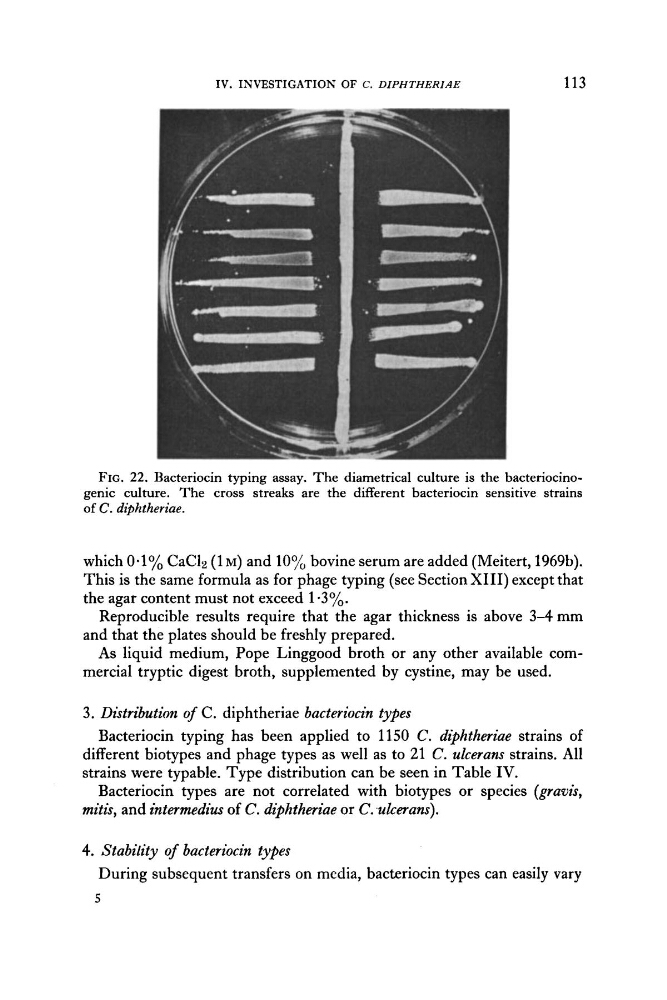
FIG. 22. Bacteriocin typing assay. The diametrical culture is the bacteriocinogenic culture. The cross streaks are the different bacteriocin sensitive strains
of C. diphtheriae.
which 0.1% CaClz (1 M) and lOyo bovine serum are added (Meitert, 1969b).
This is the same formula as for phage typing (see Section XIII) except that
the agar content must not exceed 1.3%.
Reproducible results require that the agar thickness is above 3-4mm
and that the plates should be freshly prepared.
As liquid medium, Pope Linggood broth or any other available commercial tryptic digest broth, supplemented by cystine, may be used.
3. Distribution of C. diphtheriae bacteriocin types
Bacteriocin typing has been applied to 1150 C. diphtheriae strains of
different biotypes and phage types as well as to 21 C. ulcerans strains. All
strains were typable. Type distribution can be seen in Table IV.
Bacteriocin types are not correlated with biotypes or species (graeris,
mitis, and intermedius of C. diphtheriae or C. .ulceram).
4. Stability of bacteriocin types
During subsequent transfers on media, bacteriocin types can easily vary
5
113
FIG. 22. Bacteriocin typing assay. The diametrical culture is the bacteriocinogenic culture. The cross streaks are the different bacteriocin sensitive strains
of C. diphtheriae.
which 0.1% CaClz (1 M) and lOyo bovine serum are added (Meitert, 1969b).
This is the same formula as for phage typing (see Section XIII) except that
the agar content must not exceed 1.3%.
Reproducible results require that the agar thickness is above 3-4mm
and that the plates should be freshly prepared.
As liquid medium, Pope Linggood broth or any other available commercial tryptic digest broth, supplemented by cystine, may be used.
3. Distribution of C. diphtheriae bacteriocin types
Bacteriocin typing has been applied to 1150 C. diphtheriae strains of
different biotypes and phage types as well as to 21 C. ulcerans strains. All
strains were typable. Type distribution can be seen in Table IV.
Bacteriocin types are not correlated with biotypes or species (graeris,
mitis, and intermedius of C. diphtheriae or C. .ulceram).
4. Stability of bacteriocin types
During subsequent transfers on media, bacteriocin types can easily vary
5