

II. DESERT SOILS
49
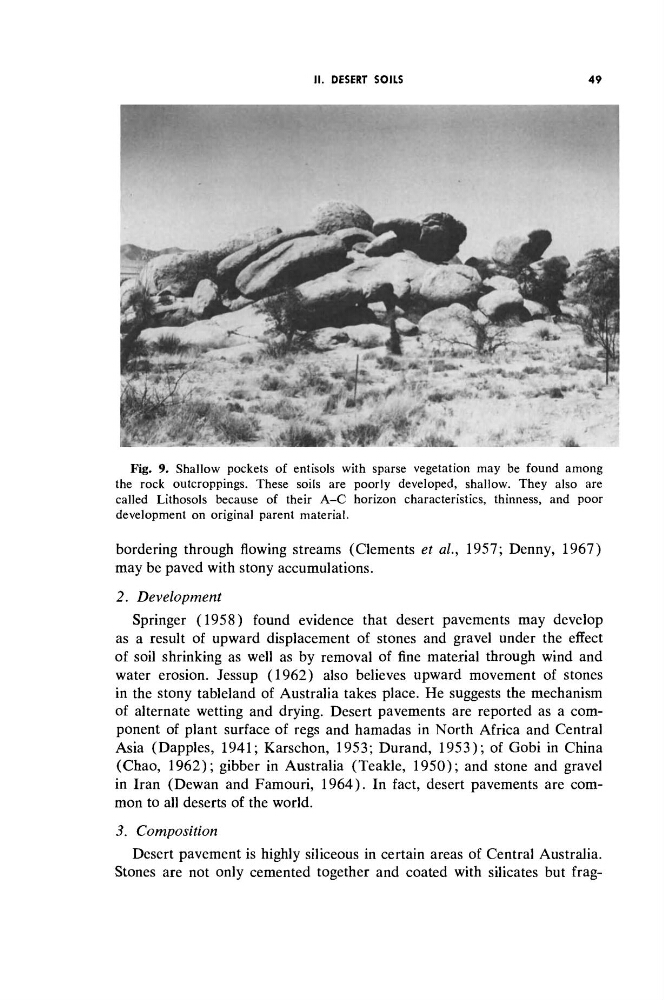
Fig. 9. Shallow pockets of entisols with sparse vegetation may be found among
the rock outcroppings. These soils are poorly developed, shallow. They also are
called Lithosols because of their A-C horizon characteristics, thinness, and poor
development on original parent material.
bordering through flowing streams (Clements et al, 1957; Denny, 1967)
may be paved with stony accumulations.
2. Development
Springer (1958) found evidence that desert pavements may develop
as a result of upward displacement of stones and gravel under the effect
of soil shrinking as well as by removal of fine material through wind and
water erosion. Jessup (1962) also believes upward movement of stones
in the stony tableland of Australia takes place. He suggests the mechanism
of alternate wetting and drying. Desert pavements are reported as a component of plant surface of regs and hamadas in North Africa and Central
Asia (Dapples, 1941; Karschon, 1953; Durand, 1953); of Gobi in China
(Chao, 1962); gibber in Australia (Teakle, 1950); and stone and gravel
in Iran (Dewan and Famouri, 1964). In fact, desert pavements are common to all deserts of the world.
3. Composition
Desert pavement is highly siliceous in certain areas of Central Australia.
Stones are not only cemented together and coated with silicates but frag-
49
Fig. 9. Shallow pockets of entisols with sparse vegetation may be found among
the rock outcroppings. These soils are poorly developed, shallow. They also are
called Lithosols because of their A-C horizon characteristics, thinness, and poor
development on original parent material.
bordering through flowing streams (Clements et al, 1957; Denny, 1967)
may be paved with stony accumulations.
2. Development
Springer (1958) found evidence that desert pavements may develop
as a result of upward displacement of stones and gravel under the effect
of soil shrinking as well as by removal of fine material through wind and
water erosion. Jessup (1962) also believes upward movement of stones
in the stony tableland of Australia takes place. He suggests the mechanism
of alternate wetting and drying. Desert pavements are reported as a component of plant surface of regs and hamadas in North Africa and Central
Asia (Dapples, 1941; Karschon, 1953; Durand, 1953); of Gobi in China
(Chao, 1962); gibber in Australia (Teakle, 1950); and stone and gravel
in Iran (Dewan and Famouri, 1964). In fact, desert pavements are common to all deserts of the world.
3. Composition
Desert pavement is highly siliceous in certain areas of Central Australia.
Stones are not only cemented together and coated with silicates but frag-