

50
WALLACE H. FULLER
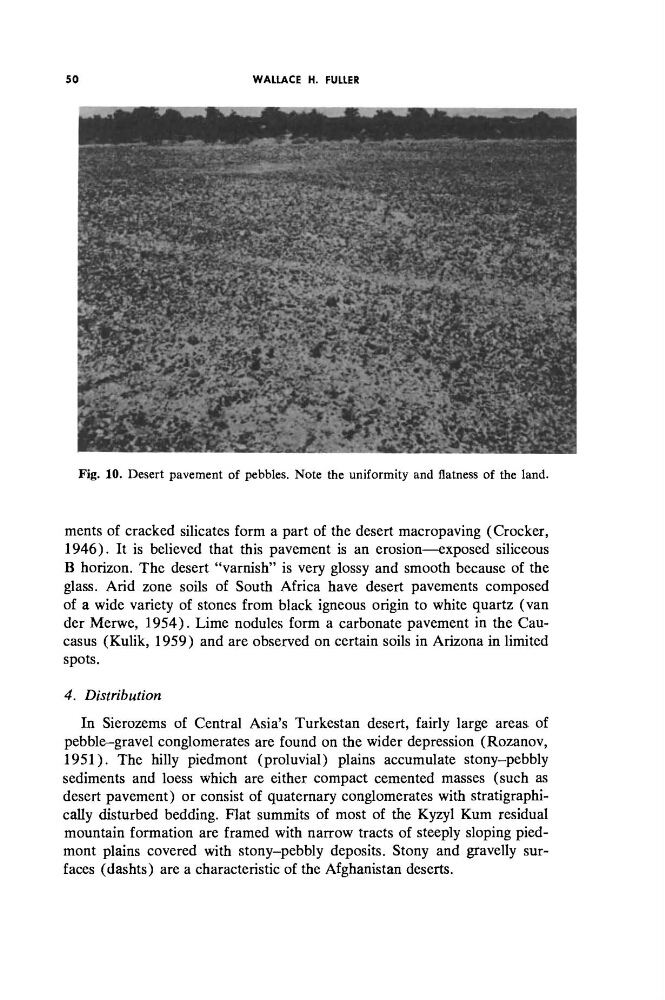
Fig. 10. Desert pavement of pebbles. Note the uniformity and flatness of the land.
ments of cracked silicates form a part of the desert macropaving (Crocker,
1946). It is believed that this pavement is an erosion—exposed siliceous
B horizon. The desert "varnish" is very glossy and smooth because of the
glass. Arid zone soils of South Africa have desert pavements composed
of a wide variety of stones from black igneous origin to white quartz (van
der Merwe, 1954). Lime nodules form a carbonate pavement in the Caucasus (Kulik, 1959) and are observed on certain soils in Arizona in limited
spots.
4. Distribution
In Sierozems of Central Asia's Turkestan desert, fairly large areas of
pebble-gravel conglomerates are found on the wider depression (Rozanov,
1951). The hilly piedmont (proluvial) plains accumulate stony-pebbly
sediments and loess which are either compact cemented masses (such as
desert pavement) or consist of quaternary conglomerates with stratigraphically disturbed bedding. Flat summits of most of the Kyzyl Kum residual
mountain formation are framed with narrow tracts of steeply sloping piedmont plains covered with stony-pebbly deposits. Stony and gravelly surfaces (dashts) are a characteristic of the Afghanistan deserts.
WALLACE H. FULLER
Fig. 10. Desert pavement of pebbles. Note the uniformity and flatness of the land.
ments of cracked silicates form a part of the desert macropaving (Crocker,
1946). It is believed that this pavement is an erosion—exposed siliceous
B horizon. The desert "varnish" is very glossy and smooth because of the
glass. Arid zone soils of South Africa have desert pavements composed
of a wide variety of stones from black igneous origin to white quartz (van
der Merwe, 1954). Lime nodules form a carbonate pavement in the Caucasus (Kulik, 1959) and are observed on certain soils in Arizona in limited
spots.
4. Distribution
In Sierozems of Central Asia's Turkestan desert, fairly large areas of
pebble-gravel conglomerates are found on the wider depression (Rozanov,
1951). The hilly piedmont (proluvial) plains accumulate stony-pebbly
sediments and loess which are either compact cemented masses (such as
desert pavement) or consist of quaternary conglomerates with stratigraphically disturbed bedding. Flat summits of most of the Kyzyl Kum residual
mountain formation are framed with narrow tracts of steeply sloping piedmont plains covered with stony-pebbly deposits. Stony and gravelly surfaces (dashts) are a characteristic of the Afghanistan deserts.