

48
WALLACE H. FULLER
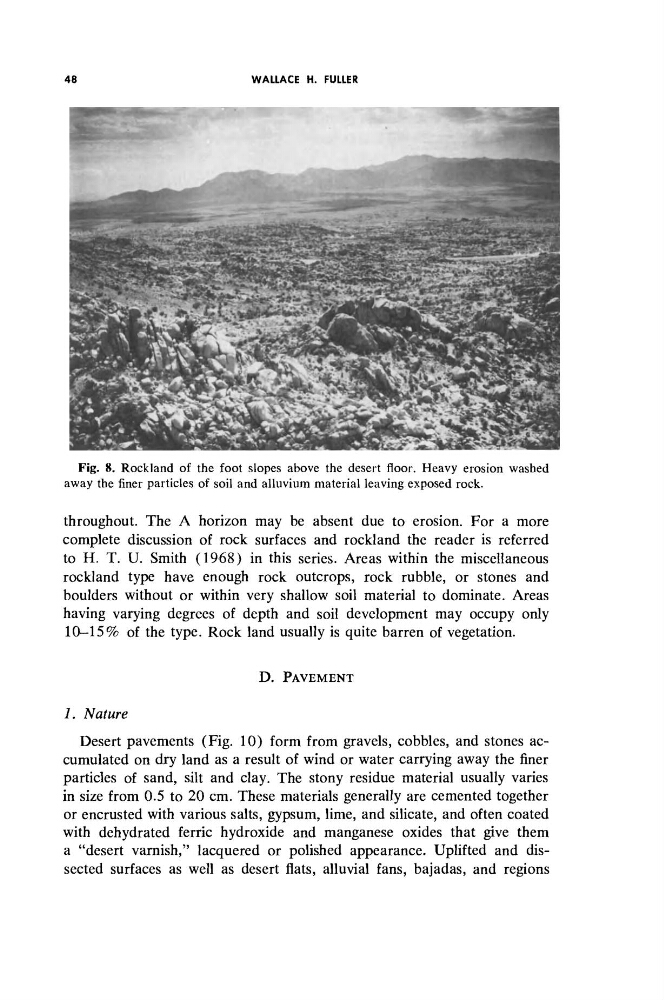
Fig. 8. Rockland of the foot slopes above the desert floor. Heavy erosion washed
away the finer particles of soil and alluvium material leaving exposed rock.
throughout. The A horizon may be absent due to erosion. For a more
complete discussion of rock surfaces and rockland the reader is referred
to H. T. U. Smith (1968) in this series. Areas within the miscellaneous
rockland type have enough rock outcrops, rock rubble, or stones and
boulders without or within very shallow soil material to dominate. Areas
having varying degrees of depth and soil development may occupy only
10-15% of the type. Rock land usually is quite barren of vegetation.
D. PAVEMENT
1. Nature
Desert pavements (Fig. 10) form from gravels, cobbles, and stones accumulated on dry land as a result of wind or water carrying away the finer
particles of sand, silt and clay. The stony residue material usually varies
in size from 0.5 to 20 cm. These materials generally are cemented together
or encrusted with various salts, gypsum, lime, and silicate, and often coated
with dehydrated ferric hydroxide and manganese oxides that give them
a "desert varnish," lacquered or polished appearance. Uplifted and dissected surfaces as well as desert flats, alluvial fans, bajadas, and regions
WALLACE H. FULLER
Fig. 8. Rockland of the foot slopes above the desert floor. Heavy erosion washed
away the finer particles of soil and alluvium material leaving exposed rock.
throughout. The A horizon may be absent due to erosion. For a more
complete discussion of rock surfaces and rockland the reader is referred
to H. T. U. Smith (1968) in this series. Areas within the miscellaneous
rockland type have enough rock outcrops, rock rubble, or stones and
boulders without or within very shallow soil material to dominate. Areas
having varying degrees of depth and soil development may occupy only
10-15% of the type. Rock land usually is quite barren of vegetation.
D. PAVEMENT
1. Nature
Desert pavements (Fig. 10) form from gravels, cobbles, and stones accumulated on dry land as a result of wind or water carrying away the finer
particles of sand, silt and clay. The stony residue material usually varies
in size from 0.5 to 20 cm. These materials generally are cemented together
or encrusted with various salts, gypsum, lime, and silicate, and often coated
with dehydrated ferric hydroxide and manganese oxides that give them
a "desert varnish," lacquered or polished appearance. Uplifted and dissected surfaces as well as desert flats, alluvial fans, bajadas, and regions