

VII. DESERT FISHES
397
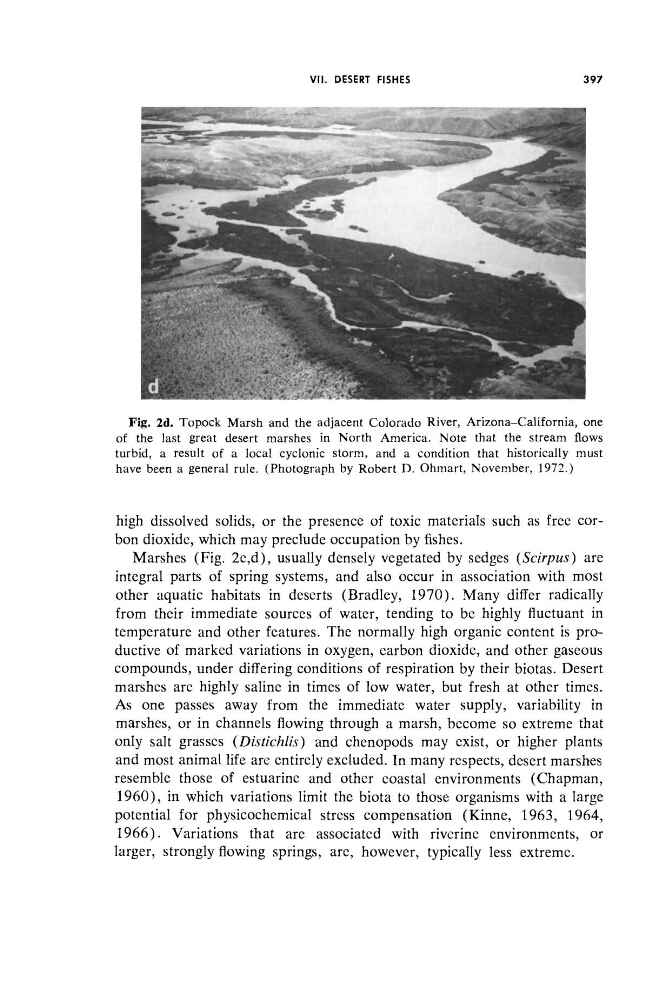
Fig. 2d. Topock Marsh and the adjacent Colorado River, Arizona-California, one
of the last great desert marshes in North America. Note that the stream flows
turbid, a result of a local cyclonic storm, and a condition that historically must
have been a general rule. (Photograph by Robert D. Ohmart, November, 1972.)
high dissolved solids, or the presence of toxic materials such as free corbon dioxide, which may preclude occupation by fishes.
Marshes (Fig. 2c,d), usually densely vegetated by sedges (Scirpus) are
integral parts of spring systems, and also occur in association with most
other aquatic habitats in deserts (Bradley, 1970). Many differ radically
from their immediate sources of water, tending to be highly fluctuant in
temperature and other features. The normally high organic content is productive of marked variations in oxygen, carbon dioxide, and other gaseous
compounds, under differing conditions of respiration by their biotas. Desert
marshes are highly saline in times of low water, but fresh at other times.
As one passes away from the immediate water supply, variability in
marshes, or in channels flowing through a marsh, become so extreme that
only salt grasses (Distichlis) and chenopods may exist, or higher plants
and most animal life are entirely excluded. In many respects, desert marshes
resemble those of estuarine and other coastal environments (Chapman,
1960), in which variations limit the biota to those organisms with a large
potential for physicochemical stress compensation (Kinne, 1963, 1964,
1966). Variations that are associated with riverine environments, or
larger, strongly flowing springs, are, however, typically less extreme.
397
Fig. 2d. Topock Marsh and the adjacent Colorado River, Arizona-California, one
of the last great desert marshes in North America. Note that the stream flows
turbid, a result of a local cyclonic storm, and a condition that historically must
have been a general rule. (Photograph by Robert D. Ohmart, November, 1972.)
high dissolved solids, or the presence of toxic materials such as free corbon dioxide, which may preclude occupation by fishes.
Marshes (Fig. 2c,d), usually densely vegetated by sedges (Scirpus) are
integral parts of spring systems, and also occur in association with most
other aquatic habitats in deserts (Bradley, 1970). Many differ radically
from their immediate sources of water, tending to be highly fluctuant in
temperature and other features. The normally high organic content is productive of marked variations in oxygen, carbon dioxide, and other gaseous
compounds, under differing conditions of respiration by their biotas. Desert
marshes are highly saline in times of low water, but fresh at other times.
As one passes away from the immediate water supply, variability in
marshes, or in channels flowing through a marsh, become so extreme that
only salt grasses (Distichlis) and chenopods may exist, or higher plants
and most animal life are entirely excluded. In many respects, desert marshes
resemble those of estuarine and other coastal environments (Chapman,
1960), in which variations limit the biota to those organisms with a large
potential for physicochemical stress compensation (Kinne, 1963, 1964,
1966). Variations that are associated with riverine environments, or
larger, strongly flowing springs, are, however, typically less extreme.