

126
CLAUDE J. GRENOT
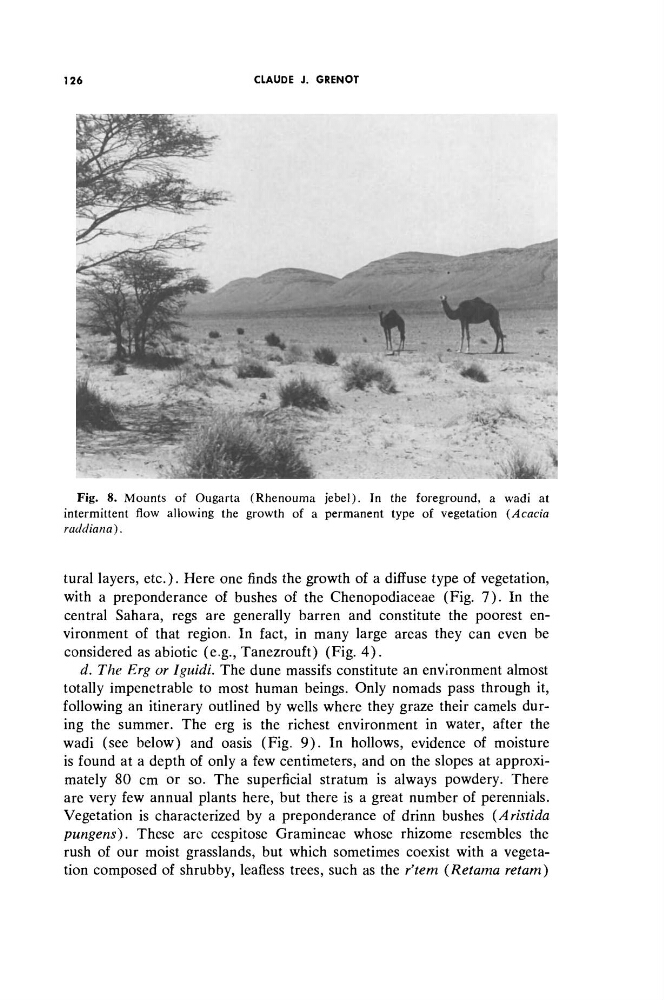
Fig. 8. Mounts of Ougarta (Rhenouma jebel). In the foreground, a wadi at
intermittent flow allowing the growth of a permanent type of vegetation {Acacia
raddiana ).
tural layers, etc.). Here one finds the growth of a diffuse type of vegetation,
with a preponderance of bushes of the Chenopodiaceae (Fig. 7). In the
central Sahara, regs are generally barren and constitute the poorest environment of that region. In fact, in many large areas they can even be
considered as abiotic (e.g., Tanezrouft) (Fig. 4 ) .
d. The Erg or lguidi. The dune massifs constitute an environment almost
totally impenetrable to most human beings. Only nomads pass through it,
following an itinerary outlined by wells where they graze their camels during the summer. The erg is the richest environment in water, after the
wadi (see below) and oasis (Fig. 9). In hollows, evidence of moisture
is found at a depth of only a few centimeters, and on the slopes at approximately 80 cm or so. The superficial stratum is always powdery. There
are very few annual plants here, but there is a great number of perennials.
Vegetation is characterized by a preponderance of drinn bushes (Aristida
pungens). These are cespitose Gramineae whose rhizome resembles the
rush of our moist grasslands, but which sometimes coexist with a vegetation composed of shrubby, leafless trees, such as the r'tem {Rétama retam)
CLAUDE J. GRENOT
Fig. 8. Mounts of Ougarta (Rhenouma jebel). In the foreground, a wadi at
intermittent flow allowing the growth of a permanent type of vegetation {Acacia
raddiana ).
tural layers, etc.). Here one finds the growth of a diffuse type of vegetation,
with a preponderance of bushes of the Chenopodiaceae (Fig. 7). In the
central Sahara, regs are generally barren and constitute the poorest environment of that region. In fact, in many large areas they can even be
considered as abiotic (e.g., Tanezrouft) (Fig. 4 ) .
d. The Erg or lguidi. The dune massifs constitute an environment almost
totally impenetrable to most human beings. Only nomads pass through it,
following an itinerary outlined by wells where they graze their camels during the summer. The erg is the richest environment in water, after the
wadi (see below) and oasis (Fig. 9). In hollows, evidence of moisture
is found at a depth of only a few centimeters, and on the slopes at approximately 80 cm or so. The superficial stratum is always powdery. There
are very few annual plants here, but there is a great number of perennials.
Vegetation is characterized by a preponderance of drinn bushes (Aristida
pungens). These are cespitose Gramineae whose rhizome resembles the
rush of our moist grasslands, but which sometimes coexist with a vegetation composed of shrubby, leafless trees, such as the r'tem {Rétama retam)