

III. PHYSICAL AND VEGETATIONAL ASPECTS OF THE SAHARA
127
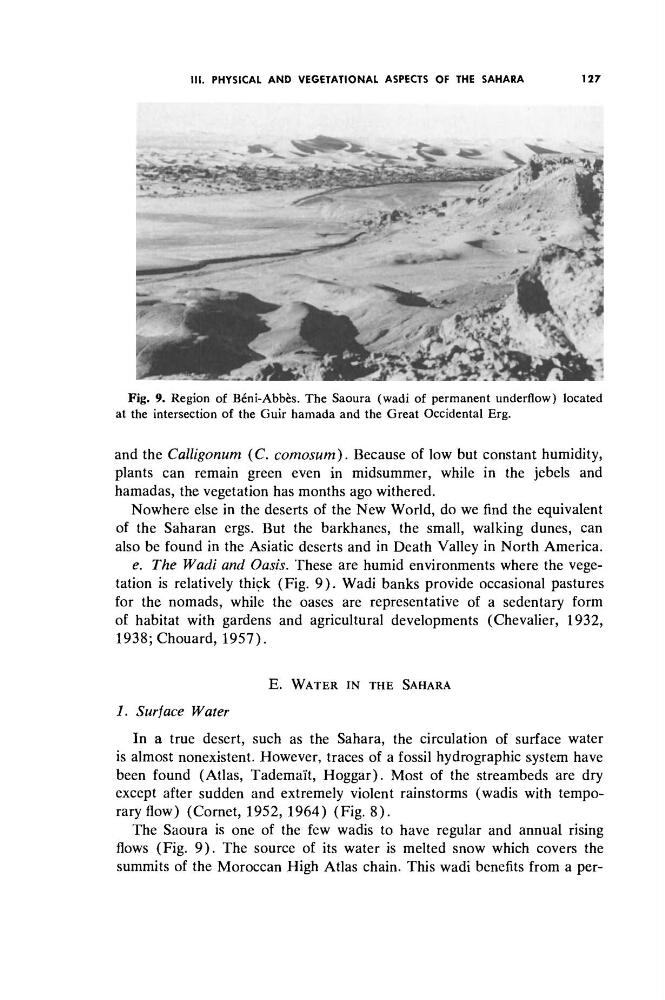
Fig. 9. Region of Béni-Abbès. The Saoura (wadi of permanent underflow) located
at the intersection of the Guir hamada and the Great Occidental Erg.
and the Calligonum (C. comosum). Because of low but constant humidity,
plants can remain green even in midsummer, while in the jebels and
hamadas, the vegetation has months ago withered.
Nowhere else in the deserts of the New World, do we find the equivalent
of the Saharan ergs. But the barkhanes, the small, walking dunes, can
also be found in the Asiatic deserts and in Death Valley in North America.
e. The Wadi and Oasis. These are humid environments where the vegetation is relatively thick (Fig. 9 ) . Wadi banks provide occasional pastures
for the nomads, while the oases are representative of a sedentary form
of habitat with gardens and agricultural developments (Chevalier, 1932,
1938;Chouard, 1957).
E. WATER IN THE SAHARA
1. Surface Water
In a true desert, such as the Sahara, the circulation of surface water
is almost nonexistent. However, traces of a fossil hydrographie system have
been found (Atlas, Tademaït, Hoggar). Most of the streambeds are dry
except after sudden and extremely violent rainstorms (wadis with temporary flow) (Cornet, 1952, 1964) (Fig. 8).
The Saoura is one of the few wadis to have regular and annual rising
flows (Fig. 9). The source of its water is melted snow which covers the
summits of the Moroccan High Atlas chain. This wadi benefits from a per-
127
Fig. 9. Region of Béni-Abbès. The Saoura (wadi of permanent underflow) located
at the intersection of the Guir hamada and the Great Occidental Erg.
and the Calligonum (C. comosum). Because of low but constant humidity,
plants can remain green even in midsummer, while in the jebels and
hamadas, the vegetation has months ago withered.
Nowhere else in the deserts of the New World, do we find the equivalent
of the Saharan ergs. But the barkhanes, the small, walking dunes, can
also be found in the Asiatic deserts and in Death Valley in North America.
e. The Wadi and Oasis. These are humid environments where the vegetation is relatively thick (Fig. 9 ) . Wadi banks provide occasional pastures
for the nomads, while the oases are representative of a sedentary form
of habitat with gardens and agricultural developments (Chevalier, 1932,
1938;Chouard, 1957).
E. WATER IN THE SAHARA
1. Surface Water
In a true desert, such as the Sahara, the circulation of surface water
is almost nonexistent. However, traces of a fossil hydrographie system have
been found (Atlas, Tademaït, Hoggar). Most of the streambeds are dry
except after sudden and extremely violent rainstorms (wadis with temporary flow) (Cornet, 1952, 1964) (Fig. 8).
The Saoura is one of the few wadis to have regular and annual rising
flows (Fig. 9). The source of its water is melted snow which covers the
summits of the Moroccan High Atlas chain. This wadi benefits from a per-