

III. PHYSICAL AND VEGETATIONAL ASPECTS OF THE SAHARA
125
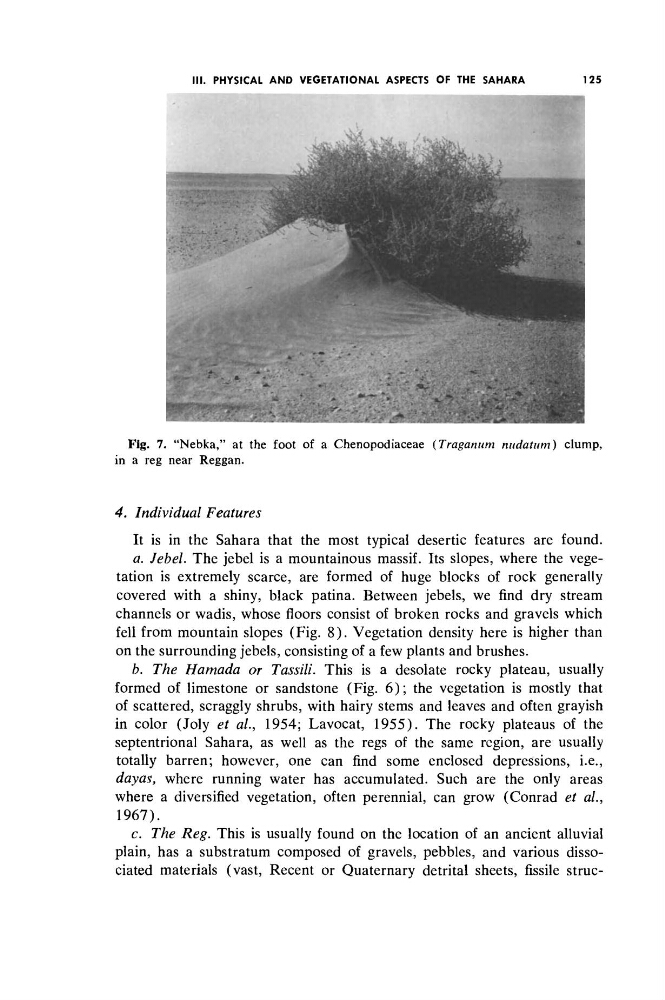
Fig. 7. "Nebka," at the foot of a Chenopodiaceae (Traganum nudatum) clump,
in a reg near Reggan.
4. Individual Features
It is in the Sahara that the most typical desertic features are found.
a. Jebel. The jebel is a mountainous massif. Its slopes, where the vegetation is extremely scarce, are formed of huge blocks of rock generally
covered with a shiny, black patina. Between jebels, we find dry stream
channels or wadis, whose floors consist of broken rocks and gravels which
fell from mountain slopes (Fig. 8). Vegetation density here is higher than
on the surrounding jebels, consisting of a few plants and brushes.
b. The Hamada or Tassili. This is a desolate rocky plateau, usually
formed of limestone or sandstone (Fig. 6 ) ; the vegetation is mostly that
of scattered, scraggly shrubs, with hairy stems and leaves and often grayish
in color (Joly et al, 1954; Lavocat, 1955). The rocky plateaus of the
septentrional Sahara, as well as the regs of the same region, are usually
totally barren; however, one can find some enclosed depressions, i.e.,
dayas, where running water has accumulated. Such are the only areas
where a diversified vegetation, often perennial, can grow (Conrad et al,
1967).
c. The Reg. This is usually found on the location of an ancient alluvial
plain, has a substratum composed of gravels, pebbles, and various dissociated materials (vast, Recent or Quaternary detrital sheets, fissile struc-
125
Fig. 7. "Nebka," at the foot of a Chenopodiaceae (Traganum nudatum) clump,
in a reg near Reggan.
4. Individual Features
It is in the Sahara that the most typical desertic features are found.
a. Jebel. The jebel is a mountainous massif. Its slopes, where the vegetation is extremely scarce, are formed of huge blocks of rock generally
covered with a shiny, black patina. Between jebels, we find dry stream
channels or wadis, whose floors consist of broken rocks and gravels which
fell from mountain slopes (Fig. 8). Vegetation density here is higher than
on the surrounding jebels, consisting of a few plants and brushes.
b. The Hamada or Tassili. This is a desolate rocky plateau, usually
formed of limestone or sandstone (Fig. 6 ) ; the vegetation is mostly that
of scattered, scraggly shrubs, with hairy stems and leaves and often grayish
in color (Joly et al, 1954; Lavocat, 1955). The rocky plateaus of the
septentrional Sahara, as well as the regs of the same region, are usually
totally barren; however, one can find some enclosed depressions, i.e.,
dayas, where running water has accumulated. Such are the only areas
where a diversified vegetation, often perennial, can grow (Conrad et al,
1967).
c. The Reg. This is usually found on the location of an ancient alluvial
plain, has a substratum composed of gravels, pebbles, and various dissociated materials (vast, Recent or Quaternary detrital sheets, fissile struc-