

CHAPTER 20 Global Climate Change
516
How do aerosols affect climate?
Aerosols act directly by reflecting
sunlight back to space and indirectly by
making clouds “brighter” reflectors. The
second effect relates to the fact that many
aerosols (such as those composed of salt or
sulfuric acid) attract water and thus are
especially effective as cloud condensation
nuclei. The large quantity of aerosols produced by human activities (especially
industrial emissions) trigger an increase in
the number of cloud droplets that form
within a cloud. A greater number of small
droplets increases the cloud’ s brightness—
that is, more sunlight is reflected back
to space.
By reducing the amount of solar
energy available to the climate system,
aerosols have a net cooling effect. Studies
indicate that the cooling effect of humangenerated aerosols offsets a portion of the
global warming caused by the growing
quantities of greenhouse gases in the
atmosphere. Unfortunately, the magnitude
and extent of the cooling effect of aerosols
is highly uncertain. This uncertainty is a
significant hurdle in advancing our
understanding of how humans alter
Earth’ s climate.
It is important to point out some significant differences between global warming
by greenhouse gases and aerosol cooling.
After being emitted, greenhouse gases, such
as carbon dioxide, remain in the atmosphere for many decades. By contrast, aerosols released into the troposphere remain there for only a few
days or, at most, a few weeks before they are “washed out” by precipitation. Because of their short lifetime in the troposphere, aerosols are
distributed unevenly over the globe. As expected, human-generated
aerosols are concentrated near the areas that produce them, namely industrialized regions that burn fossil fuels and land areas where vegetation is
burned (FIGURE 20.32).
Because their lifetime in the atmosphere is short, the effect of aerosols
on today’ s climate is determined by the amount emitted during the preceding couple of weeks. By contrast, the carbon dioxide and trace gases
released into the atmosphere remain for much longer spans and thus influence climate for many decades.
C O N C E P T C H E C K 2 0 . 1 0
What are the main sources of human-generated aerosols?
What effect do these aerosols have on temperatures in the troposphere?
Some Possible Consequences
of Global Warming
What consequences can be expected if the carbon dioxide content of the atmosphere reaches
a level that is twice what it was early in the 20th century? Because the climate system is so
complex, predicting the distribution of particular regional changes is speculative. It is not yet
possible to pinpoint specifics, such as where or when it will become drier or wetter. Nevertheless, plausible scenarios can be given for larger
scales of space and time.
As noted, the magnitude of the temperature
increase will not be the same everywhere. The
temperature rise will probably be smallest in the
tropics and increase toward the poles. As for
precipitation, the models indicate that some
regions will experience significantly more precipitation and runoff. However, others will experience a decrease in runoff due to reduced
precipitation or greater evaporation caused by
higher temperatures.
TABLE 20.1 summarizes some of the more
likely effects and their possible consequences.
The table also provides the IPCC’ s estimate of
the probability of each effect. Levels of
confidence for these projections vary from
“likely” (67 to 90 percent probability) to “very
likely” (90 to 99 percent probability) to virtually
certain (greater than 99 percent probability).
Sea-Level Rise
A significant impact of a human-induced global
warming is a rise in sea level (FIGURE 20.33). As
this occurs, coastal cities, wetlands, and lowlying islands could be threatened with more frequent flooding, increased shoreline erosion, and
saltwater encroachment into coastal rivers and
aquifers.
2
1
Taiwan Taiwan
China China
Corridor of haze
Corridor of haze
Taiwan
China
Corridor of haze
Change in mean sea level (mm)
50
40
30
20
0
10
1995
2000
2005
Year
Trend
60-day average
FIGURE 20.33 Using data from satellites
and floats, it was determined that sea level
rose an average of 3 millimeters (0.1 inch)
per year between 1993 and 2005. Researchers
attributed about half the rise to melting
glacial ice and the other half to thermal
expansion. Rising sea level can adversely
affect some of the most densely populated
areas on Earth. (NASA/Jet Propulsion
Laboratory)
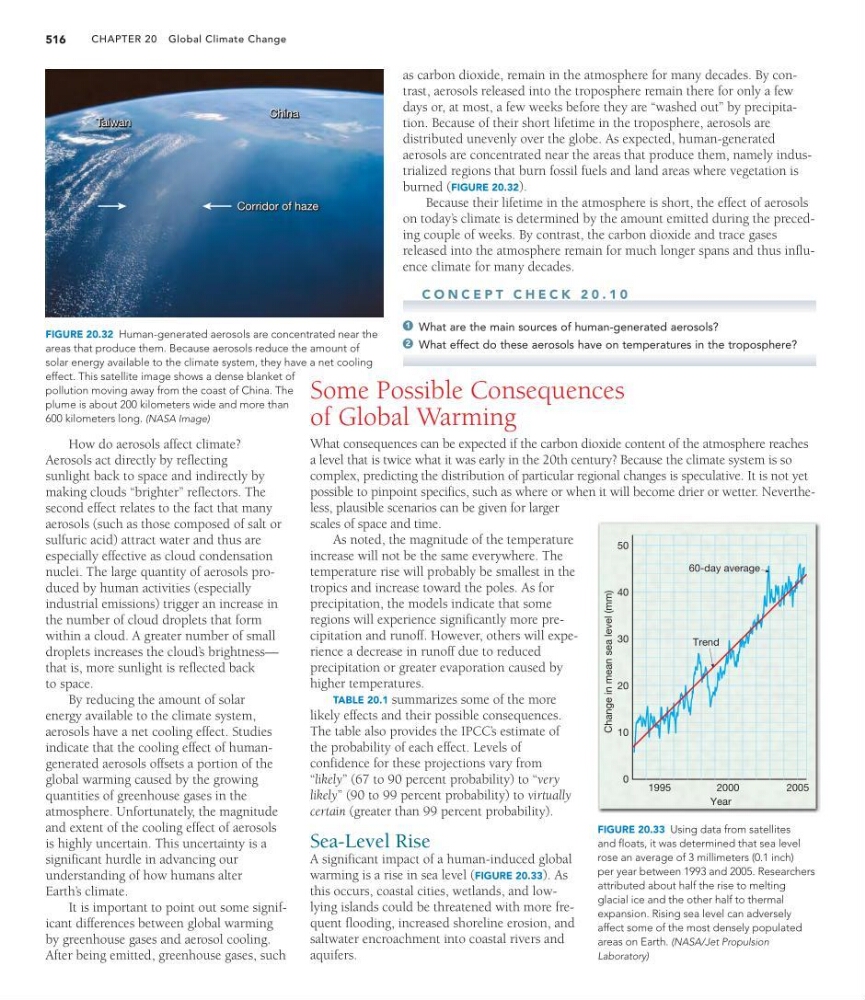
FIGURE 20.32 Human-generated aerosols are concentrated near the
areas that produce them. Because aerosols reduce the amount of
solar energy available to the climate system, they have a net cooling
effect. This satellite image shows a dense blanket of
pollution moving away from the coast of China. The
plume is about 200 kilometers wide and more than
600 kilometers long. (NASA Image)
516
How do aerosols affect climate?
Aerosols act directly by reflecting
sunlight back to space and indirectly by
making clouds “brighter” reflectors. The
second effect relates to the fact that many
aerosols (such as those composed of salt or
sulfuric acid) attract water and thus are
especially effective as cloud condensation
nuclei. The large quantity of aerosols produced by human activities (especially
industrial emissions) trigger an increase in
the number of cloud droplets that form
within a cloud. A greater number of small
droplets increases the cloud’ s brightness—
that is, more sunlight is reflected back
to space.
By reducing the amount of solar
energy available to the climate system,
aerosols have a net cooling effect. Studies
indicate that the cooling effect of humangenerated aerosols offsets a portion of the
global warming caused by the growing
quantities of greenhouse gases in the
atmosphere. Unfortunately, the magnitude
and extent of the cooling effect of aerosols
is highly uncertain. This uncertainty is a
significant hurdle in advancing our
understanding of how humans alter
Earth’ s climate.
It is important to point out some significant differences between global warming
by greenhouse gases and aerosol cooling.
After being emitted, greenhouse gases, such
as carbon dioxide, remain in the atmosphere for many decades. By contrast, aerosols released into the troposphere remain there for only a few
days or, at most, a few weeks before they are “washed out” by precipitation. Because of their short lifetime in the troposphere, aerosols are
distributed unevenly over the globe. As expected, human-generated
aerosols are concentrated near the areas that produce them, namely industrialized regions that burn fossil fuels and land areas where vegetation is
burned (FIGURE 20.32).
Because their lifetime in the atmosphere is short, the effect of aerosols
on today’ s climate is determined by the amount emitted during the preceding couple of weeks. By contrast, the carbon dioxide and trace gases
released into the atmosphere remain for much longer spans and thus influence climate for many decades.
C O N C E P T C H E C K 2 0 . 1 0
What are the main sources of human-generated aerosols?
What effect do these aerosols have on temperatures in the troposphere?
Some Possible Consequences
of Global Warming
What consequences can be expected if the carbon dioxide content of the atmosphere reaches
a level that is twice what it was early in the 20th century? Because the climate system is so
complex, predicting the distribution of particular regional changes is speculative. It is not yet
possible to pinpoint specifics, such as where or when it will become drier or wetter. Nevertheless, plausible scenarios can be given for larger
scales of space and time.
As noted, the magnitude of the temperature
increase will not be the same everywhere. The
temperature rise will probably be smallest in the
tropics and increase toward the poles. As for
precipitation, the models indicate that some
regions will experience significantly more precipitation and runoff. However, others will experience a decrease in runoff due to reduced
precipitation or greater evaporation caused by
higher temperatures.
TABLE 20.1 summarizes some of the more
likely effects and their possible consequences.
The table also provides the IPCC’ s estimate of
the probability of each effect. Levels of
confidence for these projections vary from
“likely” (67 to 90 percent probability) to “very
likely” (90 to 99 percent probability) to virtually
certain (greater than 99 percent probability).
Sea-Level Rise
A significant impact of a human-induced global
warming is a rise in sea level (FIGURE 20.33). As
this occurs, coastal cities, wetlands, and lowlying islands could be threatened with more frequent flooding, increased shoreline erosion, and
saltwater encroachment into coastal rivers and
aquifers.
2
1
Taiwan Taiwan
China China
Corridor of haze
Corridor of haze
Taiwan
China
Corridor of haze
Change in mean sea level (mm)
50
40
30
20
0
10
1995
2000
2005
Year
Trend
60-day average
FIGURE 20.33 Using data from satellites
and floats, it was determined that sea level
rose an average of 3 millimeters (0.1 inch)
per year between 1993 and 2005. Researchers
attributed about half the rise to melting
glacial ice and the other half to thermal
expansion. Rising sea level can adversely
affect some of the most densely populated
areas on Earth. (NASA/Jet Propulsion
Laboratory)
FIGURE 20.32 Human-generated aerosols are concentrated near the
areas that produce them. Because aerosols reduce the amount of
solar energy available to the climate system, they have a net cooling
effect. This satellite image shows a dense blanket of
pollution moving away from the coast of China. The
plume is about 200 kilometers wide and more than
600 kilometers long. (NASA Image)