

513
Carbon Dioxide, Trace Gases, and Climate Change
N2O (parts per billion)
CH4 (parts per billion)
0
400
350
300
250
500
1000
1500
2000
Year
Methane (CH4)
Nitrous Oxide (N2O)
2000
1800
1600
1400
1200
1000
800
600
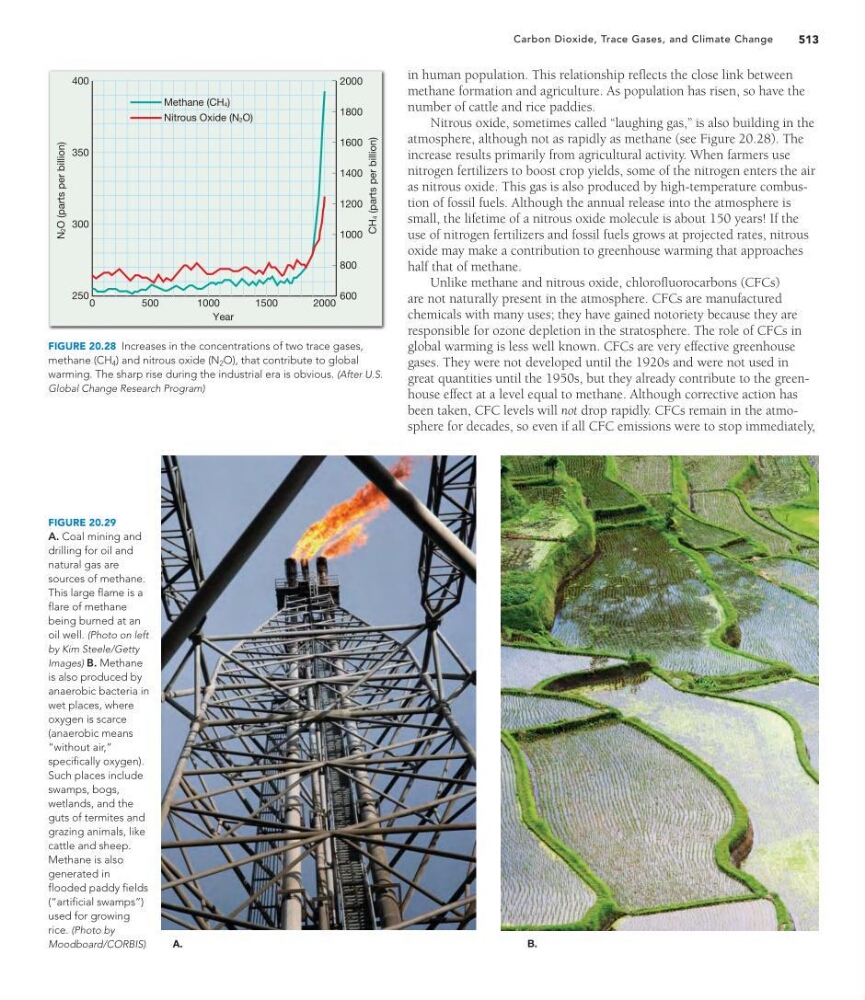
FIGURE 20.28 Increases in the concentrations of two trace gases,
methane (CH 4 ) and nitrous oxide (N 2 O), that contribute to global
warming. The sharp rise during the industrial era is obvious. (After U.S.
Global Change Research Program)
A.
B.
FIGURE 20.29
A. Coal mining and
drilling for oil and
natural gas are
sources of methane.
This large flame is a
flare of methane
being burned at an
oil well. (Photo on left
by Kim Steele/Getty
Images) B. Methane
is also produced by
anaerobic bacteria in
wet places, where
oxygen is scarce
(anaerobic means
“without air,”
specifically oxygen).
Such places include
swamps, bogs,
wetlands, and the
guts of termites and
grazing animals, like
cattle and sheep.
Methane is also
generated in
flooded paddy fields
(“artificial swamps”)
used for growing
rice. (Photo by
Moodboard/CORBIS)
in human population. This relationship reflects the close link between
methane formation and agriculture. As population has risen, so have the
number of cattle and rice paddies.
Nitrous oxide, sometimes called “laughing gas,” is also building in the
atmosphere, although not as rapidly as methane (see Figure 20.28). The
increase results primarily from agricultural activity. When farmers use
nitrogen fertilizers to boost crop yields, some of the nitrogen enters the air
as nitrous oxide. This gas is also produced by high-temperature combustion of fossil fuels. Although the annual release into the atmosphere is
small, the lifetime of a nitrous oxide molecule is about 150 years! If the
use of nitrogen fertilizers and fossil fuels grows at projected rates, nitrous
oxide may make a contribution to greenhouse warming that approaches
half that of methane.
Unlike methane and nitrous oxide, chlorofluorocarbons (CFCs)
are not naturally present in the atmosphere. CFCs are manufactured
chemicals with many uses; they have gained notoriety because they are
responsible for ozone depletion in the stratosphere. The role of CFCs in
global warming is less well known. CFCs are very effective greenhouse
gases. They were not developed until the 1920s and were not used in
great quantities until the 1950s, but they already contribute to the greenhouse effect at a level equal to methane. Although corrective action has
been taken, CFC levels will not drop rapidly. CFCs remain in the atmosphere for decades, so even if all CFC emissions were to stop immediately,
Carbon Dioxide, Trace Gases, and Climate Change
N2O (parts per billion)
CH4 (parts per billion)
0
400
350
300
250
500
1000
1500
2000
Year
Methane (CH4)
Nitrous Oxide (N2O)
2000
1800
1600
1400
1200
1000
800
600
FIGURE 20.28 Increases in the concentrations of two trace gases,
methane (CH 4 ) and nitrous oxide (N 2 O), that contribute to global
warming. The sharp rise during the industrial era is obvious. (After U.S.
Global Change Research Program)
A.
B.
FIGURE 20.29
A. Coal mining and
drilling for oil and
natural gas are
sources of methane.
This large flame is a
flare of methane
being burned at an
oil well. (Photo on left
by Kim Steele/Getty
Images) B. Methane
is also produced by
anaerobic bacteria in
wet places, where
oxygen is scarce
(anaerobic means
“without air,”
specifically oxygen).
Such places include
swamps, bogs,
wetlands, and the
guts of termites and
grazing animals, like
cattle and sheep.
Methane is also
generated in
flooded paddy fields
(“artificial swamps”)
used for growing
rice. (Photo by
Moodboard/CORBIS)
in human population. This relationship reflects the close link between
methane formation and agriculture. As population has risen, so have the
number of cattle and rice paddies.
Nitrous oxide, sometimes called “laughing gas,” is also building in the
atmosphere, although not as rapidly as methane (see Figure 20.28). The
increase results primarily from agricultural activity. When farmers use
nitrogen fertilizers to boost crop yields, some of the nitrogen enters the air
as nitrous oxide. This gas is also produced by high-temperature combustion of fossil fuels. Although the annual release into the atmosphere is
small, the lifetime of a nitrous oxide molecule is about 150 years! If the
use of nitrogen fertilizers and fossil fuels grows at projected rates, nitrous
oxide may make a contribution to greenhouse warming that approaches
half that of methane.
Unlike methane and nitrous oxide, chlorofluorocarbons (CFCs)
are not naturally present in the atmosphere. CFCs are manufactured
chemicals with many uses; they have gained notoriety because they are
responsible for ozone depletion in the stratosphere. The role of CFCs in
global warming is less well known. CFCs are very effective greenhouse
gases. They were not developed until the 1920s and were not used in
great quantities until the 1950s, but they already contribute to the greenhouse effect at a level equal to methane. Although corrective action has
been taken, CFC levels will not drop rapidly. CFCs remain in the atmosphere for decades, so even if all CFC emissions were to stop immediately,