

507
Natural Causes of Climate Change
*For more on the end of the Cretaceous, see
Chapter 19.
VOLCANISM AND GLOBAL WARMING.
The Cretaceous Period is the last period of
the Mesozoic Era, the era of middle life that
is often called the “age of dinosaurs.” It
began about 145.5 million years ago and
ended about 65.5 million years ago with
the extinction of the dinosaurs (and many
other life forms as well).*
The Cretaceous climate was among the
warmest in Earth’ s long history. Dinosaurs,
which are associated with mild temperatures, ranged north of the Arctic Circle.
Tropical forests existed in Greenland and
Antarctica, and coral reefs grew as much as
15 degrees latitude closer to the poles than
at present. Deposits of peat that would
eventually form widespread coal beds accumulated at high latitudes. Sea level was as
much as 200 meters (650 feet) higher than
it is today, indicating that there were no
polar ice sheets.
What was the cause of the unusually
warm climates of the Cretaceous Period?
Among the significant factors that may
have contributed was an enhancement of
the greenhouse effect due to an increase in
the amount of carbon dioxide in the
atmosphere.
Where did the additional CO 2 come
from that contributed to the Cretaceous
warming? Many geologists suggest that the
D I D Y O U K N O W ?
A meteorite colliding with Earth could
trigger climate change. For example,
the most strongly supported hypothesis
for the extinction of dinosaurs (about
65.5 million years ago) is related to
such an event. When a large (about
10 kilometers in diameter) meteorite
struck Earth, huge quantities of debris
were blasted high into the atmosphere.
For months the encircling dust cloud
greatly restricted the amount of light
reaching Earth’s surface. Without
sufficient sunlight for photosynthesis,
delicate food chains collapsed. When
the sunlight returned, more than half of
the species on Earth, including the
dinosaurs and many marine organisms,
had become extinct. There is more
about this in Chapter 19.
1
0
–1
–2
–3
–4
–5
A.
B .
1973
1978
1983
1988
1993
1998
2003
Year
Net Solar Radiation Percent Change
Pinatubo
El Chichon
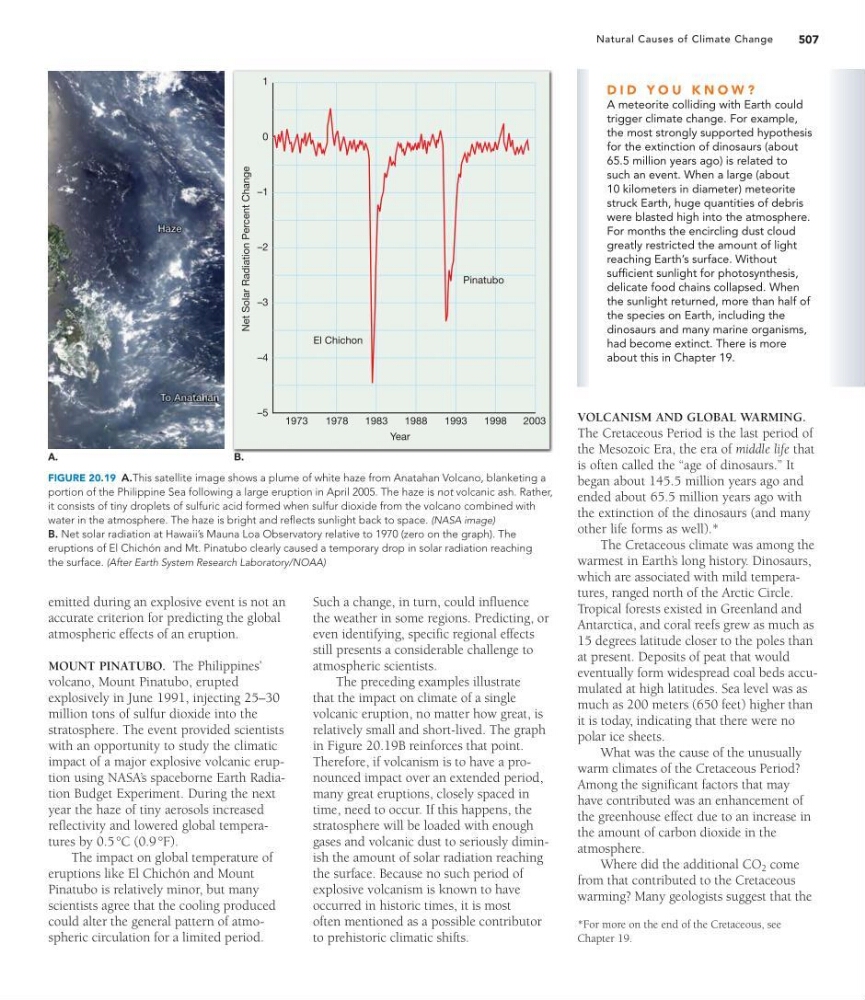
FIGURE 20.19 A.This satellite image shows a plume of white haze from Anatahan Volcano, blanketing a
portion of the Philippine Sea following a large eruption in April 2005. The haze is not volcanic ash. Rather,
it consists of tiny droplets of sulfuric acid formed when sulfur dioxide from the volcano combined with
water in the atmosphere. The haze is bright and reflects sunlight back to space. (NASA image)
B. Net solar radiation at Hawaii’s Mauna Loa Observatory relative to 1970 (zero on the graph). The
eruptions of El Chichón and Mt. Pinatubo clearly caused a temporary drop in solar radiation reaching
the surface. (After Earth System Research Laboratory/NOAA)
emitted during an explosive event is not an
accurate criterion for predicting the global
atmospheric effects of an eruption.
MOUNT PINATUBO. The Philippines’
volcano, Mount Pinatubo, erupted
explosively in June 1991, injecting 25–30
million tons of sulfur dioxide into the
stratosphere. The event provided scientists
with an opportunity to study the climatic
impact of a major explosive volcanic eruption using NASA’ s spaceborne Earth Radiation Budget Experiment. During the next
year the haze of tiny aerosols increased
reflectivity and lowered global temperatures by 0.5 °C (0.9 °F).
The impact on global temperature of
eruptions like El Chichón and Mount
Pinatubo is relatively minor, but many
scientists agree that the cooling produced
could alter the general pattern of atmospheric circulation for a limited period.
Such a change, in turn, could influence
the weather in some regions. Predicting, or
even identifying, specific regional effects
still presents a considerable challenge to
atmospheric scientists.
The preceding examples illustrate
that the impact on climate of a single
volcanic eruption, no matter how great, is
relatively small and short-lived. The graph
in Figure 20.19B reinforces that point.
Therefore, if volcanism is to have a pronounced impact over an extended period,
many great eruptions, closely spaced in
time, need to occur. If this happens, the
stratosphere will be loaded with enough
gases and volcanic dust to seriously diminish the amount of solar radiation reaching
the surface. Because no such period of
explosive volcanism is known to have
occurred in historic times, it is most
often mentioned as a possible contributor
to prehistoric climatic shifts.
Natural Causes of Climate Change
*For more on the end of the Cretaceous, see
Chapter 19.
VOLCANISM AND GLOBAL WARMING.
The Cretaceous Period is the last period of
the Mesozoic Era, the era of middle life that
is often called the “age of dinosaurs.” It
began about 145.5 million years ago and
ended about 65.5 million years ago with
the extinction of the dinosaurs (and many
other life forms as well).*
The Cretaceous climate was among the
warmest in Earth’ s long history. Dinosaurs,
which are associated with mild temperatures, ranged north of the Arctic Circle.
Tropical forests existed in Greenland and
Antarctica, and coral reefs grew as much as
15 degrees latitude closer to the poles than
at present. Deposits of peat that would
eventually form widespread coal beds accumulated at high latitudes. Sea level was as
much as 200 meters (650 feet) higher than
it is today, indicating that there were no
polar ice sheets.
What was the cause of the unusually
warm climates of the Cretaceous Period?
Among the significant factors that may
have contributed was an enhancement of
the greenhouse effect due to an increase in
the amount of carbon dioxide in the
atmosphere.
Where did the additional CO 2 come
from that contributed to the Cretaceous
warming? Many geologists suggest that the
D I D Y O U K N O W ?
A meteorite colliding with Earth could
trigger climate change. For example,
the most strongly supported hypothesis
for the extinction of dinosaurs (about
65.5 million years ago) is related to
such an event. When a large (about
10 kilometers in diameter) meteorite
struck Earth, huge quantities of debris
were blasted high into the atmosphere.
For months the encircling dust cloud
greatly restricted the amount of light
reaching Earth’s surface. Without
sufficient sunlight for photosynthesis,
delicate food chains collapsed. When
the sunlight returned, more than half of
the species on Earth, including the
dinosaurs and many marine organisms,
had become extinct. There is more
about this in Chapter 19.
1
0
–1
–2
–3
–4
–5
A.
B .
1973
1978
1983
1988
1993
1998
2003
Year
Net Solar Radiation Percent Change
Pinatubo
El Chichon
FIGURE 20.19 A.This satellite image shows a plume of white haze from Anatahan Volcano, blanketing a
portion of the Philippine Sea following a large eruption in April 2005. The haze is not volcanic ash. Rather,
it consists of tiny droplets of sulfuric acid formed when sulfur dioxide from the volcano combined with
water in the atmosphere. The haze is bright and reflects sunlight back to space. (NASA image)
B. Net solar radiation at Hawaii’s Mauna Loa Observatory relative to 1970 (zero on the graph). The
eruptions of El Chichón and Mt. Pinatubo clearly caused a temporary drop in solar radiation reaching
the surface. (After Earth System Research Laboratory/NOAA)
emitted during an explosive event is not an
accurate criterion for predicting the global
atmospheric effects of an eruption.
MOUNT PINATUBO. The Philippines’
volcano, Mount Pinatubo, erupted
explosively in June 1991, injecting 25–30
million tons of sulfur dioxide into the
stratosphere. The event provided scientists
with an opportunity to study the climatic
impact of a major explosive volcanic eruption using NASA’ s spaceborne Earth Radiation Budget Experiment. During the next
year the haze of tiny aerosols increased
reflectivity and lowered global temperatures by 0.5 °C (0.9 °F).
The impact on global temperature of
eruptions like El Chichón and Mount
Pinatubo is relatively minor, but many
scientists agree that the cooling produced
could alter the general pattern of atmospheric circulation for a limited period.
Such a change, in turn, could influence
the weather in some regions. Predicting, or
even identifying, specific regional effects
still presents a considerable challenge to
atmospheric scientists.
The preceding examples illustrate
that the impact on climate of a single
volcanic eruption, no matter how great, is
relatively small and short-lived. The graph
in Figure 20.19B reinforces that point.
Therefore, if volcanism is to have a pronounced impact over an extended period,
many great eruptions, closely spaced in
time, need to occur. If this happens, the
stratosphere will be loaded with enough
gases and volcanic dust to seriously diminish the amount of solar radiation reaching
the surface. Because no such period of
explosive volcanism is known to have
occurred in historic times, it is most
often mentioned as a possible contributor
to prehistoric climatic shifts.