

CHAPTER 19 Earth’s Evolution through Geologic Time
488
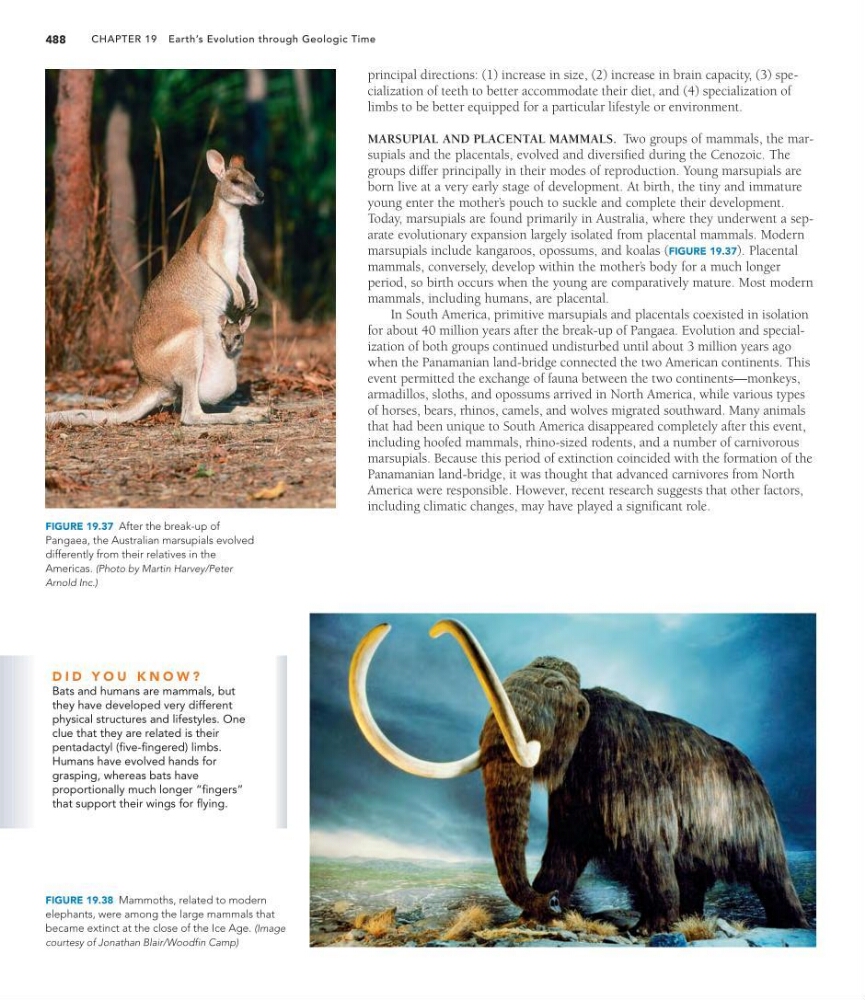
FIGURE 19.38 Mammoths, related to modern
elephants, were among the large mammals that
became extinct at the close of the Ice Age. (Image
courtesy of Jonathan Blair/Woodfin Camp)
principal directions: (1) increase in size, (2) increase in brain capacity, (3) specialization of teeth to better accommodate their diet, and (4) specialization of
limbs to be better equipped for a particular lifestyle or environment.
MARSUPIAL AND PLACENTAL MAMMALS. Two groups of mammals, the marsupials and the placentals, evolved and diversified during the Cenozoic. The
groups differ principally in their modes of reproduction. Young marsupials are
born live at a very early stage of development. At birth, the tiny and immature
young enter the mother’ s pouch to suckle and complete their development.
Today, marsupials are found primarily in Australia, where they underwent a separate evolutionary expansion largely isolated from placental mammals. Modern
marsupials include kangaroos, opossums, and koalas (FIGURE 19.37). Placental
mammals, conversely, develop within the mother’ s body for a much longer
period, so birth occurs when the young are comparatively mature. Most modern
mammals, including humans, are placental.
In South America, primitive marsupials and placentals coexisted in isolation
for about 40 million years after the break-up of Pangaea. Evolution and specialization of both groups continued undisturbed until about 3 million years ago
when the Panamanian land-bridge connected the two American continents. This
event permitted the exchange of fauna between the two continents—monkeys,
armadillos, sloths, and opossums arrived in North America, while various types
of horses, bears, rhinos, camels, and wolves migrated southward. Many animals
that had been unique to South America disappeared completely after this event,
including hoofed mammals, rhino-sized rodents, and a number of carnivorous
marsupials. Because this period of extinction coincided with the formation of the
Panamanian land-bridge, it was thought that advanced carnivores from North
America were responsible. However, recent research suggests that other factors,
including climatic changes, may have played a significant role.
D I D Y O U K N O W ?
Bats and humans are mammals, but
they have developed very different
physical structures and lifestyles. One
clue that they are related is their
pentadactyl (five-fingered) limbs.
Humans have evolved hands for
grasping, whereas bats have
proportionally much longer “fingers”
that support their wings for flying.
FIGURE 19.37 After the break-up of
Pangaea, the Australian marsupials evolved
differently from their relatives in the
Americas. (Photo by Martin Harvey/Peter
Arnold Inc.)
488
FIGURE 19.38 Mammoths, related to modern
elephants, were among the large mammals that
became extinct at the close of the Ice Age. (Image
courtesy of Jonathan Blair/Woodfin Camp)
principal directions: (1) increase in size, (2) increase in brain capacity, (3) specialization of teeth to better accommodate their diet, and (4) specialization of
limbs to be better equipped for a particular lifestyle or environment.
MARSUPIAL AND PLACENTAL MAMMALS. Two groups of mammals, the marsupials and the placentals, evolved and diversified during the Cenozoic. The
groups differ principally in their modes of reproduction. Young marsupials are
born live at a very early stage of development. At birth, the tiny and immature
young enter the mother’ s pouch to suckle and complete their development.
Today, marsupials are found primarily in Australia, where they underwent a separate evolutionary expansion largely isolated from placental mammals. Modern
marsupials include kangaroos, opossums, and koalas (FIGURE 19.37). Placental
mammals, conversely, develop within the mother’ s body for a much longer
period, so birth occurs when the young are comparatively mature. Most modern
mammals, including humans, are placental.
In South America, primitive marsupials and placentals coexisted in isolation
for about 40 million years after the break-up of Pangaea. Evolution and specialization of both groups continued undisturbed until about 3 million years ago
when the Panamanian land-bridge connected the two American continents. This
event permitted the exchange of fauna between the two continents—monkeys,
armadillos, sloths, and opossums arrived in North America, while various types
of horses, bears, rhinos, camels, and wolves migrated southward. Many animals
that had been unique to South America disappeared completely after this event,
including hoofed mammals, rhino-sized rodents, and a number of carnivorous
marsupials. Because this period of extinction coincided with the formation of the
Panamanian land-bridge, it was thought that advanced carnivores from North
America were responsible. However, recent research suggests that other factors,
including climatic changes, may have played a significant role.
D I D Y O U K N O W ?
Bats and humans are mammals, but
they have developed very different
physical structures and lifestyles. One
clue that they are related is their
pentadactyl (five-fingered) limbs.
Humans have evolved hands for
grasping, whereas bats have
proportionally much longer “fingers”
that support their wings for flying.
FIGURE 19.37 After the break-up of
Pangaea, the Australian marsupials evolved
differently from their relatives in the
Americas. (Photo by Martin Harvey/Peter
Arnold Inc.)