

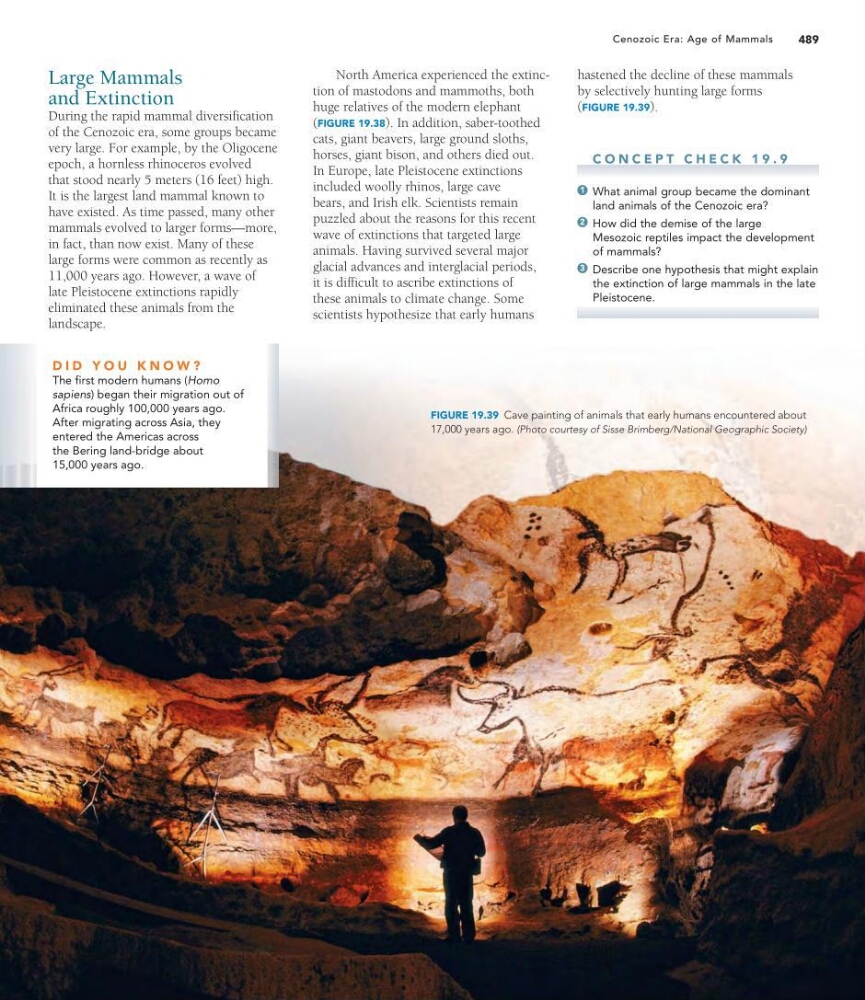
FIGURE 19.39 Cave painting of animals that early humans encountered about
17,000 years ago. (Photo courtesy of Sisse Brimberg/National Geographic Society)
489
Cenozoic Era: Age of Mammals
D I D Y O U K N O W ?
The first modern humans (Homo
sapiens) began their migration out of
Africa roughly 100,000 years ago.
After migrating across Asia, they
entered the Americas across
the Bering land-bridge about
15,000 years ago.
Large Mammals
and Extinction
During the rapid mammal diversification
of the Cenozoic era, some groups became
very large. For example, by the Oligocene
epoch, a hornless rhinoceros evolved
that stood nearly 5 meters (16 feet) high.
It is the largest land mammal known to
have existed. As time passed, many other
mammals evolved to larger forms—more,
in fact, than now exist. Many of these
large forms were common as recently as
11,000 years ago. However, a wave of
late Pleistocene extinctions rapidly
eliminated these animals from the
landscape.
North America experienced the extinction of mastodons and mammoths, both
huge relatives of the modern elephant
(FIGURE 19.38). In addition, saber-toothed
cats, giant beavers, large ground sloths,
horses, giant bison, and others died out.
In Europe, late Pleistocene extinctions
included woolly rhinos, large cave
bears, and Irish elk. Scientists remain
puzzled about the reasons for this recent
wave of extinctions that targeted large
animals. Having survived several major
glacial advances and interglacial periods,
it is difficult to ascribe extinctions of
these animals to climate change. Some
scientists hypothesize that early humans
hastened the decline of these mammals
by selectively hunting large forms
(FIGURE 19.39).
C O N C E P T C H E C K 1 9 . 9
What animal group became the dominant
land animals of the Cenozoic era?
How did the demise of the large
Mesozoic reptiles impact the development
of mammals?
Describe one hypothesis that might explain
the extinction of large mammals in the late
Pleistocene.
3
2
1
17,000 years ago. (Photo courtesy of Sisse Brimberg/National Geographic Society)
489
Cenozoic Era: Age of Mammals
D I D Y O U K N O W ?
The first modern humans (Homo
sapiens) began their migration out of
Africa roughly 100,000 years ago.
After migrating across Asia, they
entered the Americas across
the Bering land-bridge about
15,000 years ago.
Large Mammals
and Extinction
During the rapid mammal diversification
of the Cenozoic era, some groups became
very large. For example, by the Oligocene
epoch, a hornless rhinoceros evolved
that stood nearly 5 meters (16 feet) high.
It is the largest land mammal known to
have existed. As time passed, many other
mammals evolved to larger forms—more,
in fact, than now exist. Many of these
large forms were common as recently as
11,000 years ago. However, a wave of
late Pleistocene extinctions rapidly
eliminated these animals from the
landscape.
North America experienced the extinction of mastodons and mammoths, both
huge relatives of the modern elephant
(FIGURE 19.38). In addition, saber-toothed
cats, giant beavers, large ground sloths,
horses, giant bison, and others died out.
In Europe, late Pleistocene extinctions
included woolly rhinos, large cave
bears, and Irish elk. Scientists remain
puzzled about the reasons for this recent
wave of extinctions that targeted large
animals. Having survived several major
glacial advances and interglacial periods,
it is difficult to ascribe extinctions of
these animals to climate change. Some
scientists hypothesize that early humans
hastened the decline of these mammals
by selectively hunting large forms
(FIGURE 19.39).
C O N C E P T C H E C K 1 9 . 9
What animal group became the dominant
land animals of the Cenozoic era?
How did the demise of the large
Mesozoic reptiles impact the development
of mammals?
Describe one hypothesis that might explain
the extinction of large mammals in the late
Pleistocene.
3
2
1