

483
Mesozoic Era: Age of the Dinosaurs
ago and covered thousands of square
kilometers of the continents. (This period
of volcanism produced the Siberian Traps
located in northern Russia.) The release
of carbon dioxide would certainly have
enhanced greenhouse warming, and
the emissions of sulfur dioxide
probably resulted in copious amounts
of acid rain.
A group of researchers have
taken the global warming hypothesis
still further. Although they agree that
rapid greenhouse warming occurred, it
alone would not have destroyed most
plants because they are heat tolerant
and consume CO 2 in photosynthesis.
They contend, instead, that the trouble
began in the ocean rather than on land.
Most organisms, including humans,
use oxygen to metabolize food. However,
some forms of bacteria employ anaerobic
(without oxygen) metabolism. Under
normal conditions, oxygen from the
atmosphere is readily dissolved in
seawater and is then evenly distributed
to all depths by deep-water currents.
This “oxygen-rich” water relegates “oxygenhating” anaerobic bacteria to anoxic
(oxygen-free) environments found in deepwater sediments.
An intense period of greenhouse
warming caused by an extreme episode
of volcanism would have heated the
ocean surface, thereby significantly
reducing the amount of oxygen absorbed
by seawater (FIGURE 19.29). This
condition favors deep-sea anaerobic
bacteria, which generate toxic hydrogen
sulfide as a waste gas. As these organisms
proliferated, the amount of hydrogen
sulfide dissolved in seawater would have
steadily increased. Eventually, the concentration of hydrogen sulfide would reach a
critical threshold and release large toxic
bubbles into the atmosphere. On land,
hydrogen sulfide is lethal to both plants
and animals, but it is most destructive to
oxygen-breathing marine life.
How plausible is this scenario?
Remember that these ideas represent a
hypothesis, a tentative explanation regarding
a particular set of observations. Additional
research about this and other hypotheses
that relate to the Permian extinction
continues.
C O N C E P T C H E C K 1 9 . 7
What is the Cambrian explosion?
What animal group was dominant in
Cambrian seas?
What did plants have to overcome to move
onto land?
What group of animals is thought to
have left the ocean to become the first
amphibians?
Why are amphibians not considered
“true” land animals?
5
4
3
2
1
Mesozoic Era: Age
of the Dinosaurs
As the Mesozoic era dawned, its lifeforms were the survivors of the great
Permian extinction. These organisms
diversified in many ways to fill the
biological voids created at the close of
the Paleozoic. On land, conditions
favored those that could adapt to drier
climates. Among plants, gymnosperms
were one such group. Unlike the first
plants to invade the land, seed-bearing
gymnosperms did not depend on freestanding water for fertilization.
Consequently, these plants were
not restricted to a life near the
water’ s edge.
The gymnosperms quickly became
the dominant trees of the Mesozoic.
They included: cycads that resembled
a large pineapple plant; ginkgoes that
had fan-shaped leaves, much like their
modern relatives; and the largest
plants, the conifers, whose modern
descendants include the pines, firs,
and junipers. The best-known fossil
occurrence of these ancient trees is in
northern Arizona’ s Petrified Forest
National Park. Here, huge petrified
logs lie exposed at the surface, having
been weathered from rocks of the Triassic Chinle Formation (FIGURE 19.30).
Region of
Region of
dissolved oxygen
dissolved oxygen
Volcanism releases
greenhouse gases
into the atmosphere
Rapid global
warming reduces
the amount of O 2
dissolved in seawater
H 2 S
upwelling upwelling
H 2 S
upwelling
Region of
dissolved oxygen
Anaerobic
bacteria
flourish
Hydrogen sulfide
(H 2 S) gas kills
animals and plants
H 2 S destroys
ozone layer
Anaerobic
bacteria
flourish
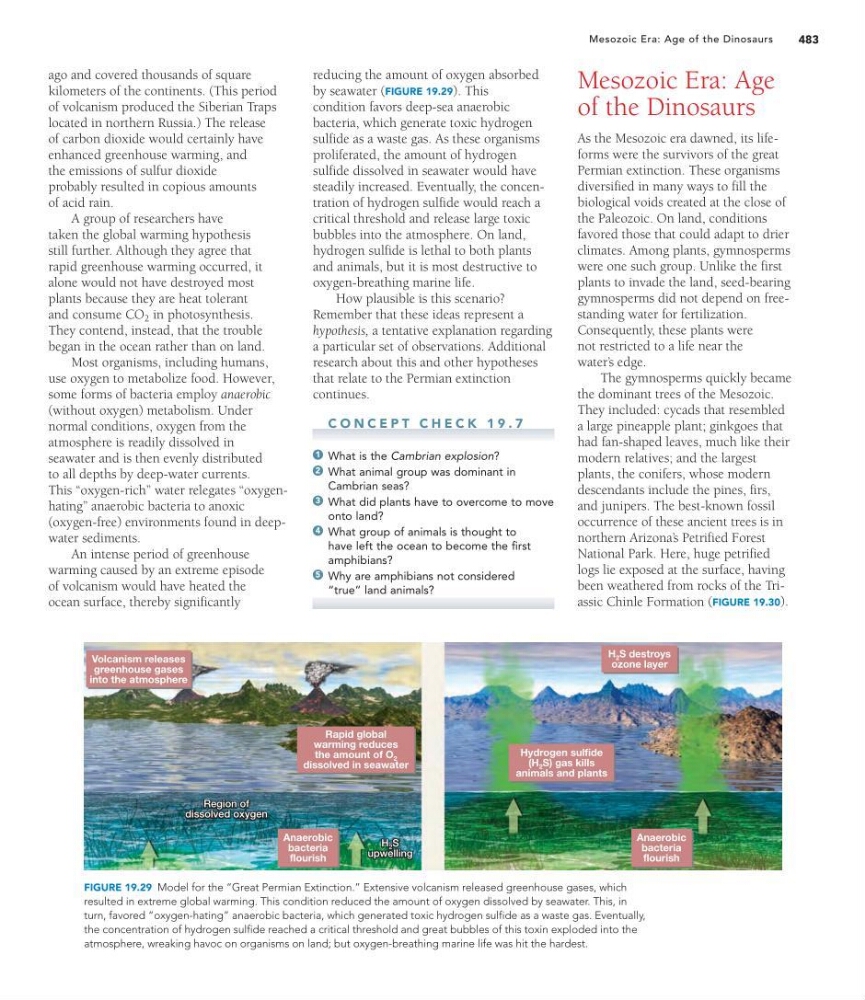
FIGURE 19.29 Model for the “Great Permian Extinction.” Extensive volcanism released greenhouse gases, which
resulted in extreme global warming. This condition reduced the amount of oxygen dissolved by seawater. This, in
turn, favored “oxygen-hating” anaerobic bacteria, which generated toxic hydrogen sulfide as a waste gas. Eventually,
the concentration of hydrogen sulfide reached a critical threshold and great bubbles of this toxin exploded into the
atmosphere, wreaking havoc on organisms on land; but oxygen-breathing marine life was hit the hardest.
Mesozoic Era: Age of the Dinosaurs
ago and covered thousands of square
kilometers of the continents. (This period
of volcanism produced the Siberian Traps
located in northern Russia.) The release
of carbon dioxide would certainly have
enhanced greenhouse warming, and
the emissions of sulfur dioxide
probably resulted in copious amounts
of acid rain.
A group of researchers have
taken the global warming hypothesis
still further. Although they agree that
rapid greenhouse warming occurred, it
alone would not have destroyed most
plants because they are heat tolerant
and consume CO 2 in photosynthesis.
They contend, instead, that the trouble
began in the ocean rather than on land.
Most organisms, including humans,
use oxygen to metabolize food. However,
some forms of bacteria employ anaerobic
(without oxygen) metabolism. Under
normal conditions, oxygen from the
atmosphere is readily dissolved in
seawater and is then evenly distributed
to all depths by deep-water currents.
This “oxygen-rich” water relegates “oxygenhating” anaerobic bacteria to anoxic
(oxygen-free) environments found in deepwater sediments.
An intense period of greenhouse
warming caused by an extreme episode
of volcanism would have heated the
ocean surface, thereby significantly
reducing the amount of oxygen absorbed
by seawater (FIGURE 19.29). This
condition favors deep-sea anaerobic
bacteria, which generate toxic hydrogen
sulfide as a waste gas. As these organisms
proliferated, the amount of hydrogen
sulfide dissolved in seawater would have
steadily increased. Eventually, the concentration of hydrogen sulfide would reach a
critical threshold and release large toxic
bubbles into the atmosphere. On land,
hydrogen sulfide is lethal to both plants
and animals, but it is most destructive to
oxygen-breathing marine life.
How plausible is this scenario?
Remember that these ideas represent a
hypothesis, a tentative explanation regarding
a particular set of observations. Additional
research about this and other hypotheses
that relate to the Permian extinction
continues.
C O N C E P T C H E C K 1 9 . 7
What is the Cambrian explosion?
What animal group was dominant in
Cambrian seas?
What did plants have to overcome to move
onto land?
What group of animals is thought to
have left the ocean to become the first
amphibians?
Why are amphibians not considered
“true” land animals?
5
4
3
2
1
Mesozoic Era: Age
of the Dinosaurs
As the Mesozoic era dawned, its lifeforms were the survivors of the great
Permian extinction. These organisms
diversified in many ways to fill the
biological voids created at the close of
the Paleozoic. On land, conditions
favored those that could adapt to drier
climates. Among plants, gymnosperms
were one such group. Unlike the first
plants to invade the land, seed-bearing
gymnosperms did not depend on freestanding water for fertilization.
Consequently, these plants were
not restricted to a life near the
water’ s edge.
The gymnosperms quickly became
the dominant trees of the Mesozoic.
They included: cycads that resembled
a large pineapple plant; ginkgoes that
had fan-shaped leaves, much like their
modern relatives; and the largest
plants, the conifers, whose modern
descendants include the pines, firs,
and junipers. The best-known fossil
occurrence of these ancient trees is in
northern Arizona’ s Petrified Forest
National Park. Here, huge petrified
logs lie exposed at the surface, having
been weathered from rocks of the Triassic Chinle Formation (FIGURE 19.30).
Region of
Region of
dissolved oxygen
dissolved oxygen
Volcanism releases
greenhouse gases
into the atmosphere
Rapid global
warming reduces
the amount of O 2
dissolved in seawater
H 2 S
upwelling upwelling
H 2 S
upwelling
Region of
dissolved oxygen
Anaerobic
bacteria
flourish
Hydrogen sulfide
(H 2 S) gas kills
animals and plants
H 2 S destroys
ozone layer
Anaerobic
bacteria
flourish
FIGURE 19.29 Model for the “Great Permian Extinction.” Extensive volcanism released greenhouse gases, which
resulted in extreme global warming. This condition reduced the amount of oxygen dissolved by seawater. This, in
turn, favored “oxygen-hating” anaerobic bacteria, which generated toxic hydrogen sulfide as a waste gas. Eventually,
the concentration of hydrogen sulfide reached a critical threshold and great bubbles of this toxin exploded into the
atmosphere, wreaking havoc on organisms on land; but oxygen-breathing marine life was hit the hardest.