

CHAPTER 19 Earth’s Evolution through Geologic Time
480
D I D Y O U K N O W ?
Although the possession of hard parts
greatly enhances the likelihood of
organisms being preserved as a fossil,
there have been rare occasions when
large numbers of soft-bodied
organisms were preserved. One of the
best examples is the Burgess Shale,
located in the Canadian Rockies, where
more than 100,000 unique fossils have
been uncovered.
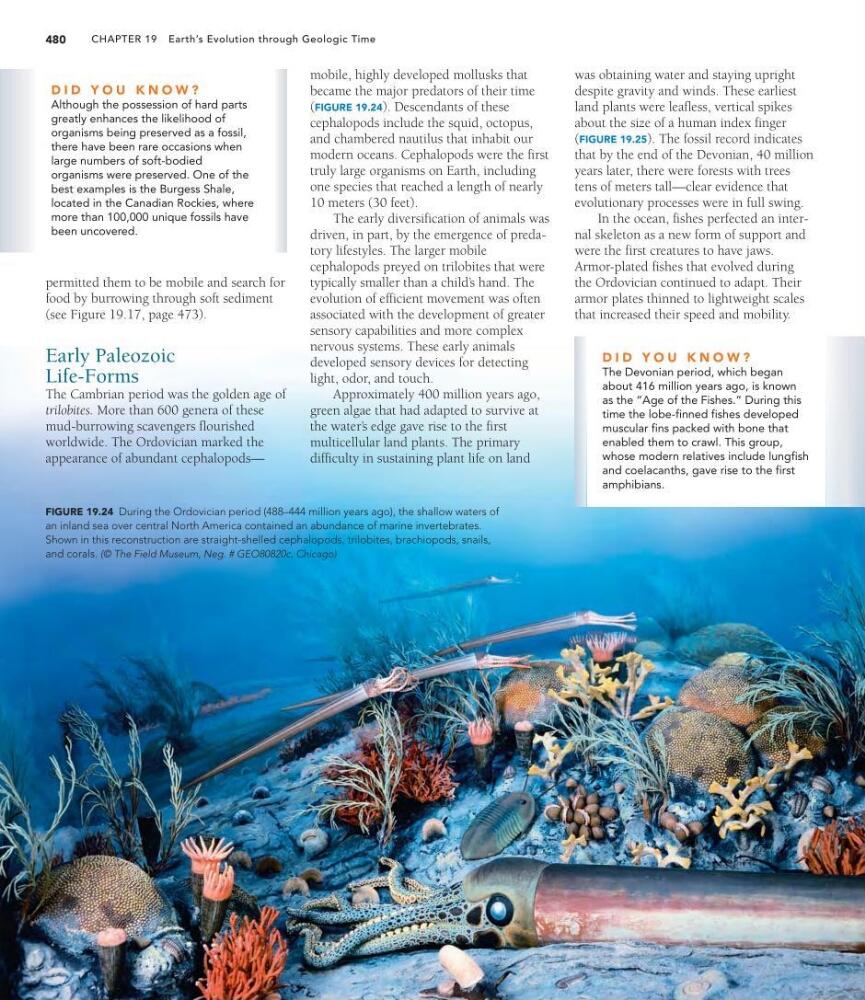
FIGURE 19.24 During the Ordovician period (488–444 million years ago), the shallow waters of
an inland sea over central North America contained an abundance of marine invertebrates.
Shown in this reconstruction are straight-shelled cephalopods, trilobites, brachiopods, snails,
and corals. (© The Field Museum, Neg. # GEO80820c, Chicago)
permitted them to be mobile and search for
food by burrowing through soft sediment
(see Figure 19.17, page 473).
Early Paleozoic
Life-Forms
The Cambrian period was the golden age of
trilobites. More than 600 genera of these
mud-burrowing scavengers flourished
worldwide. The Ordovician marked the
appearance of abundant cephalopods—
mobile, highly developed mollusks that
became the major predators of their time
(FIGURE 19.24). Descendants of these
cephalopods include the squid, octopus,
and chambered nautilus that inhabit our
modern oceans. Cephalopods were the first
truly large organisms on Earth, including
one species that reached a length of nearly
10 meters (30 feet).
The early diversification of animals was
driven, in part, by the emergence of predatory lifestyles. The larger mobile
cephalopods preyed on trilobites that were
typically smaller than a child’ s hand. The
evolution of efficient movement was often
associated with the development of greater
sensory capabilities and more complex
nervous systems. These early animals
developed sensory devices for detecting
light, odor, and touch.
Approximately 400 million years ago,
green algae that had adapted to survive at
the water’ s edge gave rise to the first
multicellular land plants. The primary
difficulty in sustaining plant life on land
D I D Y O U K N O W ?
The Devonian period, which began
about 416 million years ago, is known
as the “Age of the Fishes.” During this
time the lobe-finned fishes developed
muscular fins packed with bone that
enabled them to crawl. This group,
whose modern relatives include lungfish
and coelacanths, gave rise to the first
amphibians.
was obtaining water and staying upright
despite gravity and winds. These earliest
land plants were leafless, vertical spikes
about the size of a human index finger
(FIGURE 19.25). The fossil record indicates
that by the end of the Devonian, 40 million
years later, there were forests with trees
tens of meters tall—clear evidence that
evolutionary processes were in full swing.
In the ocean, fishes perfected an internal skeleton as a new form of support and
were the first creatures to have jaws.
Armor-plated fishes that evolved during
the Ordovician continued to adapt. Their
armor plates thinned to lightweight scales
that increased their speed and mobility.
480
D I D Y O U K N O W ?
Although the possession of hard parts
greatly enhances the likelihood of
organisms being preserved as a fossil,
there have been rare occasions when
large numbers of soft-bodied
organisms were preserved. One of the
best examples is the Burgess Shale,
located in the Canadian Rockies, where
more than 100,000 unique fossils have
been uncovered.
FIGURE 19.24 During the Ordovician period (488–444 million years ago), the shallow waters of
an inland sea over central North America contained an abundance of marine invertebrates.
Shown in this reconstruction are straight-shelled cephalopods, trilobites, brachiopods, snails,
and corals. (© The Field Museum, Neg. # GEO80820c, Chicago)
permitted them to be mobile and search for
food by burrowing through soft sediment
(see Figure 19.17, page 473).
Early Paleozoic
Life-Forms
The Cambrian period was the golden age of
trilobites. More than 600 genera of these
mud-burrowing scavengers flourished
worldwide. The Ordovician marked the
appearance of abundant cephalopods—
mobile, highly developed mollusks that
became the major predators of their time
(FIGURE 19.24). Descendants of these
cephalopods include the squid, octopus,
and chambered nautilus that inhabit our
modern oceans. Cephalopods were the first
truly large organisms on Earth, including
one species that reached a length of nearly
10 meters (30 feet).
The early diversification of animals was
driven, in part, by the emergence of predatory lifestyles. The larger mobile
cephalopods preyed on trilobites that were
typically smaller than a child’ s hand. The
evolution of efficient movement was often
associated with the development of greater
sensory capabilities and more complex
nervous systems. These early animals
developed sensory devices for detecting
light, odor, and touch.
Approximately 400 million years ago,
green algae that had adapted to survive at
the water’ s edge gave rise to the first
multicellular land plants. The primary
difficulty in sustaining plant life on land
D I D Y O U K N O W ?
The Devonian period, which began
about 416 million years ago, is known
as the “Age of the Fishes.” During this
time the lobe-finned fishes developed
muscular fins packed with bone that
enabled them to crawl. This group,
whose modern relatives include lungfish
and coelacanths, gave rise to the first
amphibians.
was obtaining water and staying upright
despite gravity and winds. These earliest
land plants were leafless, vertical spikes
about the size of a human index finger
(FIGURE 19.25). The fossil record indicates
that by the end of the Devonian, 40 million
years later, there were forests with trees
tens of meters tall—clear evidence that
evolutionary processes were in full swing.
In the ocean, fishes perfected an internal skeleton as a new form of support and
were the first creatures to have jaws.
Armor-plated fishes that evolved during
the Ordovician continued to adapt. Their
armor plates thinned to lightweight scales
that increased their speed and mobility.