

475
Geologic History of the Phanerozoic: The Formation of Earth’s Modern Continents
well as the Atlantic and Gulf coastal
regions. This led to the formation of “coal
swamps” similar to those of the Paleozoic
era. Today, the Cretaceous coal deposits in
the western United States and Canada are
economically important. For example, on
the Crow Native American reservation in
Montana, there are nearly 20 billion tons of
high-quality, Cretaceous-age coal.
Another major event of the Mesozoic
era was the break-up of Pangaea. About
165 million years ago a rift developed
between what is now North America and
western Africa, which marked the birth of
the Atlantic Ocean. As Pangaea gradually
broke apart, the westward-moving North
American plate began to override the
Pacific basin. This tectonic event triggered
a continuous wave of deformation that
moved inland along the entire western
margin of North America. By Jurassic times,
subduction of the Farallon plate had begun
to produce the chaotic mixture of rocks
that exist today in the Coast Ranges of
California. Further inland, igneous
activity was widespread, and for more than
100 million years volcanism was rampant
as huge masses of magma rose within a few
miles of Earth’ s surface. The remnants of
this activity include the granitic plutons of
the Sierra Nevada, as well as the Idaho
batholith, and British Columbia’ s Coast
Range batholith.
Tectonic activity initiated in the
Jurassic continued throughout the Cretaceous. Compressional forces moved huge
rock units in a shingle-like fashion toward
the east. Across much of North America’ s
western margin, older rocks were thrust
eastward over younger strata, for distances
exceeding 150 kilometers (90 miles).
Ultimately, this activity was responsible for
creating the vast Northern Rockies that
extend from Wyoming to Alaska.
Toward the end of the Mesozoic, the
southern portions of the Rocky Mountains
developed. This mountain-building
event, called the Laramide Orogeny,
occurred when large blocks of deeply
buried Precambrian rocks were lifted nearly
vertically along steeply dipping faults,
upwarping the overlying younger sedimentary strata. The mountain ranges produced
by the Laramide Orogeny include
Colorado’ s Front Range, the Sangre de
Cristo of New Mexico and Colorado, and
the Bighorns of Wyoming.
Cenozoic History
The Cenozoic era, or “era of recent life,”
encompasses the last 65.5 million years of
Earth history. It was during this span that
the physical landscapes and life-forms of
our modern world came into existence. The
Cenozoic era represents a considerably
smaller fraction of geologic time than either
the Paleozoic or the Mesozoic. Nevertheless, much more is known about this time
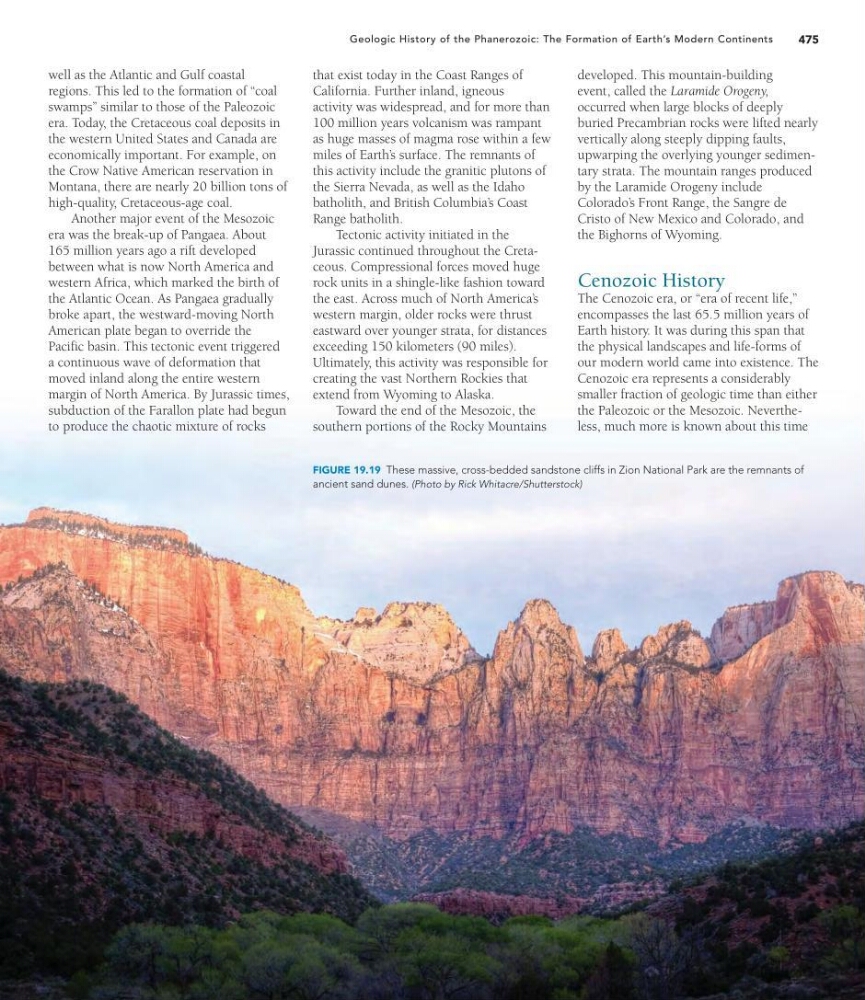
FIGURE 19.19 These massive, cross-bedded sandstone cliffs in Zion National Park are the remnants of
ancient sand dunes. (Photo by Rick Whitacre/Shutterstock)
Geologic History of the Phanerozoic: The Formation of Earth’s Modern Continents
well as the Atlantic and Gulf coastal
regions. This led to the formation of “coal
swamps” similar to those of the Paleozoic
era. Today, the Cretaceous coal deposits in
the western United States and Canada are
economically important. For example, on
the Crow Native American reservation in
Montana, there are nearly 20 billion tons of
high-quality, Cretaceous-age coal.
Another major event of the Mesozoic
era was the break-up of Pangaea. About
165 million years ago a rift developed
between what is now North America and
western Africa, which marked the birth of
the Atlantic Ocean. As Pangaea gradually
broke apart, the westward-moving North
American plate began to override the
Pacific basin. This tectonic event triggered
a continuous wave of deformation that
moved inland along the entire western
margin of North America. By Jurassic times,
subduction of the Farallon plate had begun
to produce the chaotic mixture of rocks
that exist today in the Coast Ranges of
California. Further inland, igneous
activity was widespread, and for more than
100 million years volcanism was rampant
as huge masses of magma rose within a few
miles of Earth’ s surface. The remnants of
this activity include the granitic plutons of
the Sierra Nevada, as well as the Idaho
batholith, and British Columbia’ s Coast
Range batholith.
Tectonic activity initiated in the
Jurassic continued throughout the Cretaceous. Compressional forces moved huge
rock units in a shingle-like fashion toward
the east. Across much of North America’ s
western margin, older rocks were thrust
eastward over younger strata, for distances
exceeding 150 kilometers (90 miles).
Ultimately, this activity was responsible for
creating the vast Northern Rockies that
extend from Wyoming to Alaska.
Toward the end of the Mesozoic, the
southern portions of the Rocky Mountains
developed. This mountain-building
event, called the Laramide Orogeny,
occurred when large blocks of deeply
buried Precambrian rocks were lifted nearly
vertically along steeply dipping faults,
upwarping the overlying younger sedimentary strata. The mountain ranges produced
by the Laramide Orogeny include
Colorado’ s Front Range, the Sangre de
Cristo of New Mexico and Colorado, and
the Bighorns of Wyoming.
Cenozoic History
The Cenozoic era, or “era of recent life,”
encompasses the last 65.5 million years of
Earth history. It was during this span that
the physical landscapes and life-forms of
our modern world came into existence. The
Cenozoic era represents a considerably
smaller fraction of geologic time than either
the Paleozoic or the Mesozoic. Nevertheless, much more is known about this time
FIGURE 19.19 These massive, cross-bedded sandstone cliffs in Zion National Park are the remnants of
ancient sand dunes. (Photo by Rick Whitacre/Shutterstock)