

CHAPTER 19 Earth’s Evolution through Geologic Time
474
North
America
Africa
South
America
Siberia
Northern
Europe
A. Cambrian (500 Ma)
B. Silurian (425 Ma)
C. Mississippian (340 Ma)
P A
N
G
A
E
A
D. Triassic (250 Ma)
North
America
Eurasia
North
America
North
America
Africa
South
America
G
O N D W A N A
Northern
Europe
Siberia
Northern
Europe
Siberia
G
O N D W A N A
G
O N D W A N A
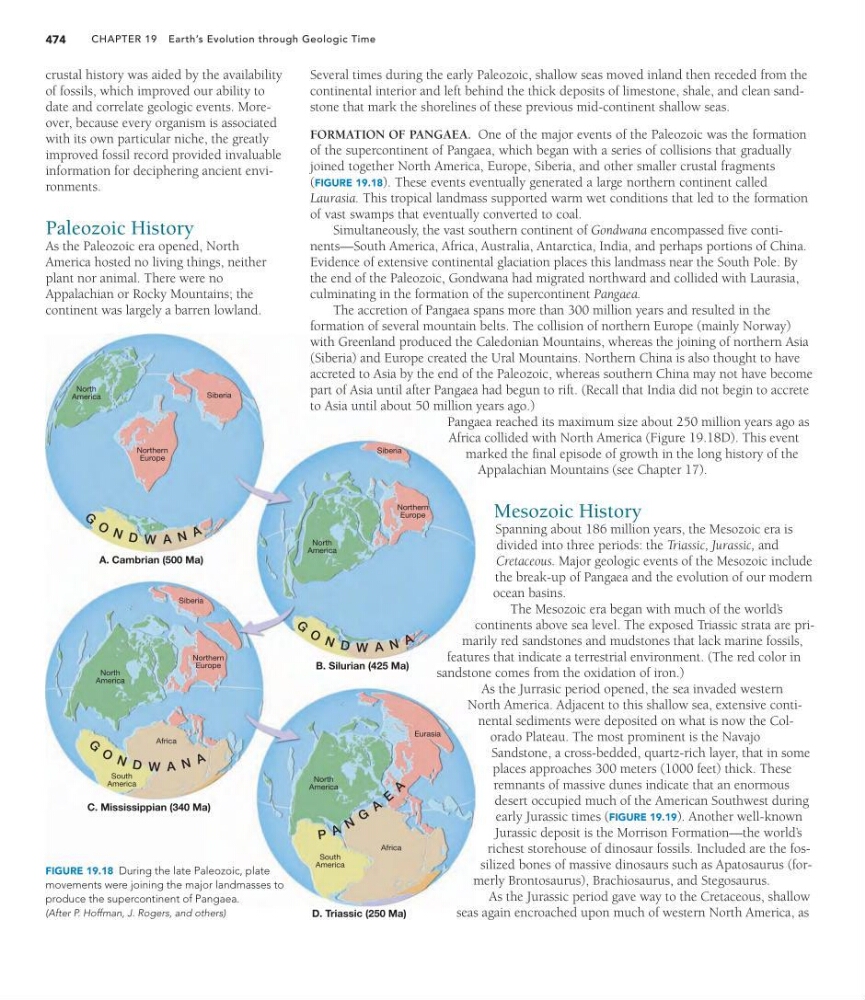
FIGURE 19.18 During the late Paleozoic, plate
movements were joining the major landmasses to
produce the supercontinent of Pangaea.
(After P. Hoffman, J. Rogers, and others)
crustal history was aided by the availability
of fossils, which improved our ability to
date and correlate geologic events. Moreover, because every organism is associated
with its own particular niche, the greatly
improved fossil record provided invaluable
information for deciphering ancient environments.
Paleozoic History
As the Paleozoic era opened, North
America hosted no living things, neither
plant nor animal. There were no
Appalachian or Rocky Mountains; the
continent was largely a barren lowland.
Several times during the early Paleozoic, shallow seas moved inland then receded from the
continental interior and left behind the thick deposits of limestone, shale, and clean sandstone that mark the shorelines of these previous mid-continent shallow seas.
FORMATION OF PANGAEA. One of the major events of the Paleozoic was the formation
of the supercontinent of Pangaea, which began with a series of collisions that gradually
joined together North America, Europe, Siberia, and other smaller crustal fragments
(FIGURE 19.18). These events eventually generated a large northern continent called
Laurasia. This tropical landmass supported warm wet conditions that led to the formation
of vast swamps that eventually converted to coal.
Simultaneously, the vast southern continent of Gondwana encompassed five continents—South America, Africa, Australia, Antarctica, India, and perhaps portions of China.
Evidence of extensive continental glaciation places this landmass near the South Pole. By
the end of the Paleozoic, Gondwana had migrated northward and collided with Laurasia,
culminating in the formation of the supercontinent Pangaea.
The accretion of Pangaea spans more than 300 million years and resulted in the
formation of several mountain belts. The collision of northern Europe (mainly Norway)
with Greenland produced the Caledonian Mountains, whereas the joining of northern Asia
(Siberia) and Europe created the Ural Mountains. Northern China is also thought to have
accreted to Asia by the end of the Paleozoic, whereas southern China may not have become
part of Asia until after Pangaea had begun to rift. (Recall that India did not begin to accrete
to Asia until about 50 million years ago.)
Pangaea reached its maximum size about 250 million years ago as
Africa collided with North America (Figure 19.18D). This event
marked the final episode of growth in the long history of the
Appalachian Mountains (see Chapter 17).
Mesozoic History
Spanning about 186 million years, the Mesozoic era is
divided into three periods: the Triassic, Jurassic, and
Cretaceous. Major geologic events of the Mesozoic include
the break-up of Pangaea and the evolution of our modern
ocean basins.
The Mesozoic era began with much of the world’ s
continents above sea level. The exposed Triassic strata are primarily red sandstones and mudstones that lack marine fossils,
features that indicate a terrestrial environment. (The red color in
sandstone comes from the oxidation of iron.)
As the Jurrasic period opened, the sea invaded western
North America. Adjacent to this shallow sea, extensive continental sediments were deposited on what is now the Colorado Plateau. The most prominent is the Navajo
Sandstone, a cross-bedded, quartz-rich layer, that in some
places approaches 300 meters (1000 feet) thick. These
remnants of massive dunes indicate that an enormous
desert occupied much of the American Southwest during
early Jurassic times (FIGURE 19.19). Another well-known
Jurassic deposit is the Morrison Formation—the world’ s
richest storehouse of dinosaur fossils. Included are the fossilized bones of massive dinosaurs such as Apatosaurus (formerly Brontosaurus), Brachiosaurus, and Stegosaurus.
As the Jurassic period gave way to the Cretaceous, shallow
seas again encroached upon much of western North America, as
474
North
America
Africa
South
America
Siberia
Northern
Europe
A. Cambrian (500 Ma)
B. Silurian (425 Ma)
C. Mississippian (340 Ma)
P A
N
G
A
E
A
D. Triassic (250 Ma)
North
America
Eurasia
North
America
North
America
Africa
South
America
G
O N D W A N A
Northern
Europe
Siberia
Northern
Europe
Siberia
G
O N D W A N A
G
O N D W A N A
FIGURE 19.18 During the late Paleozoic, plate
movements were joining the major landmasses to
produce the supercontinent of Pangaea.
(After P. Hoffman, J. Rogers, and others)
crustal history was aided by the availability
of fossils, which improved our ability to
date and correlate geologic events. Moreover, because every organism is associated
with its own particular niche, the greatly
improved fossil record provided invaluable
information for deciphering ancient environments.
Paleozoic History
As the Paleozoic era opened, North
America hosted no living things, neither
plant nor animal. There were no
Appalachian or Rocky Mountains; the
continent was largely a barren lowland.
Several times during the early Paleozoic, shallow seas moved inland then receded from the
continental interior and left behind the thick deposits of limestone, shale, and clean sandstone that mark the shorelines of these previous mid-continent shallow seas.
FORMATION OF PANGAEA. One of the major events of the Paleozoic was the formation
of the supercontinent of Pangaea, which began with a series of collisions that gradually
joined together North America, Europe, Siberia, and other smaller crustal fragments
(FIGURE 19.18). These events eventually generated a large northern continent called
Laurasia. This tropical landmass supported warm wet conditions that led to the formation
of vast swamps that eventually converted to coal.
Simultaneously, the vast southern continent of Gondwana encompassed five continents—South America, Africa, Australia, Antarctica, India, and perhaps portions of China.
Evidence of extensive continental glaciation places this landmass near the South Pole. By
the end of the Paleozoic, Gondwana had migrated northward and collided with Laurasia,
culminating in the formation of the supercontinent Pangaea.
The accretion of Pangaea spans more than 300 million years and resulted in the
formation of several mountain belts. The collision of northern Europe (mainly Norway)
with Greenland produced the Caledonian Mountains, whereas the joining of northern Asia
(Siberia) and Europe created the Ural Mountains. Northern China is also thought to have
accreted to Asia by the end of the Paleozoic, whereas southern China may not have become
part of Asia until after Pangaea had begun to rift. (Recall that India did not begin to accrete
to Asia until about 50 million years ago.)
Pangaea reached its maximum size about 250 million years ago as
Africa collided with North America (Figure 19.18D). This event
marked the final episode of growth in the long history of the
Appalachian Mountains (see Chapter 17).
Mesozoic History
Spanning about 186 million years, the Mesozoic era is
divided into three periods: the Triassic, Jurassic, and
Cretaceous. Major geologic events of the Mesozoic include
the break-up of Pangaea and the evolution of our modern
ocean basins.
The Mesozoic era began with much of the world’ s
continents above sea level. The exposed Triassic strata are primarily red sandstones and mudstones that lack marine fossils,
features that indicate a terrestrial environment. (The red color in
sandstone comes from the oxidation of iron.)
As the Jurrasic period opened, the sea invaded western
North America. Adjacent to this shallow sea, extensive continental sediments were deposited on what is now the Colorado Plateau. The most prominent is the Navajo
Sandstone, a cross-bedded, quartz-rich layer, that in some
places approaches 300 meters (1000 feet) thick. These
remnants of massive dunes indicate that an enormous
desert occupied much of the American Southwest during
early Jurassic times (FIGURE 19.19). Another well-known
Jurassic deposit is the Morrison Formation—the world’ s
richest storehouse of dinosaur fossils. Included are the fossilized bones of massive dinosaurs such as Apatosaurus (formerly Brontosaurus), Brachiosaurus, and Stegosaurus.
As the Jurassic period gave way to the Cretaceous, shallow
seas again encroached upon much of western North America, as