

trilobite
473
Geologic History of the Phanerozoic: The Formation of Earth’s Modern Continents
heavily forested western slopes of the Sierra Nevada compared to the dry climate of
the Great Basin desert that lies directly downwind (see Figure 12.4, p. 291)
SUPERCONTINENTS AND SEA LEVEL CHANGES. Significant and numerous sea
level changes have been documented in geologic history, many of which appear
related to the assembly and dispersal of supercontinents. If sea level rises, shallow seas advance onto the continents. Evidence for periods when the seas
advanced onto the continents include thick sequences of ancient marine
sedimentary rocks that blanket large areas of modern landmasses—
including much of the eastern two thirds of the United States.
The supercontinent cycle and sea level changes are directly related to
rates of seafloor spreading. When the rate of spreading is rapid, as it is
along the East Pacific Rise today, the production of warm oceanic crust is
also high. Because warm oceanic crust is less dense (takes up more
space) than cold crust, fast spreading ridges occupy more volume in the
ocean basins than do slow spreading centers. (Think of getting into a tub
filled with water.) As a result, when the rates of seafloor spreading
increase, sea level rises. This, in turn, causes shallow seas to advance
onto the low-lying portions of the continents.
C O N C E P T C H E C K 1 9 . 4
Explain why Precambrian history is more difficult to decipher than more
recent geological history.
Briefly describe how cratons come into being.
What is the supercontinent cycle?
How can the movement of continents trigger climate change?
4
3
2
1
South
America
Africa
Antarctica
A. 50 million years ago
B. Present
E q u a to r
E q u a to r
Antarctica
South
America
Africa
Warm curre nt
W
a r m
c u r r e n t
Warm c u r r e n
t
C ool cur
re
n
t
C o
o l c u r r e n t
C
oo
l
curre
nt
C o o l c ur rent
We st Wind Drif t
W a r m c u r r e
n t
FIGURE 19.16 Comparison of the oceanic circulation pattern 50 million years ago with that of
the present. When South America separated from Antarctica, the West Wind Drift developed,
which effectively isolated the entire Antarctic coast from the warm, poleward-directed currents
in the southern oceans. This led to the eventual covering of much of Antarctica with glacial ice.
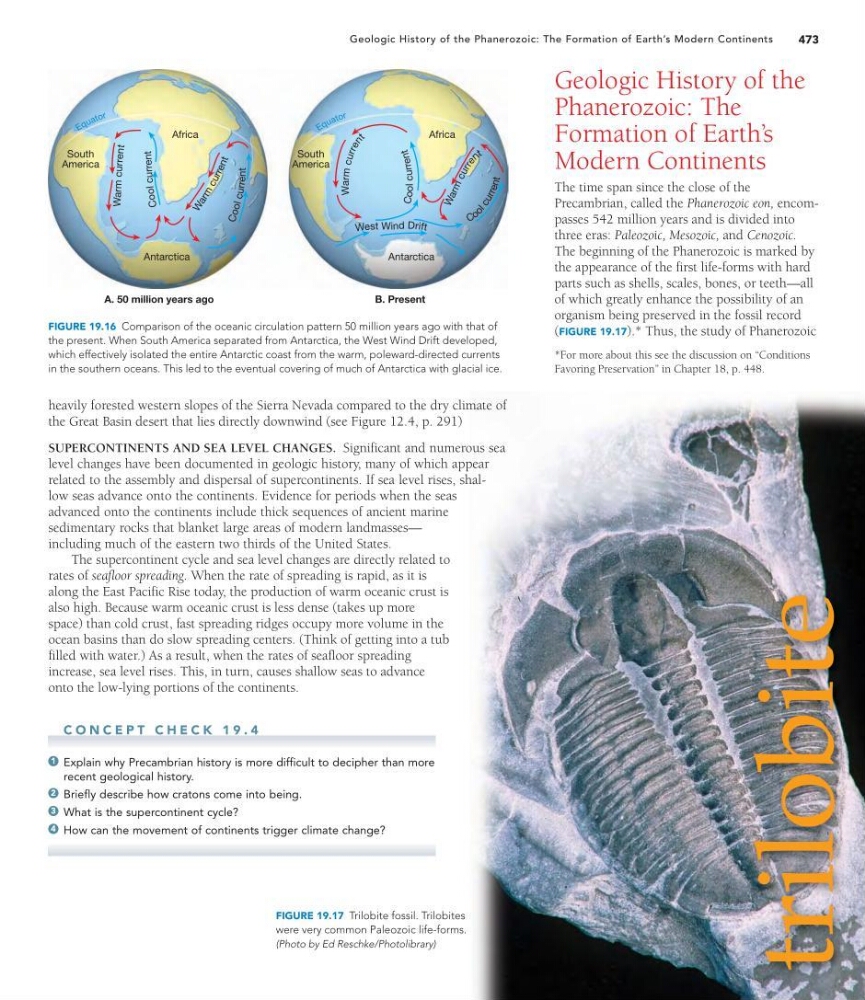
FIGURE 19.17 Trilobite fossil. Trilobites
were very common Paleozoic life-forms.
(Photo by Ed Reschke/Photolibrary)
*For more about this see the discussion on “Conditions
Favoring Preservation” in Chapter 18, p. 448.
Geologic History of the
Phanerozoic: The
Formation of Earth’ s
Modern Continents
The time span since the close of the
Precambrian, called the Phanerozoic eon, encompasses 542 million years and is divided into
three eras: Paleozoic, Mesozoic, and Cenozoic.
The beginning of the Phanerozoic is marked by
the appearance of the first life-forms with hard
parts such as shells, scales, bones, or teeth—all
of which greatly enhance the possibility of an
organism being preserved in the fossil record
(FIGURE 19.17).* Thus, the study of Phanerozoic
473
Geologic History of the Phanerozoic: The Formation of Earth’s Modern Continents
heavily forested western slopes of the Sierra Nevada compared to the dry climate of
the Great Basin desert that lies directly downwind (see Figure 12.4, p. 291)
SUPERCONTINENTS AND SEA LEVEL CHANGES. Significant and numerous sea
level changes have been documented in geologic history, many of which appear
related to the assembly and dispersal of supercontinents. If sea level rises, shallow seas advance onto the continents. Evidence for periods when the seas
advanced onto the continents include thick sequences of ancient marine
sedimentary rocks that blanket large areas of modern landmasses—
including much of the eastern two thirds of the United States.
The supercontinent cycle and sea level changes are directly related to
rates of seafloor spreading. When the rate of spreading is rapid, as it is
along the East Pacific Rise today, the production of warm oceanic crust is
also high. Because warm oceanic crust is less dense (takes up more
space) than cold crust, fast spreading ridges occupy more volume in the
ocean basins than do slow spreading centers. (Think of getting into a tub
filled with water.) As a result, when the rates of seafloor spreading
increase, sea level rises. This, in turn, causes shallow seas to advance
onto the low-lying portions of the continents.
C O N C E P T C H E C K 1 9 . 4
Explain why Precambrian history is more difficult to decipher than more
recent geological history.
Briefly describe how cratons come into being.
What is the supercontinent cycle?
How can the movement of continents trigger climate change?
4
3
2
1
South
America
Africa
Antarctica
A. 50 million years ago
B. Present
E q u a to r
E q u a to r
Antarctica
South
America
Africa
Warm curre nt
W
a r m
c u r r e n t
Warm c u r r e n
t
C ool cur
re
n
t
C o
o l c u r r e n t
C
oo
l
curre
nt
C o o l c ur rent
We st Wind Drif t
W a r m c u r r e
n t
FIGURE 19.16 Comparison of the oceanic circulation pattern 50 million years ago with that of
the present. When South America separated from Antarctica, the West Wind Drift developed,
which effectively isolated the entire Antarctic coast from the warm, poleward-directed currents
in the southern oceans. This led to the eventual covering of much of Antarctica with glacial ice.
FIGURE 19.17 Trilobite fossil. Trilobites
were very common Paleozoic life-forms.
(Photo by Ed Reschke/Photolibrary)
*For more about this see the discussion on “Conditions
Favoring Preservation” in Chapter 18, p. 448.
Geologic History of the
Phanerozoic: The
Formation of Earth’ s
Modern Continents
The time span since the close of the
Precambrian, called the Phanerozoic eon, encompasses 542 million years and is divided into
three eras: Paleozoic, Mesozoic, and Cenozoic.
The beginning of the Phanerozoic is marked by
the appearance of the first life-forms with hard
parts such as shells, scales, bones, or teeth—all
of which greatly enhance the possibility of an
organism being preserved in the fossil record
(FIGURE 19.17).* Thus, the study of Phanerozoic