

471
Precambrian History: The Formation of Earth’s Continents
The Making of North America
North America provides an excellent example of the development of continental crust and
its piecemeal assembly into a continent. Notice in FIGURE 19.13 that very little continental
crust older than 3.5 billion years remains. In the late Archean, between 3 and 2.5 billion
years ago, there was a period of major continental growth. During this span, the accretion
of numerous island arcs and other fragments generated several large crustal provinces.
North America contains some of these crustal units, including the Superior and Hearne/Rae
cratons shown in Figure 19.13. It remains unknown where these ancient continental blocks
formed.
About 1.9 billion years ago these crustal provinces collided to produce the TransHudson mountain belt (Figure 19.13). (This mountain-building episode was not restricted
to North America, because ancient
deformed strata of similar age are also
found on other continents.) This event
built the North American craton, around
which several large and numerous small
crustal fragments were later added. These
late arrivals include Blue Ridge and Piedmont provinces of the Appalachians. Additionally, several terranes were added to the
western margin of North America during
the Mesozoic and Cenozoic eras to generate
the mountainous North American
Cordillera.
Supercontinents
of the Precambrian
Supercontinents are large landmasses that
contain all, or nearly all, the existing
continents. Pangaea was the most recent,
but certainly not the only, supercontinent
to exist in the geologic past. The earliest
well-documented supercontinent, Rodinia,
formed during the Proterozoic eon about
1.1 billion years ago. Although its reconstruction is still being researched, it is clear
that Rodinia’ s configuration was quite
different from Pangaea’ s (FIGURE 19.14).
One obvious distinction is that North
America was located near the center of this
ancient landmass.
Between 800 and 600 million years
ago, Rodinia gradually split apart. By the
end of the Precambrian, many of the fragments reassembled producing a large landmass in the Southern Hemisphere called
Gondwana, comprised mainly of presentday South America, Africa, India, Australia,
and Antarctica (FIGURE 19.15). Other continental fragments also developed—North
America, Siberia, and northern Europe. We
will consider the fate of these Precambrian
landmasses later in the chapter.
SUPERCONTINENT CYCLE. The idea that
rifting and dispersal of one supercontinent
is followed by a long period during which
the fragments are gradually reassembled
into a new supercontinent with a different
configuration is called the supercontinent
cycle. The assembly and dispersal of
supercontinents had a profound impact on
the evolution of Earth’ s continents. In addition, this phenomenon greatly influenced
global climates and contributed to periodic
episodes of rising and falling sea level.
Sediments
Volcanic
island arc
Oceanic
plateau
Mantle
plume
Volcanic
island arc
Volcanic
island arc
Sediments
Sediments
Collision of volcanic arcs and
oceanic plateau to form
larger crustal fragment
Melting in lower crust
to form granitic magmas
A.
B.
FIGURE 19.11 The growth of large continental masses was accomplished through the collision and
accretion of various types of terranes.
Wyoming
Greenland
craton
Univak
Acasta
Itsaq
Key
Rocks older than
(3500 Ma)
Archean cratons
(>2500 Ma)
Proterozoic cratons
(2500 Ma to 542 Ma)
Phanerozoic orgens
(542 Ma to present)
Minnesota
North
American
craton
South
American
craton
Antarctic
craton
Enderbyland
Indian
craton
China
craton
Australian
craton
Barberton
Narryer
African
craton
European
craton
Siberian
craton
Aldan
Anshae
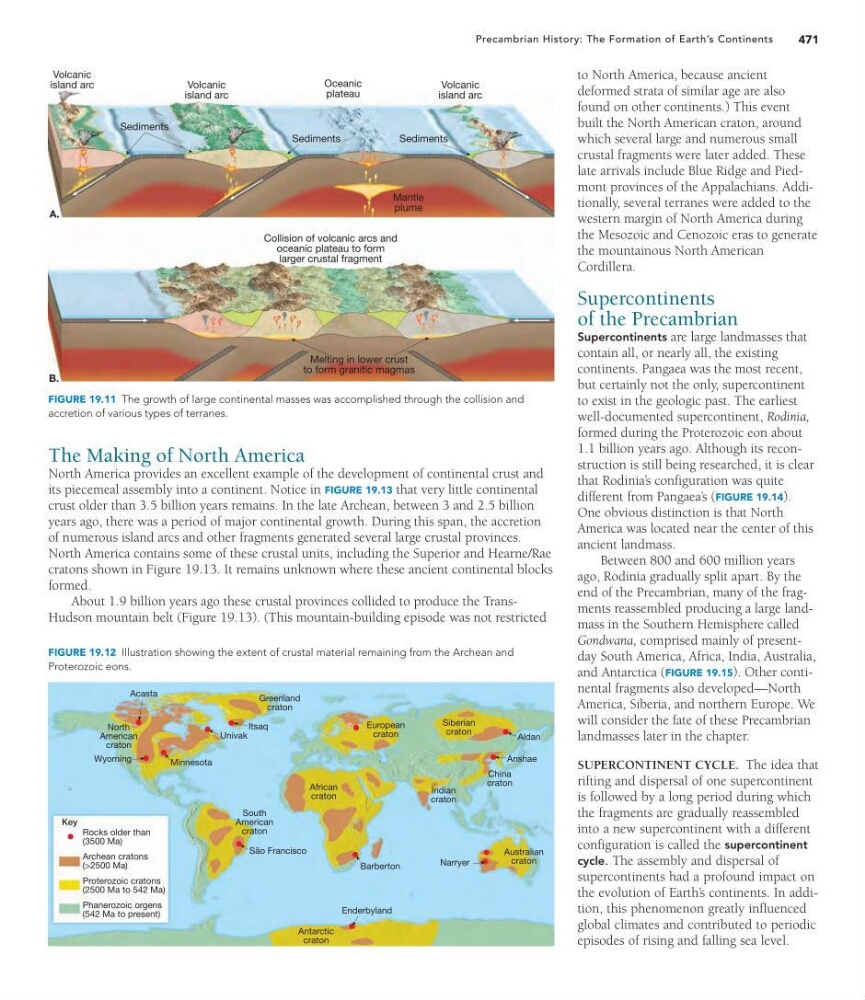
FIGURE 19.12 Illustration showing the extent of crustal material remaining from the Archean and
Proterozoic eons.
Precambrian History: The Formation of Earth’s Continents
The Making of North America
North America provides an excellent example of the development of continental crust and
its piecemeal assembly into a continent. Notice in FIGURE 19.13 that very little continental
crust older than 3.5 billion years remains. In the late Archean, between 3 and 2.5 billion
years ago, there was a period of major continental growth. During this span, the accretion
of numerous island arcs and other fragments generated several large crustal provinces.
North America contains some of these crustal units, including the Superior and Hearne/Rae
cratons shown in Figure 19.13. It remains unknown where these ancient continental blocks
formed.
About 1.9 billion years ago these crustal provinces collided to produce the TransHudson mountain belt (Figure 19.13). (This mountain-building episode was not restricted
to North America, because ancient
deformed strata of similar age are also
found on other continents.) This event
built the North American craton, around
which several large and numerous small
crustal fragments were later added. These
late arrivals include Blue Ridge and Piedmont provinces of the Appalachians. Additionally, several terranes were added to the
western margin of North America during
the Mesozoic and Cenozoic eras to generate
the mountainous North American
Cordillera.
Supercontinents
of the Precambrian
Supercontinents are large landmasses that
contain all, or nearly all, the existing
continents. Pangaea was the most recent,
but certainly not the only, supercontinent
to exist in the geologic past. The earliest
well-documented supercontinent, Rodinia,
formed during the Proterozoic eon about
1.1 billion years ago. Although its reconstruction is still being researched, it is clear
that Rodinia’ s configuration was quite
different from Pangaea’ s (FIGURE 19.14).
One obvious distinction is that North
America was located near the center of this
ancient landmass.
Between 800 and 600 million years
ago, Rodinia gradually split apart. By the
end of the Precambrian, many of the fragments reassembled producing a large landmass in the Southern Hemisphere called
Gondwana, comprised mainly of presentday South America, Africa, India, Australia,
and Antarctica (FIGURE 19.15). Other continental fragments also developed—North
America, Siberia, and northern Europe. We
will consider the fate of these Precambrian
landmasses later in the chapter.
SUPERCONTINENT CYCLE. The idea that
rifting and dispersal of one supercontinent
is followed by a long period during which
the fragments are gradually reassembled
into a new supercontinent with a different
configuration is called the supercontinent
cycle. The assembly and dispersal of
supercontinents had a profound impact on
the evolution of Earth’ s continents. In addition, this phenomenon greatly influenced
global climates and contributed to periodic
episodes of rising and falling sea level.
Sediments
Volcanic
island arc
Oceanic
plateau
Mantle
plume
Volcanic
island arc
Volcanic
island arc
Sediments
Sediments
Collision of volcanic arcs and
oceanic plateau to form
larger crustal fragment
Melting in lower crust
to form granitic magmas
A.
B.
FIGURE 19.11 The growth of large continental masses was accomplished through the collision and
accretion of various types of terranes.
Wyoming
Greenland
craton
Univak
Acasta
Itsaq
Key
Rocks older than
(3500 Ma)
Archean cratons
(>2500 Ma)
Proterozoic cratons
(2500 Ma to 542 Ma)
Phanerozoic orgens
(542 Ma to present)
Minnesota
North
American
craton
South
American
craton
Antarctic
craton
Enderbyland
Indian
craton
China
craton
Australian
craton
Barberton
Narryer
African
craton
European
craton
Siberian
craton
Aldan
Anshae
FIGURE 19.12 Illustration showing the extent of crustal material remaining from the Archean and
Proterozoic eons.