

CHAPTER 19 Earth’s Evolution through Geologic Time
470
well as oceanic plateaus. Simultaneously,
subduction of oceanic crust generated volcanic island arcs. Collectively, these relatively small crustal fragments represent the
first phase in creating stable, continent-size
landmasses.
FROM CONTINENTAL CRUST TO
CONTINENTS. According to one model,
the growth of large continental masses
was accomplished through collision and
accretion of various types of terranes as
illustrated in FIGURE 19.11. This type of
collision tectonics deformed and
metamorphosed sediments caught
between converging crustal fragments,
thereby shortening and thickening the
developing crust. Within the deepest
regions of these collision zones, partial
melting of the thickened crust generated
silica-rich magmas that ascended and
intruded the rocks above. The result was
the formation of large crustal provinces
that, in turn, accreted with others to form
even larger crustal blocks called cratons.
(The portion of a modern craton that is
exposed at the surface is referred to as a
shield.) The assembly of a large craton
involves the accretion of several crustal
blocks that cause major mountain-building
episodes similar to India’ s collision with
Asia. FIGURE 19.12 shows the extent of
crustal material that was produced during
the Archean and Proterozoic eons. This
was accomplished by the collision and
accretion of many thin, highly mobile
terranes into nearly recognizable
continental masses.
Although the Precambrian was a time
when much of Earth’ s continental crust
was generated, a substantial amount of
crustal material was destroyed as well.
Crust can be lost by either weathering and
erosion or by direct reincorporation into
the mantle through subduction. Evidence
suggests that during much of the Archean,
thin slabs of continental crust were eliminated, mainly by subduction into the
mantle. However, by about 3 billion years
ago, cratons grew sufficiently large and
thick to resist subduction. After that
time, weathering and erosion became the
primary processes of crustal destruction.
By the close of the Precambrian, an
estimated 85 percent of the modern
continental crust had formed.
FIGURE 19.10 These rocks at Isua, Greenland, some of the world’s oldest, have been dated at
3.8 billion years. (Photo courtesy of James L. Amos/CORBIS)
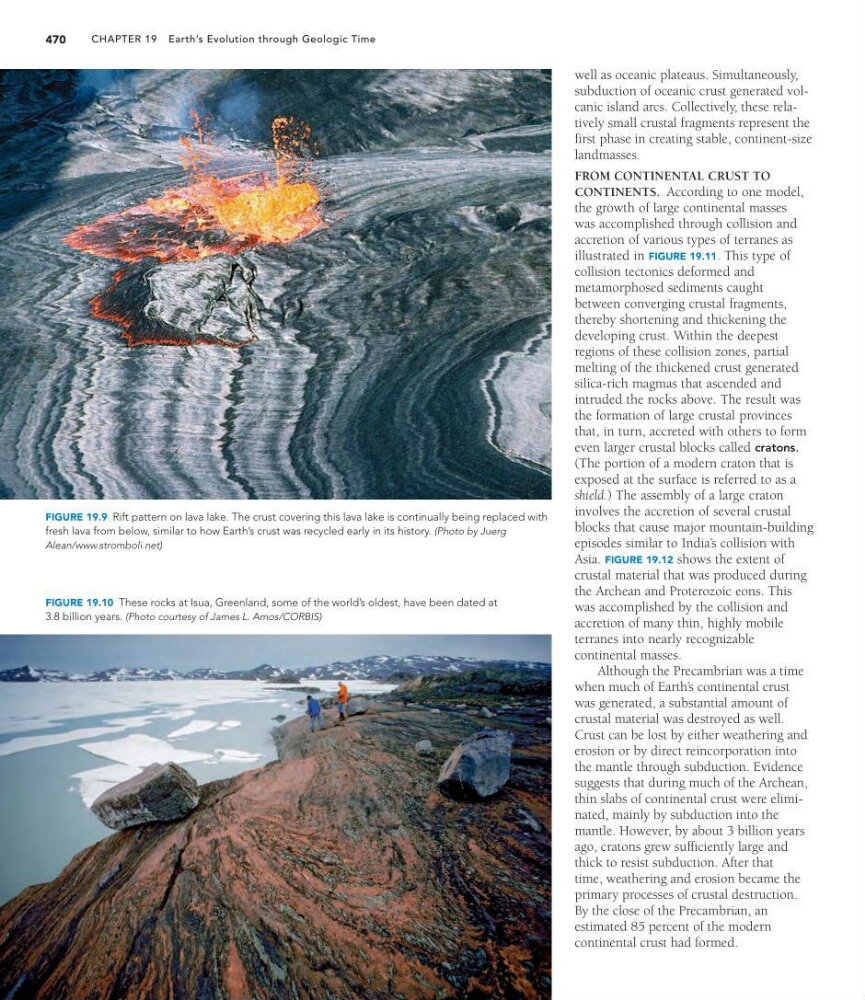
FIGURE 19.9 Rift pattern on lava lake. The crust covering this lava lake is continually being replaced with
fresh lava from below, similar to how Earth’s crust was recycled early in its history. (Photo by Juerg
Alean/www.stromboli.net)
470
well as oceanic plateaus. Simultaneously,
subduction of oceanic crust generated volcanic island arcs. Collectively, these relatively small crustal fragments represent the
first phase in creating stable, continent-size
landmasses.
FROM CONTINENTAL CRUST TO
CONTINENTS. According to one model,
the growth of large continental masses
was accomplished through collision and
accretion of various types of terranes as
illustrated in FIGURE 19.11. This type of
collision tectonics deformed and
metamorphosed sediments caught
between converging crustal fragments,
thereby shortening and thickening the
developing crust. Within the deepest
regions of these collision zones, partial
melting of the thickened crust generated
silica-rich magmas that ascended and
intruded the rocks above. The result was
the formation of large crustal provinces
that, in turn, accreted with others to form
even larger crustal blocks called cratons.
(The portion of a modern craton that is
exposed at the surface is referred to as a
shield.) The assembly of a large craton
involves the accretion of several crustal
blocks that cause major mountain-building
episodes similar to India’ s collision with
Asia. FIGURE 19.12 shows the extent of
crustal material that was produced during
the Archean and Proterozoic eons. This
was accomplished by the collision and
accretion of many thin, highly mobile
terranes into nearly recognizable
continental masses.
Although the Precambrian was a time
when much of Earth’ s continental crust
was generated, a substantial amount of
crustal material was destroyed as well.
Crust can be lost by either weathering and
erosion or by direct reincorporation into
the mantle through subduction. Evidence
suggests that during much of the Archean,
thin slabs of continental crust were eliminated, mainly by subduction into the
mantle. However, by about 3 billion years
ago, cratons grew sufficiently large and
thick to resist subduction. After that
time, weathering and erosion became the
primary processes of crustal destruction.
By the close of the Precambrian, an
estimated 85 percent of the modern
continental crust had formed.
FIGURE 19.10 These rocks at Isua, Greenland, some of the world’s oldest, have been dated at
3.8 billion years. (Photo courtesy of James L. Amos/CORBIS)
FIGURE 19.9 Rift pattern on lava lake. The crust covering this lava lake is continually being replaced with
fresh lava from below, similar to how Earth’s crust was recycled early in its history. (Photo by Juerg
Alean/www.stromboli.net)