

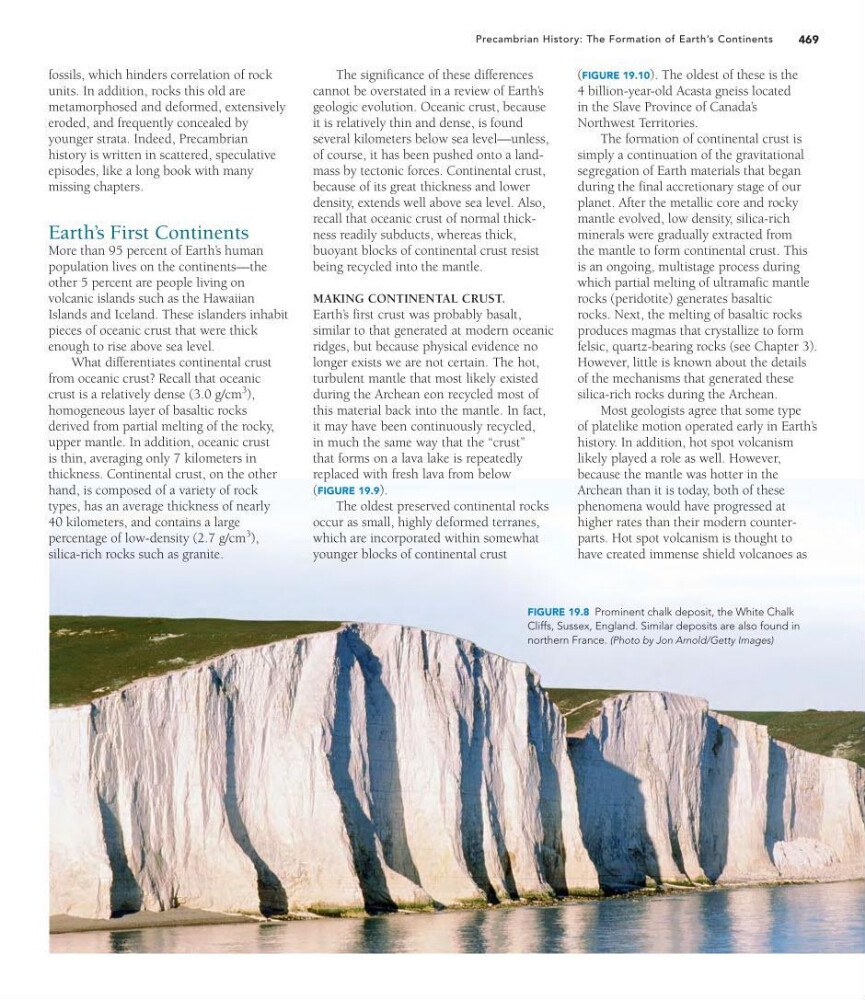
FIGURE 19.8 Prominent chalk deposit, the White Chalk
Cliffs, Sussex, England. Similar deposits are also found in
northern France. (Photo by Jon Arnold/Getty Images)
469
Precambrian History: The Formation of Earth’s Continents
fossils, which hinders correlation of rock
units. In addition, rocks this old are
metamorphosed and deformed, extensively
eroded, and frequently concealed by
younger strata. Indeed, Precambrian
history is written in scattered, speculative
episodes, like a long book with many
missing chapters.
Earth’ s First Continents
More than 95 percent of Earth’ s human
population lives on the continents—the
other 5 percent are people living on
volcanic islands such as the Hawaiian
Islands and Iceland. These islanders inhabit
pieces of oceanic crust that were thick
enough to rise above sea level.
What differentiates continental crust
from oceanic crust? Recall that oceanic
crust is a relatively dense (3.0 g/cm
3
),
homogeneous layer of basaltic rocks
derived from partial melting of the rocky,
upper mantle. In addition, oceanic crust
is thin, averaging only 7 kilometers in
thickness. Continental crust, on the other
hand, is composed of a variety of rock
types, has an average thickness of nearly
40 kilometers, and contains a large
percentage of low-density (2.7 g/cm
3
),
silica-rich rocks such as granite.
The significance of these differences
cannot be overstated in a review of Earth’ s
geologic evolution. Oceanic crust, because
it is relatively thin and dense, is found
several kilometers below sea level—unless,
of course, it has been pushed onto a landmass by tectonic forces. Continental crust,
because of its great thickness and lower
density, extends well above sea level. Also,
recall that oceanic crust of normal thickness readily subducts, whereas thick,
buoyant blocks of continental crust resist
being recycled into the mantle.
MAKING CONTINENTAL CRUST.
Earth’ s first crust was probably basalt,
similar to that generated at modern oceanic
ridges, but because physical evidence no
longer exists we are not certain. The hot,
turbulent mantle that most likely existed
during the Archean eon recycled most of
this material back into the mantle. In fact,
it may have been continuously recycled,
in much the same way that the “crust”
that forms on a lava lake is repeatedly
replaced with fresh lava from below
(FIGURE 19.9).
The oldest preserved continental rocks
occur as small, highly deformed terranes,
which are incorporated within somewhat
younger blocks of continental crust
(FIGURE 19.10). The oldest of these is the
4 billion-year-old Acasta gneiss located
in the Slave Province of Canada’ s
Northwest Territories.
The formation of continental crust is
simply a continuation of the gravitational
segregation of Earth materials that began
during the final accretionary stage of our
planet. After the metallic core and rocky
mantle evolved, low density, silica-rich
minerals were gradually extracted from
the mantle to form continental crust. This
is an ongoing, multistage process during
which partial melting of ultramafic mantle
rocks (peridotite) generates basaltic
rocks. Next, the melting of basaltic rocks
produces magmas that crystallize to form
felsic, quartz-bearing rocks (see Chapter 3).
However, little is known about the details
of the mechanisms that generated these
silica-rich rocks during the Archean.
Most geologists agree that some type
of platelike motion operated early in Earth’ s
history. In addition, hot spot volcanism
likely played a role as well. However,
because the mantle was hotter in the
Archean than it is today, both of these
phenomena would have progressed at
higher rates than their modern counterparts. Hot spot volcanism is thought to
have created immense shield volcanoes as
Cliffs, Sussex, England. Similar deposits are also found in
northern France. (Photo by Jon Arnold/Getty Images)
469
Precambrian History: The Formation of Earth’s Continents
fossils, which hinders correlation of rock
units. In addition, rocks this old are
metamorphosed and deformed, extensively
eroded, and frequently concealed by
younger strata. Indeed, Precambrian
history is written in scattered, speculative
episodes, like a long book with many
missing chapters.
Earth’ s First Continents
More than 95 percent of Earth’ s human
population lives on the continents—the
other 5 percent are people living on
volcanic islands such as the Hawaiian
Islands and Iceland. These islanders inhabit
pieces of oceanic crust that were thick
enough to rise above sea level.
What differentiates continental crust
from oceanic crust? Recall that oceanic
crust is a relatively dense (3.0 g/cm
3
),
homogeneous layer of basaltic rocks
derived from partial melting of the rocky,
upper mantle. In addition, oceanic crust
is thin, averaging only 7 kilometers in
thickness. Continental crust, on the other
hand, is composed of a variety of rock
types, has an average thickness of nearly
40 kilometers, and contains a large
percentage of low-density (2.7 g/cm
3
),
silica-rich rocks such as granite.
The significance of these differences
cannot be overstated in a review of Earth’ s
geologic evolution. Oceanic crust, because
it is relatively thin and dense, is found
several kilometers below sea level—unless,
of course, it has been pushed onto a landmass by tectonic forces. Continental crust,
because of its great thickness and lower
density, extends well above sea level. Also,
recall that oceanic crust of normal thickness readily subducts, whereas thick,
buoyant blocks of continental crust resist
being recycled into the mantle.
MAKING CONTINENTAL CRUST.
Earth’ s first crust was probably basalt,
similar to that generated at modern oceanic
ridges, but because physical evidence no
longer exists we are not certain. The hot,
turbulent mantle that most likely existed
during the Archean eon recycled most of
this material back into the mantle. In fact,
it may have been continuously recycled,
in much the same way that the “crust”
that forms on a lava lake is repeatedly
replaced with fresh lava from below
(FIGURE 19.9).
The oldest preserved continental rocks
occur as small, highly deformed terranes,
which are incorporated within somewhat
younger blocks of continental crust
(FIGURE 19.10). The oldest of these is the
4 billion-year-old Acasta gneiss located
in the Slave Province of Canada’ s
Northwest Territories.
The formation of continental crust is
simply a continuation of the gravitational
segregation of Earth materials that began
during the final accretionary stage of our
planet. After the metallic core and rocky
mantle evolved, low density, silica-rich
minerals were gradually extracted from
the mantle to form continental crust. This
is an ongoing, multistage process during
which partial melting of ultramafic mantle
rocks (peridotite) generates basaltic
rocks. Next, the melting of basaltic rocks
produces magmas that crystallize to form
felsic, quartz-bearing rocks (see Chapter 3).
However, little is known about the details
of the mechanisms that generated these
silica-rich rocks during the Archean.
Most geologists agree that some type
of platelike motion operated early in Earth’ s
history. In addition, hot spot volcanism
likely played a role as well. However,
because the mantle was hotter in the
Archean than it is today, both of these
phenomena would have progressed at
higher rates than their modern counterparts. Hot spot volcanism is thought to
have created immense shield volcanoes as