

CHAPTER 18 Geologic Time
456
Eon
Era
Period
Epoch
Phanerozoic
Proterozoic
Archean
Cenozoic
Mesozoic
Paleozoic
2500
3600
~4000
Quaternary
Tertiary
Cretaceous
Jurassic
Triassic
Permian
Carboniferous
Pennsylvanian
Mississippian
Devonian
Silurian
Ordovician
Cambrian
Precambrian
145.5
199.6
251
299
318
359
416
444
488
542
Holocene
Pleistocene
Pliocene
Miocene
Oligocene
Eocene
Paleocene
0.01
2.6
5.3
23.0
33.9
55.8
65.5
Millions
of years
ago
Precambrian
Cenozoic
Mesozoic
Paleozoic
Millions
of years
ago
Era
65.5
251
542
1000
1600
Neoproterozoic
Mesoproterozoic
Paleoproterozoic
Neoarchean
Mesoarchean
Paleoarchean
2800
3200
Eoarchean
Neogene
Paleogene
~4600
Hadean
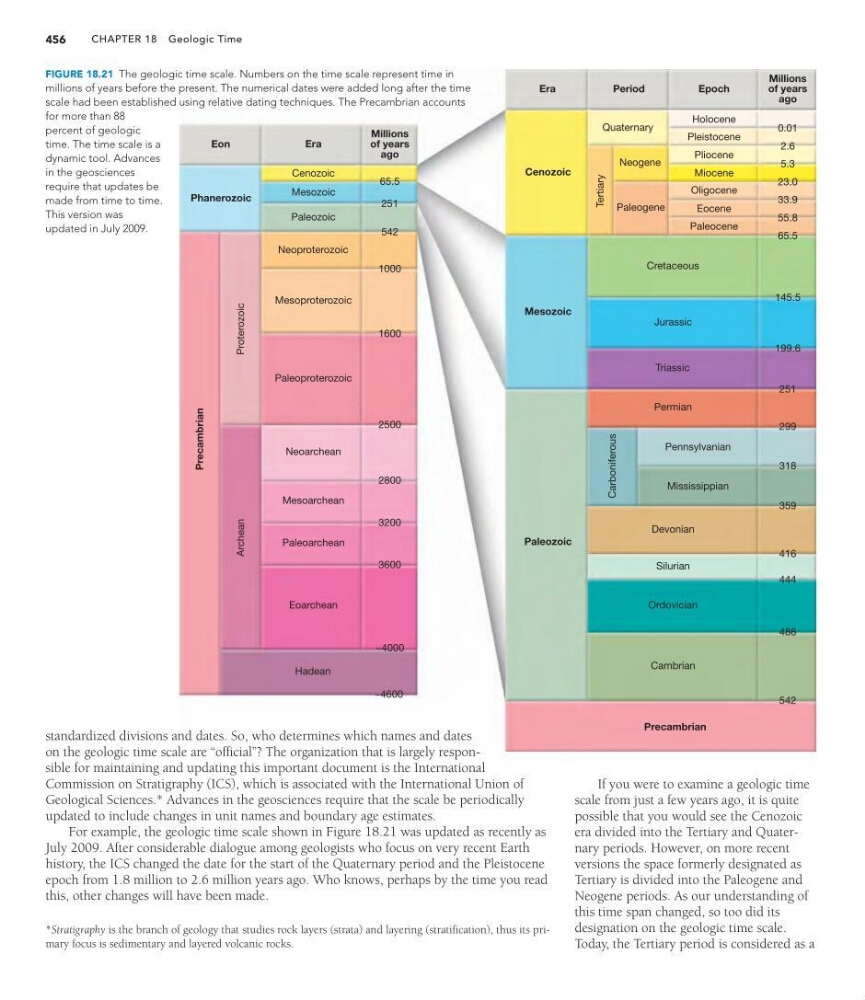
FIGURE 18.21 The geologic time scale. Numbers on the time scale represent time in
millions of years before the present. The numerical dates were added long after the time
scale had been established using relative dating techniques. The Precambrian accounts
for more than 88
percent of geologic
time. The time scale is a
dynamic tool. Advances
in the geosciences
require that updates be
made from time to time.
This version was
updated in July 2009.
*Stratigraphy is the branch of geology that studies rock layers (strata) and layering (stratification), thus its primary focus is sedimentary and layered volcanic rocks.
standardized divisions and dates. So, who determines which names and dates
on the geologic time scale are “official”? The organization that is largely responsible for maintaining and updating this important document is the International
Commission on Stratigraphy (ICS), which is associated with the International Union of
Geological Sciences.* Advances in the geosciences require that the scale be periodically
updated to include changes in unit names and boundary age estimates.
For example, the geologic time scale shown in Figure 18.21 was updated as recently as
July 2009. After considerable dialogue among geologists who focus on very recent Earth
history, the ICS changed the date for the start of the Quaternary period and the Pleistocene
epoch from 1.8 million to 2.6 million years ago. Who knows, perhaps by the time you read
this, other changes will have been made.
If you were to examine a geologic time
scale from just a few years ago, it is quite
possible that you would see the Cenozoic
era divided into the Tertiary and Quaternary periods. However, on more recent
versions the space formerly designated as
Tertiary is divided into the Paleogene and
Neogene periods. As our understanding of
this time span changed, so too did its
designation on the geologic time scale.
Today, the Tertiary period is considered as a
456
Eon
Era
Period
Epoch
Phanerozoic
Proterozoic
Archean
Cenozoic
Mesozoic
Paleozoic
2500
3600
~4000
Quaternary
Tertiary
Cretaceous
Jurassic
Triassic
Permian
Carboniferous
Pennsylvanian
Mississippian
Devonian
Silurian
Ordovician
Cambrian
Precambrian
145.5
199.6
251
299
318
359
416
444
488
542
Holocene
Pleistocene
Pliocene
Miocene
Oligocene
Eocene
Paleocene
0.01
2.6
5.3
23.0
33.9
55.8
65.5
Millions
of years
ago
Precambrian
Cenozoic
Mesozoic
Paleozoic
Millions
of years
ago
Era
65.5
251
542
1000
1600
Neoproterozoic
Mesoproterozoic
Paleoproterozoic
Neoarchean
Mesoarchean
Paleoarchean
2800
3200
Eoarchean
Neogene
Paleogene
~4600
Hadean
FIGURE 18.21 The geologic time scale. Numbers on the time scale represent time in
millions of years before the present. The numerical dates were added long after the time
scale had been established using relative dating techniques. The Precambrian accounts
for more than 88
percent of geologic
time. The time scale is a
dynamic tool. Advances
in the geosciences
require that updates be
made from time to time.
This version was
updated in July 2009.
*Stratigraphy is the branch of geology that studies rock layers (strata) and layering (stratification), thus its primary focus is sedimentary and layered volcanic rocks.
standardized divisions and dates. So, who determines which names and dates
on the geologic time scale are “official”? The organization that is largely responsible for maintaining and updating this important document is the International
Commission on Stratigraphy (ICS), which is associated with the International Union of
Geological Sciences.* Advances in the geosciences require that the scale be periodically
updated to include changes in unit names and boundary age estimates.
For example, the geologic time scale shown in Figure 18.21 was updated as recently as
July 2009. After considerable dialogue among geologists who focus on very recent Earth
history, the ICS changed the date for the start of the Quaternary period and the Pleistocene
epoch from 1.8 million to 2.6 million years ago. Who knows, perhaps by the time you read
this, other changes will have been made.
If you were to examine a geologic time
scale from just a few years ago, it is quite
possible that you would see the Cenozoic
era divided into the Tertiary and Quaternary periods. However, on more recent
versions the space formerly designated as
Tertiary is divided into the Paleogene and
Neogene periods. As our understanding of
this time span changed, so too did its
designation on the geologic time scale.
Today, the Tertiary period is considered as a