

Live tree
Dead tree
Log from ruins
455
The Geologic Time Scale
periods of the Cenozoic. The epochs of other periods usually are
simply termed early, middle, and late.
Precambrian Time
Notice that the detail of the geologic time scale does not begin until
about 542 million years ago, the date for the beginning of the Cambrian period. The nearly 4 billion years prior to the Cambrian are
divided into three eons, the Hadean, the Archean, and the
Proterozoic. These, in turn, are divided into seven eras. It is also
common for this vast expanse of time to simply be referred to as
the Precambrian.* Although it represents about 88 percent of Earth
history, the Precambrian is not divided into nearly as many smaller
time units as the Phanerozoic eon.
Why is the huge expanse of Precambrian time not divided into
numerous eras, periods, and epochs? The reason is that Precambrian history is not known in great enough detail. The quantity of
information that geologists have deciphered about Earth’ s past is
somewhat analogous to the detail of human history. The further
back we go, the less is known. Certainly more data and information exist about the past 10 years than for the first decade of
the 20th century; the events of the 19th century have been documented much better than the events of the 1st century AD; and so
on. So it is with Earth history. The more recent past has the freshest, least disturbed, and more observable record. The further back
in time the geologist goes, the more fragmented the record and
clues become.
Terminology and the Geologic Time Scale
There are some terms associated with the geologic time scale that
are not “officially” recognized as part of it. The best known, and
most common, example is Precambrian—the informal name for the
eons that came before the current Phanerozoic eon. Although the
term Precambrian has no formal status on the geologic time scale,
it has been traditionally used as though it did.
Hadean is another informal term that is found on some versions of the geologic time scale and is used by some geologists. It
refers to the earliest interval (eon) of Earth history—before the
oldest known rocks. When the term was coined in 1972, the
age of Earth’ s oldest known rocks was about 3.8 billion
years. Today that number stands at slightly greater than 4
billion and, of course, is subject to revision. The
name Hadean derives from Hades, Greek
for underworld—a reference to the “hellish” conditions that prevailed on Earth
early in its history.
Effective communication in the geosciences
requires that the geologic
time scale consist of
The Geologic Time Scale
Geologic Time
Geologic Time Scale
Geologists have divided the whole of geologic history into units of
varying magnitude. Together they comprise the geologic time scale
of Earth history (FIGURE 18.21). The major units of the time scale
were delineated during the 19th century, principally by workers in
western Europe and Great Britain. Because radiometric dating was
unavailable at that time, the entire time scale was created using
methods of relative dating. It was only in the 20th century that
radiometric dating permitted numerical dates to be added.
Structure of the Time Scale
The geologic time scale subdivides the 4.6-billion-year history of
Earth into many different units and provides a meaningful time
frame within which the events of the geologic past are arranged.
As shown in Figure 18.21, eons represent the greatest expanses
of time. The eon that began about 542 million years ago is the
Phanerozoic, a term derived from Greek words meaning visible life.
It is an appropriate description because the rocks and deposits of
the Phanerozoic eon contain abundant fossils that document
major evolutionary trends.
Another glance at the time scale reveals that eons are divided
into eras. The three eras within the Phanerozoic are the Paleozoic
(“ancient life”), the Mesozoic (“middle life”), and the Cenozoic
(“recent life”). As the names imply, these eras are bound by profound worldwide changes in life forms. Major changes in life forms
are discussed in Chapter 19 “Earth’ s Evolution through Geologic
Time”. Each era of the Phanerozoic eon is subdivided into periods.
Each period is characterized by a somewhat less profound change
in life-forms as compared with the eras.
Each period is divided into still smaller units called epochs. As
you can see in Figure 18.21, seven epochs have been named for the
GEODe
ESSENTIALS
OF GEOLOGY
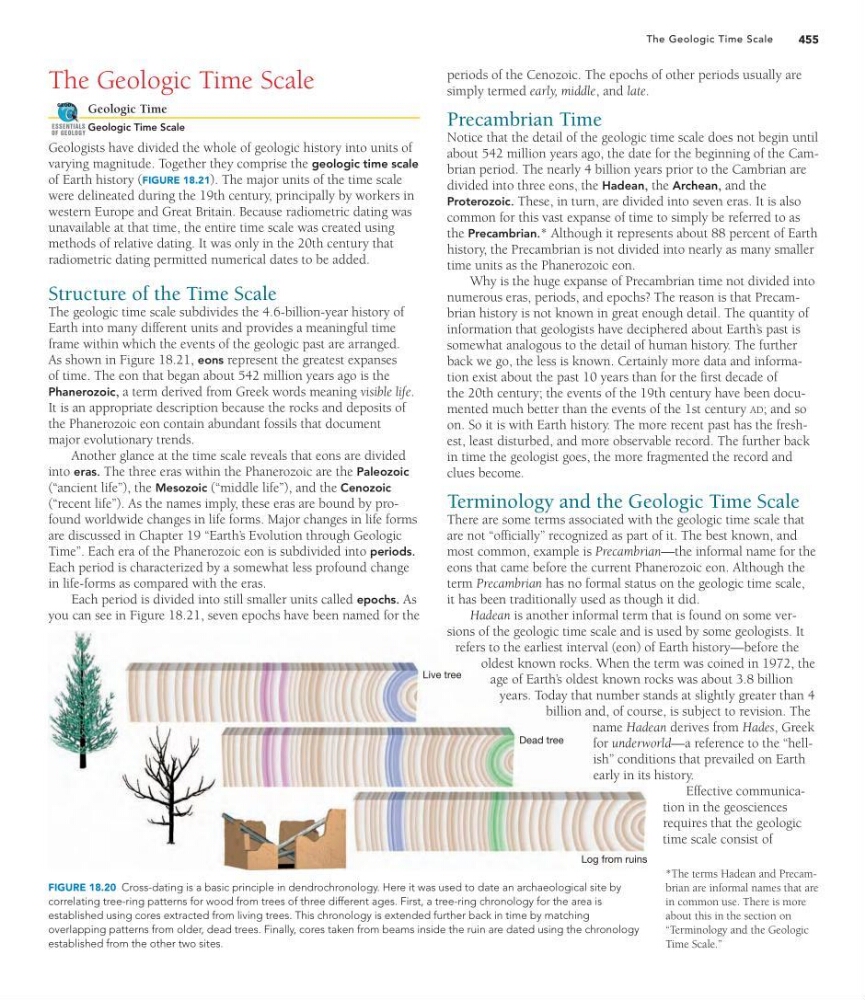
FIGURE 18.20 Cross-dating is a basic principle in dendrochronology. Here it was used to date an archaeological site by
correlating tree-ring patterns for wood from trees of three different ages. First, a tree-ring chronology for the area is
established using cores extracted from living trees. This chronology is extended further back in time by matching
overlapping patterns from older, dead trees. Finally, cores taken from beams inside the ruin are dated using the chronology
established from the other two sites.
*The terms Hadean and Precambrian are informal names that are
in common use. There is more
about this in the section on
“Terminology and the Geologic
Time Scale.”
Dead tree
Log from ruins
455
The Geologic Time Scale
periods of the Cenozoic. The epochs of other periods usually are
simply termed early, middle, and late.
Precambrian Time
Notice that the detail of the geologic time scale does not begin until
about 542 million years ago, the date for the beginning of the Cambrian period. The nearly 4 billion years prior to the Cambrian are
divided into three eons, the Hadean, the Archean, and the
Proterozoic. These, in turn, are divided into seven eras. It is also
common for this vast expanse of time to simply be referred to as
the Precambrian.* Although it represents about 88 percent of Earth
history, the Precambrian is not divided into nearly as many smaller
time units as the Phanerozoic eon.
Why is the huge expanse of Precambrian time not divided into
numerous eras, periods, and epochs? The reason is that Precambrian history is not known in great enough detail. The quantity of
information that geologists have deciphered about Earth’ s past is
somewhat analogous to the detail of human history. The further
back we go, the less is known. Certainly more data and information exist about the past 10 years than for the first decade of
the 20th century; the events of the 19th century have been documented much better than the events of the 1st century AD; and so
on. So it is with Earth history. The more recent past has the freshest, least disturbed, and more observable record. The further back
in time the geologist goes, the more fragmented the record and
clues become.
Terminology and the Geologic Time Scale
There are some terms associated with the geologic time scale that
are not “officially” recognized as part of it. The best known, and
most common, example is Precambrian—the informal name for the
eons that came before the current Phanerozoic eon. Although the
term Precambrian has no formal status on the geologic time scale,
it has been traditionally used as though it did.
Hadean is another informal term that is found on some versions of the geologic time scale and is used by some geologists. It
refers to the earliest interval (eon) of Earth history—before the
oldest known rocks. When the term was coined in 1972, the
age of Earth’ s oldest known rocks was about 3.8 billion
years. Today that number stands at slightly greater than 4
billion and, of course, is subject to revision. The
name Hadean derives from Hades, Greek
for underworld—a reference to the “hellish” conditions that prevailed on Earth
early in its history.
Effective communication in the geosciences
requires that the geologic
time scale consist of
The Geologic Time Scale
Geologic Time
Geologic Time Scale
Geologists have divided the whole of geologic history into units of
varying magnitude. Together they comprise the geologic time scale
of Earth history (FIGURE 18.21). The major units of the time scale
were delineated during the 19th century, principally by workers in
western Europe and Great Britain. Because radiometric dating was
unavailable at that time, the entire time scale was created using
methods of relative dating. It was only in the 20th century that
radiometric dating permitted numerical dates to be added.
Structure of the Time Scale
The geologic time scale subdivides the 4.6-billion-year history of
Earth into many different units and provides a meaningful time
frame within which the events of the geologic past are arranged.
As shown in Figure 18.21, eons represent the greatest expanses
of time. The eon that began about 542 million years ago is the
Phanerozoic, a term derived from Greek words meaning visible life.
It is an appropriate description because the rocks and deposits of
the Phanerozoic eon contain abundant fossils that document
major evolutionary trends.
Another glance at the time scale reveals that eons are divided
into eras. The three eras within the Phanerozoic are the Paleozoic
(“ancient life”), the Mesozoic (“middle life”), and the Cenozoic
(“recent life”). As the names imply, these eras are bound by profound worldwide changes in life forms. Major changes in life forms
are discussed in Chapter 19 “Earth’ s Evolution through Geologic
Time”. Each era of the Phanerozoic eon is subdivided into periods.
Each period is characterized by a somewhat less profound change
in life-forms as compared with the eras.
Each period is divided into still smaller units called epochs. As
you can see in Figure 18.21, seven epochs have been named for the
GEODe
ESSENTIALS
OF GEOLOGY
FIGURE 18.20 Cross-dating is a basic principle in dendrochronology. Here it was used to date an archaeological site by
correlating tree-ring patterns for wood from trees of three different ages. First, a tree-ring chronology for the area is
established using cores extracted from living trees. This chronology is extended further back in time by matching
overlapping patterns from older, dead trees. Finally, cores taken from beams inside the ruin are dated using the chronology
established from the other two sites.
*The terms Hadean and Precambrian are informal names that are
in common use. There is more
about this in the section on
“Terminology and the Geologic
Time Scale.”