

447
Fossils: Evidence of Past Life
A.
B.
C.
D.
E.
F.
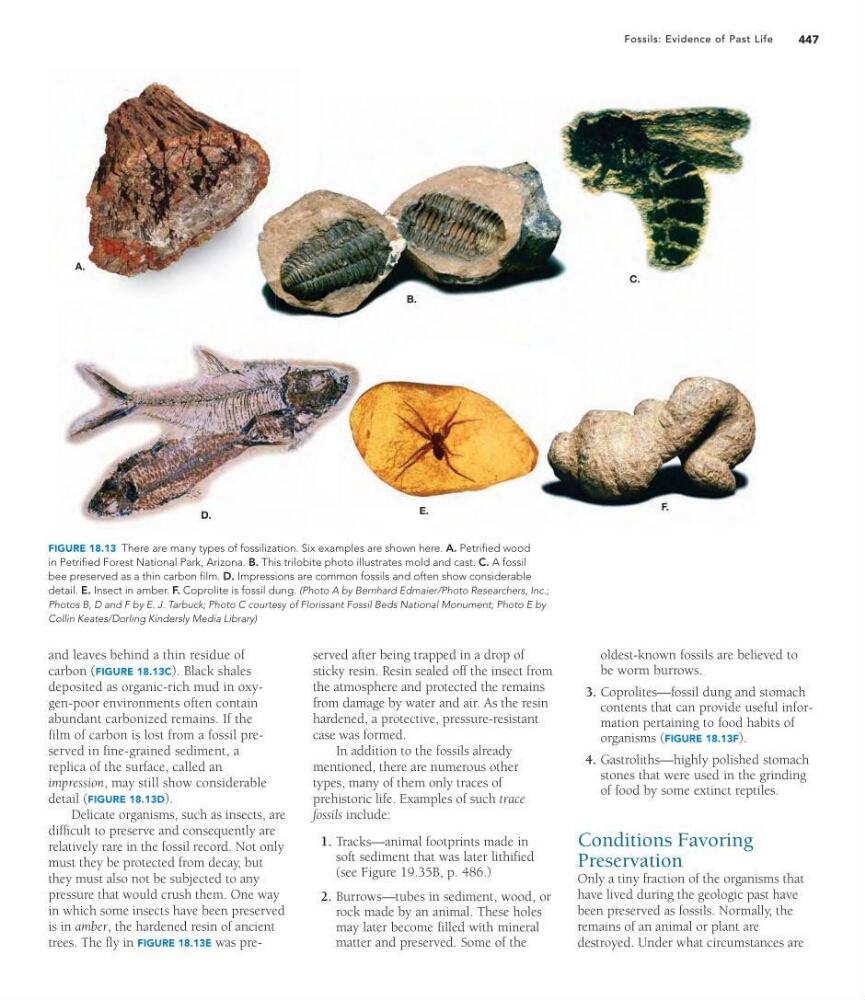
FIGURE 18.13 There are many types of fossilization. Six examples are shown here. A. Petrified wood
in Petrified Forest National Park, Arizona. B. This trilobite photo illustrates mold and cast. C. A fossil
bee preserved as a thin carbon film. D. Impressions are common fossils and often show considerable
detail. E. Insect in amber. F. Coprolite is fossil dung. (Photo A by Bernhard Edmaier/Photo Researchers, Inc.;
Photos B, D and F by E. J. Tarbuck; Photo C courtesy of Florissant Fossil Beds National Monument; Photo E by
Collin Keates/Dorling Kindersly Media Library)
and leaves behind a thin residue of
carbon (FIGURE 18.13C). Black shales
deposited as organic-rich mud in oxygen-poor environments often contain
abundant carbonized remains. If the
film of carbon is lost from a fossil preserved in fine-grained sediment, a
replica of the surface, called an
impression, may still show considerable
detail (FIGURE 18.13D).
Delicate organisms, such as insects, are
difficult to preserve and consequently are
relatively rare in the fossil record. Not only
must they be protected from decay, but
they must also not be subjected to any
pressure that would crush them. One way
in which some insects have been preserved
is in amber, the hardened resin of ancient
trees. The fly in FIGURE 18.13E was preserved after being trapped in a drop of
sticky resin. Resin sealed off the insect from
the atmosphere and protected the remains
from damage by water and air. As the resin
hardened, a protective, pressure-resistant
case was formed.
In addition to the fossils already
mentioned, there are numerous other
types, many of them only traces of
prehistoric life. Examples of such trace
fossils include:
1. Tracks—animal footprints made in
soft sediment that was later lithified
(see Figure 19.35B, p. 486.)
2. Burrows—tubes in sediment, wood, or
rock made by an animal. These holes
may later become filled with mineral
matter and preserved. Some of the
oldest-known fossils are believed to
be worm burrows.
3. Coprolites—fossil dung and stomach
contents that can provide useful information pertaining to food habits of
organisms (FIGURE 18.13F).
4. Gastroliths—highly polished stomach
stones that were used in the grinding
of food by some extinct reptiles.
Conditions Favoring
Preservation
Only a tiny fraction of the organisms that
have lived during the geologic past have
been preserved as fossils. Normally, the
remains of an animal or plant are
destroyed. Under what circumstances are
Fossils: Evidence of Past Life
A.
B.
C.
D.
E.
F.
FIGURE 18.13 There are many types of fossilization. Six examples are shown here. A. Petrified wood
in Petrified Forest National Park, Arizona. B. This trilobite photo illustrates mold and cast. C. A fossil
bee preserved as a thin carbon film. D. Impressions are common fossils and often show considerable
detail. E. Insect in amber. F. Coprolite is fossil dung. (Photo A by Bernhard Edmaier/Photo Researchers, Inc.;
Photos B, D and F by E. J. Tarbuck; Photo C courtesy of Florissant Fossil Beds National Monument; Photo E by
Collin Keates/Dorling Kindersly Media Library)
and leaves behind a thin residue of
carbon (FIGURE 18.13C). Black shales
deposited as organic-rich mud in oxygen-poor environments often contain
abundant carbonized remains. If the
film of carbon is lost from a fossil preserved in fine-grained sediment, a
replica of the surface, called an
impression, may still show considerable
detail (FIGURE 18.13D).
Delicate organisms, such as insects, are
difficult to preserve and consequently are
relatively rare in the fossil record. Not only
must they be protected from decay, but
they must also not be subjected to any
pressure that would crush them. One way
in which some insects have been preserved
is in amber, the hardened resin of ancient
trees. The fly in FIGURE 18.13E was preserved after being trapped in a drop of
sticky resin. Resin sealed off the insect from
the atmosphere and protected the remains
from damage by water and air. As the resin
hardened, a protective, pressure-resistant
case was formed.
In addition to the fossils already
mentioned, there are numerous other
types, many of them only traces of
prehistoric life. Examples of such trace
fossils include:
1. Tracks—animal footprints made in
soft sediment that was later lithified
(see Figure 19.35B, p. 486.)
2. Burrows—tubes in sediment, wood, or
rock made by an animal. These holes
may later become filled with mineral
matter and preserved. Some of the
oldest-known fossils are believed to
be worm burrows.
3. Coprolites—fossil dung and stomach
contents that can provide useful information pertaining to food habits of
organisms (FIGURE 18.13F).
4. Gastroliths—highly polished stomach
stones that were used in the grinding
of food by some extinct reptiles.
Conditions Favoring
Preservation
Only a tiny fraction of the organisms that
have lived during the geologic past have
been preserved as fossils. Normally, the
remains of an animal or plant are
destroyed. Under what circumstances are