

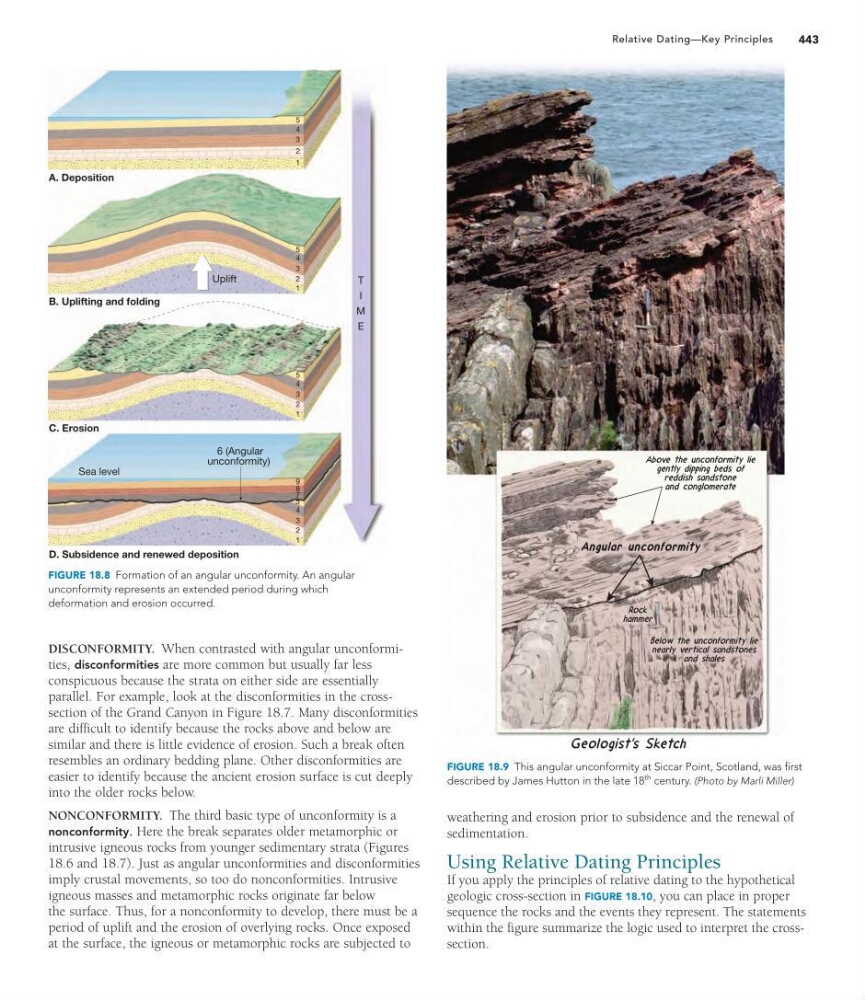
FIGURE 18.9 This angular unconformity at Siccar Point, Scotland, was first
described by James Hutton in the late 18
th century. (Photo by Marli Miller)
443
Relative Dating—Key Principles
DISCONFORMITY. When contrasted with angular unconformities, disconformities are more common but usually far less
conspicuous because the strata on either side are essentially
parallel. For example, look at the disconformities in the crosssection of the Grand Canyon in Figure 18.7. Many disconformities
are difficult to identify because the rocks above and below are
similar and there is little evidence of erosion. Such a break often
resembles an ordinary bedding plane. Other disconformities are
easier to identify because the ancient erosion surface is cut deeply
into the older rocks below.
NONCONFORMITY. The third basic type of unconformity is a
nonconformity. Here the break separates older metamorphic or
intrusive igneous rocks from younger sedimentary strata (Figures
18.6 and 18.7). Just as angular unconformities and disconformities
imply crustal movements, so too do nonconformities. Intrusive
igneous masses and metamorphic rocks originate far below
the surface. Thus, for a nonconformity to develop, there must be a
period of uplift and the erosion of overlying rocks. Once exposed
at the surface, the igneous or metamorphic rocks are subjected to
Uplift
T
I
M
E
1
2
3
4
A. Deposition
5
1
2
3
4
B. Uplifting and folding
5
1
2
3
4
C. Erosion
5
1
2
3
4
D. Subsidence and renewed deposition
7
6 (Angular
unconformity)
Sea level
8
9
5
FIGURE 18.8 Formation of an angular unconformity. An angular
unconformity represents an extended period during which
deformation and erosion occurred.
weathering and erosion prior to subsidence and the renewal of
sedimentation.
Using Relative Dating Principles
If you apply the principles of relative dating to the hypothetical
geologic cross-section in FIGURE 18.10, you can place in proper
sequence the rocks and the events they represent. The statements
within the figure summarize the logic used to interpret the crosssection.
described by James Hutton in the late 18
th century. (Photo by Marli Miller)
443
Relative Dating—Key Principles
DISCONFORMITY. When contrasted with angular unconformities, disconformities are more common but usually far less
conspicuous because the strata on either side are essentially
parallel. For example, look at the disconformities in the crosssection of the Grand Canyon in Figure 18.7. Many disconformities
are difficult to identify because the rocks above and below are
similar and there is little evidence of erosion. Such a break often
resembles an ordinary bedding plane. Other disconformities are
easier to identify because the ancient erosion surface is cut deeply
into the older rocks below.
NONCONFORMITY. The third basic type of unconformity is a
nonconformity. Here the break separates older metamorphic or
intrusive igneous rocks from younger sedimentary strata (Figures
18.6 and 18.7). Just as angular unconformities and disconformities
imply crustal movements, so too do nonconformities. Intrusive
igneous masses and metamorphic rocks originate far below
the surface. Thus, for a nonconformity to develop, there must be a
period of uplift and the erosion of overlying rocks. Once exposed
at the surface, the igneous or metamorphic rocks are subjected to
Uplift
T
I
M
E
1
2
3
4
A. Deposition
5
1
2
3
4
B. Uplifting and folding
5
1
2
3
4
C. Erosion
5
1
2
3
4
D. Subsidence and renewed deposition
7
6 (Angular
unconformity)
Sea level
8
9
5
FIGURE 18.8 Formation of an angular unconformity. An angular
unconformity represents an extended period during which
deformation and erosion occurred.
weathering and erosion prior to subsidence and the renewal of
sedimentation.
Using Relative Dating Principles
If you apply the principles of relative dating to the hypothetical
geologic cross-section in FIGURE 18.10, you can place in proper
sequence the rocks and the events they represent. The statements
within the figure summarize the logic used to interpret the crosssection.