

Cooler
water
sinks
Warm
water
rises
CHAPTER 15 Plate Tectonics: A Scientific Revolution Unfolds
386
evidence. Techniques using GPS devices
have also been useful in establishing smallscale crustal movements such as those that
occur along faults in regions known to be
tectonically active.
C O N C E P T C H E C K 1 5 . 1 0
Briefly describe how hot-spot tracks can be
used to determine the rate of plate
motion.
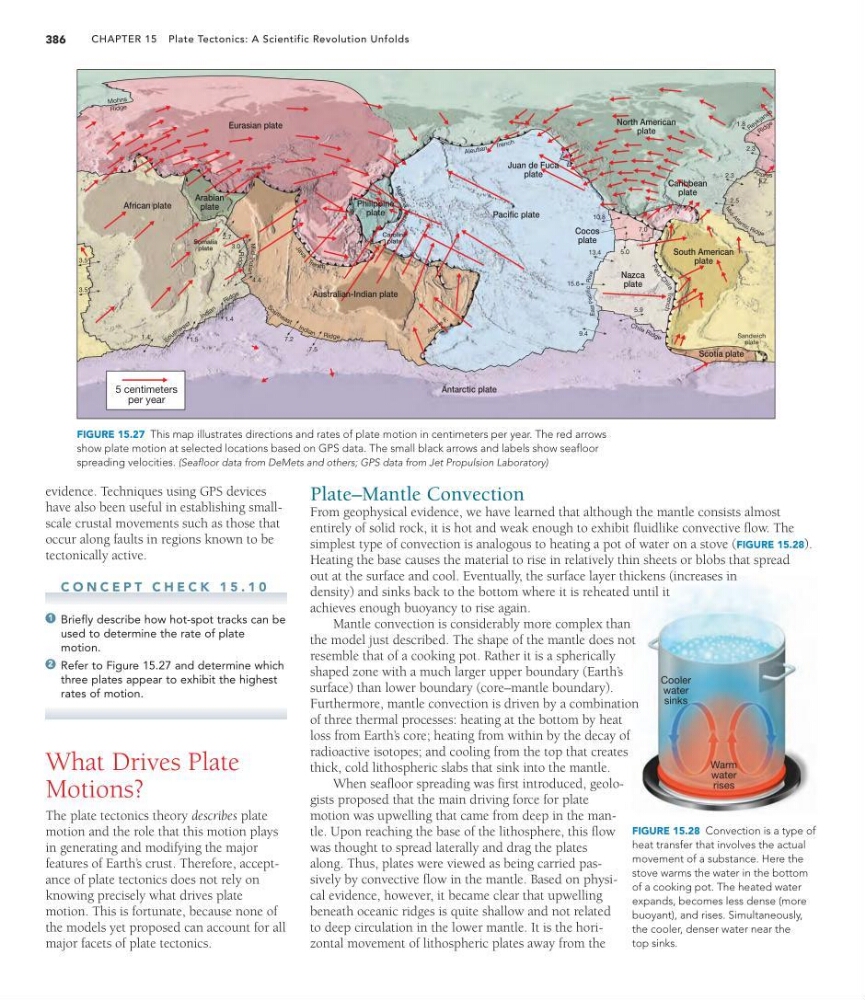
Refer to Figure 15.27 and determine which
three plates appear to exhibit the highest
rates of motion.
What Drives Plate
Motions?
The plate tectonics theory describes plate
motion and the role that this motion plays
in generating and modifying the major
features of Earth’ s crust. Therefore, acceptance of plate tectonics does not rely on
knowing precisely what drives plate
motion. This is fortunate, because none of
the models yet proposed can account for all
major facets of plate tectonics.
2
1
Plate–Mantle Convection
From geophysical evidence, we have learned that although the mantle consists almost
entirely of solid rock, it is hot and weak enough to exhibit fluidlike convective flow. The
simplest type of convection is analogous to heating a pot of water on a stove (FIGURE 15.28).
Heating the base causes the material to rise in relatively thin sheets or blobs that spread
out at the surface and cool. Eventually, the surface layer thickens (increases in
density) and sinks back to the bottom where it is reheated until it
achieves enough buoyancy to rise again.
Mantle convection is considerably more complex than
the model just described. The shape of the mantle does not
resemble that of a cooking pot. Rather it is a spherically
shaped zone with a much larger upper boundary (Earth’ s
surface) than lower boundary (core–mantle boundary).
Furthermore, mantle convection is driven by a combination
of three thermal processes: heating at the bottom by heat
loss from Earth’ s core; heating from within by the decay of
radioactive isotopes; and cooling from the top that creates
thick, cold lithospheric slabs that sink into the mantle.
When seafloor spreading was first introduced, geologists proposed that the main driving force for plate
motion was upwelling that came from deep in the mantle. Upon reaching the base of the lithosphere, this flow
was thought to spread laterally and drag the plates
along. Thus, plates were viewed as being carried passively by convective flow in the mantle. Based on physical evidence, however, it became clear that upwelling
beneath oceanic ridges is quite shallow and not related
to deep circulation in the lower mantle. It is the horizontal movement of lithospheric plates away from the
▲
▲ ▲ ▲ ▲
▲ ▲ ▲
▲
▲ ▲
▲
▲
▲
▲
▲ ▲ ▲
▲
▲
▲
▲
▲
▲ ▲
▲ ▲
▲
▲
▲
▲ ▲ ▲ ▲
▲
▲
▲ ▲ ▲ ▲ ▲
▲
▲ ▲
▲
▲ ▲
▲
▲
▲
▲
▲ ▲ ▲ ▲ ▲ ▲
▲ ▲
▲
▲
▲
▲
▲
▲
▲
▲
▲
▲ ▲
▲
▲
▲
▲
▲
▲
▲
▲
▲
▲
▲
▲
▲ ▲
▲
▲
▲
▲
▲
▲
▲
▲ ▲
▲
▲ ▲
▲ ▲ ▲ ▲ ▲
▲ ▲
▲
▲
▲
▲ ▲
▲
▲
▲
▲ ▲
▲
▲
▲
▲
▲
▲
▲
▲
▲
▲
▲
▲
▲
▲ ▲
▲
▲
▲ ▲
▲ ▲
▲ ▲
▲
▲
▲
▲
▲ ▲
▲
▲
▲
▲ ▲
▲
Eurasian plate
Philippine
plate
Australian-Indian plate
Arabian
plate
North American
plate
Juan de Fuca
plate
Pacific plate
Nazca
plate
Cocos
plate
Antarctic plate
Scotia plate
South American
plate
Caribbean
plate
African plate
M id - A
tl a n ti c R id ge
East
Pa
cif
ic Ris e
Mid-Ind
ian
S
o u th e a s t
In d ia n Ridg e
S
o u th
w e s t
In d ia n
R id g e
Ale utia n Tre nc h
C h ile R id g e
P e ru
- C
h il e Tre
nc
h
Sandwich
plate
R e y k ja n e s
Mo hns
Rid ge
A zo res
R id g e
J a v a
T re nc h
Somalia
plate
Caroline
plate
A lp in e F .
M a ri a n a Tren
c
h
5 centimeters
per year
10.8
5.0
7.0
13.4
15.6
5.9
9.4
3.5
3.5
1.4
1.5
1.4
4.4
2.5
2.3
2.3
1.8
2.7
3.0
Ridge
7.2
7.5
F.Z.
FIGURE 15.27 This map illustrates directions and rates of plate motion in centimeters per year. The red arrows
show plate motion at selected locations based on GPS data. The small black arrows and labels show seafloor
spreading velocities. (Seafloor data from DeMets and others; GPS data from Jet Propulsion Laboratory)
FIGURE 15.28 Convection is a type of
heat transfer that involves the actual
movement of a substance. Here the
stove warms the water in the bottom
of a cooking pot. The heated water
expands, becomes less dense (more
buoyant), and rises. Simultaneously,
the cooler, denser water near the
top sinks.
water
sinks
Warm
water
rises
CHAPTER 15 Plate Tectonics: A Scientific Revolution Unfolds
386
evidence. Techniques using GPS devices
have also been useful in establishing smallscale crustal movements such as those that
occur along faults in regions known to be
tectonically active.
C O N C E P T C H E C K 1 5 . 1 0
Briefly describe how hot-spot tracks can be
used to determine the rate of plate
motion.
Refer to Figure 15.27 and determine which
three plates appear to exhibit the highest
rates of motion.
What Drives Plate
Motions?
The plate tectonics theory describes plate
motion and the role that this motion plays
in generating and modifying the major
features of Earth’ s crust. Therefore, acceptance of plate tectonics does not rely on
knowing precisely what drives plate
motion. This is fortunate, because none of
the models yet proposed can account for all
major facets of plate tectonics.
2
1
Plate–Mantle Convection
From geophysical evidence, we have learned that although the mantle consists almost
entirely of solid rock, it is hot and weak enough to exhibit fluidlike convective flow. The
simplest type of convection is analogous to heating a pot of water on a stove (FIGURE 15.28).
Heating the base causes the material to rise in relatively thin sheets or blobs that spread
out at the surface and cool. Eventually, the surface layer thickens (increases in
density) and sinks back to the bottom where it is reheated until it
achieves enough buoyancy to rise again.
Mantle convection is considerably more complex than
the model just described. The shape of the mantle does not
resemble that of a cooking pot. Rather it is a spherically
shaped zone with a much larger upper boundary (Earth’ s
surface) than lower boundary (core–mantle boundary).
Furthermore, mantle convection is driven by a combination
of three thermal processes: heating at the bottom by heat
loss from Earth’ s core; heating from within by the decay of
radioactive isotopes; and cooling from the top that creates
thick, cold lithospheric slabs that sink into the mantle.
When seafloor spreading was first introduced, geologists proposed that the main driving force for plate
motion was upwelling that came from deep in the mantle. Upon reaching the base of the lithosphere, this flow
was thought to spread laterally and drag the plates
along. Thus, plates were viewed as being carried passively by convective flow in the mantle. Based on physical evidence, however, it became clear that upwelling
beneath oceanic ridges is quite shallow and not related
to deep circulation in the lower mantle. It is the horizontal movement of lithospheric plates away from the
▲
▲ ▲ ▲ ▲
▲ ▲ ▲
▲
▲ ▲
▲
▲
▲
▲
▲ ▲ ▲
▲
▲
▲
▲
▲
▲ ▲
▲ ▲
▲
▲
▲
▲ ▲ ▲ ▲
▲
▲
▲ ▲ ▲ ▲ ▲
▲
▲ ▲
▲
▲ ▲
▲
▲
▲
▲
▲ ▲ ▲ ▲ ▲ ▲
▲ ▲
▲
▲
▲
▲
▲
▲
▲
▲
▲
▲ ▲
▲
▲
▲
▲
▲
▲
▲
▲
▲
▲
▲
▲
▲ ▲
▲
▲
▲
▲
▲
▲
▲
▲ ▲
▲
▲ ▲
▲ ▲ ▲ ▲ ▲
▲ ▲
▲
▲
▲
▲ ▲
▲
▲
▲
▲ ▲
▲
▲
▲
▲
▲
▲
▲
▲
▲
▲
▲
▲
▲
▲ ▲
▲
▲
▲ ▲
▲ ▲
▲ ▲
▲
▲
▲
▲
▲ ▲
▲
▲
▲
▲ ▲
▲
Eurasian plate
Philippine
plate
Australian-Indian plate
Arabian
plate
North American
plate
Juan de Fuca
plate
Pacific plate
Nazca
plate
Cocos
plate
Antarctic plate
Scotia plate
South American
plate
Caribbean
plate
African plate
M id - A
tl a n ti c R id ge
East
Pa
cif
ic Ris e
Mid-Ind
ian
S
o u th e a s t
In d ia n Ridg e
S
o u th
w e s t
In d ia n
R id g e
Ale utia n Tre nc h
C h ile R id g e
P e ru
- C
h il e Tre
nc
h
Sandwich
plate
R e y k ja n e s
Mo hns
Rid ge
A zo res
R id g e
J a v a
T re nc h
Somalia
plate
Caroline
plate
A lp in e F .
M a ri a n a Tren
c
h
5 centimeters
per year
10.8
5.0
7.0
13.4
15.6
5.9
9.4
3.5
3.5
1.4
1.5
1.4
4.4
2.5
2.3
2.3
1.8
2.7
3.0
Ridge
7.2
7.5
F.Z.
FIGURE 15.27 This map illustrates directions and rates of plate motion in centimeters per year. The red arrows
show plate motion at selected locations based on GPS data. The small black arrows and labels show seafloor
spreading velocities. (Seafloor data from DeMets and others; GPS data from Jet Propulsion Laboratory)
FIGURE 15.28 Convection is a type of
heat transfer that involves the actual
movement of a substance. Here the
stove warms the water in the bottom
of a cooking pot. The heated water
expands, becomes less dense (more
buoyant), and rises. Simultaneously,
the cooler, denser water near the
top sinks.