

CHAPTER 15 Plate Tectonics: A Scientific Revolution Unfolds
378
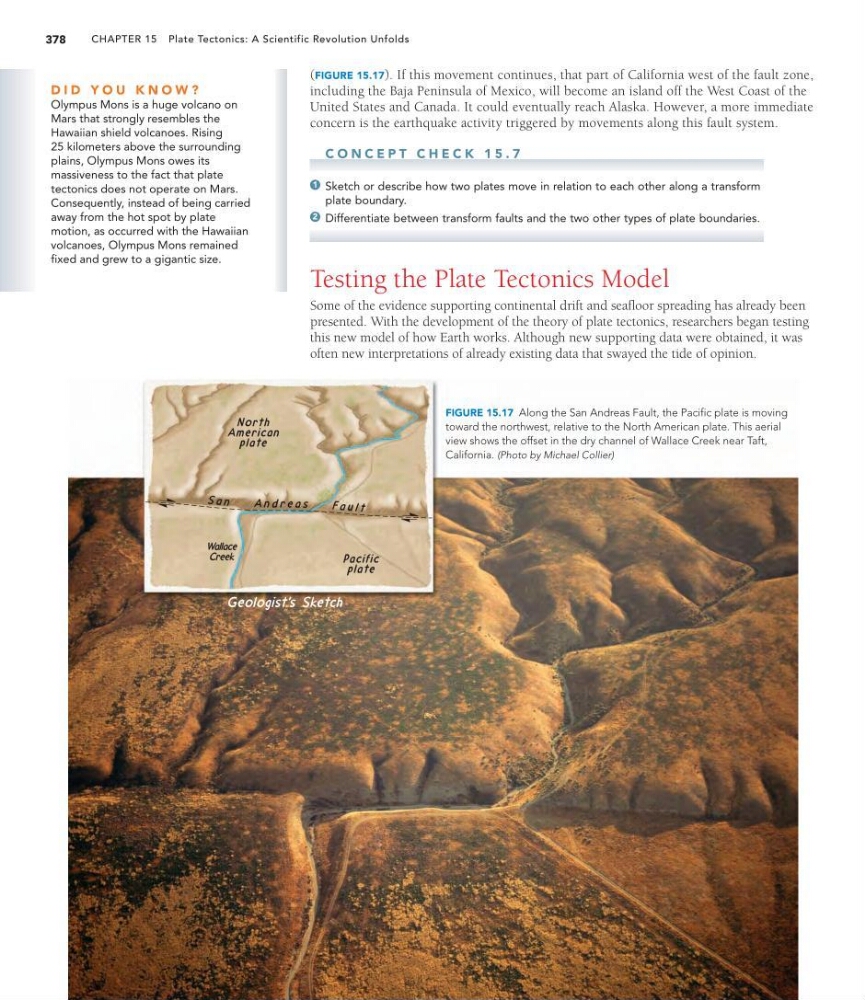
FIGURE 15.17 Along the San Andreas Fault, the Pacific plate is moving
toward the northwest, relative to the North American plate. This aerial
view shows the offset in the dry channel of Wallace Creek near Taft,
California. (Photo by Michael Collier)
D I D Y O U K N O W ?
Olympus Mons is a huge volcano on
Mars that strongly resembles the
Hawaiian shield volcanoes. Rising
25 kilometers above the surrounding
plains, Olympus Mons owes its
massiveness to the fact that plate
tectonics does not operate on Mars.
Consequently, instead of being carried
away from the hot spot by plate
motion, as occurred with the Hawaiian
volcanoes, Olympus Mons remained
fixed and grew to a gigantic size.
(FIGURE 15.17). If this movement continues, that part of California west of the fault zone,
including the Baja Peninsula of Mexico, will become an island off the West Coast of the
United States and Canada. It could eventually reach Alaska. However, a more immediate
concern is the earthquake activity triggered by movements along this fault system.
C O N C E P T C H E C K 1 5 . 7
Sketch or describe how two plates move in relation to each other along a transform
plate boundary.
Differentiate between transform faults and the two other types of plate boundaries.
Testing the Plate Tectonics Model
Some of the evidence supporting continental drift and seafloor spreading has already been
presented. With the development of the theory of plate tectonics, researchers began testing
this new model of how Earth works. Although new supporting data were obtained, it was
often new interpretations of already existing data that swayed the tide of opinion.
2
1
378
FIGURE 15.17 Along the San Andreas Fault, the Pacific plate is moving
toward the northwest, relative to the North American plate. This aerial
view shows the offset in the dry channel of Wallace Creek near Taft,
California. (Photo by Michael Collier)
D I D Y O U K N O W ?
Olympus Mons is a huge volcano on
Mars that strongly resembles the
Hawaiian shield volcanoes. Rising
25 kilometers above the surrounding
plains, Olympus Mons owes its
massiveness to the fact that plate
tectonics does not operate on Mars.
Consequently, instead of being carried
away from the hot spot by plate
motion, as occurred with the Hawaiian
volcanoes, Olympus Mons remained
fixed and grew to a gigantic size.
(FIGURE 15.17). If this movement continues, that part of California west of the fault zone,
including the Baja Peninsula of Mexico, will become an island off the West Coast of the
United States and Canada. It could eventually reach Alaska. However, a more immediate
concern is the earthquake activity triggered by movements along this fault system.
C O N C E P T C H E C K 1 5 . 7
Sketch or describe how two plates move in relation to each other along a transform
plate boundary.
Differentiate between transform faults and the two other types of plate boundaries.
Testing the Plate Tectonics Model
Some of the evidence supporting continental drift and seafloor spreading has already been
presented. With the development of the theory of plate tectonics, researchers began testing
this new model of how Earth works. Although new supporting data were obtained, it was
often new interpretations of already existing data that swayed the tide of opinion.
2
1