

CHAPTER 15 Plate Tectonics: A Scientific Revolution Unfolds
364
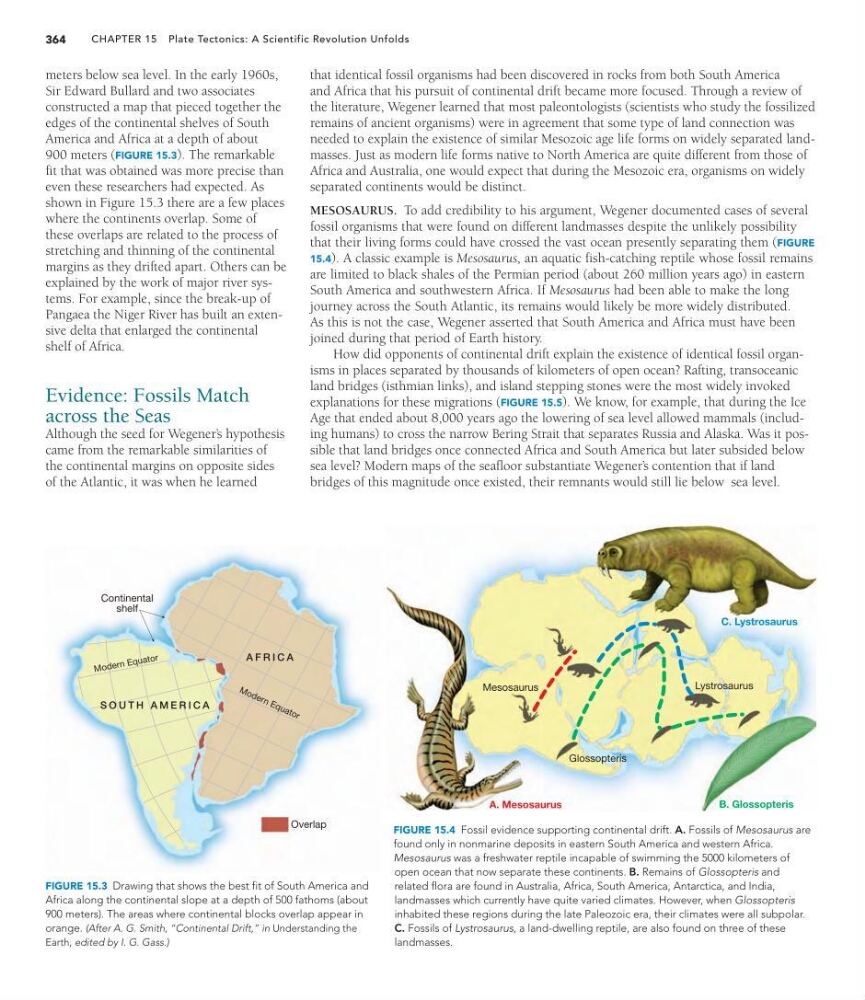
FIGURE 15.4 Fossil evidence supporting continental drift. A. Fossils of Mesosaurus are
found only in nonmarine deposits in eastern South America and western Africa.
Mesosaurus was a freshwater reptile incapable of swimming the 5000 kilometers of
open ocean that now separate these continents. B. Remains of Glossopteris and
related flora are found in Australia, Africa, South America, Antarctica, and India,
landmasses which currently have quite varied climates. However, when Glossopteris
inhabited these regions during the late Paleozoic era, their climates were all subpolar.
C. Fossils of Lystrosaurus, a land-dwelling reptile, are also found on three of these
landmasses.
meters below sea level. In the early 1960s,
Sir Edward Bullard and two associates
constructed a map that pieced together the
edges of the continental shelves of South
America and Africa at a depth of about
900 meters (FIGURE 15.3). The remarkable
fit that was obtained was more precise than
even these researchers had expected. As
shown in Figure 15.3 there are a few places
where the continents overlap. Some of
these overlaps are related to the process of
stretching and thinning of the continental
margins as they drifted apart. Others can be
explained by the work of major river systems. For example, since the break-up of
Pangaea the Niger River has built an extensive delta that enlarged the continental
shelf of Africa.
Evidence: Fossils Match
across the Seas
Although the seed for Wegener’ s hypothesis
came from the remarkable similarities of
the continental margins on opposite sides
of the Atlantic, it was when he learned
that identical fossil organisms had been discovered in rocks from both South America
and Africa that his pursuit of continental drift became more focused. Through a review of
the literature, Wegener learned that most paleontologists (scientists who study the fossilized
remains of ancient organisms) were in agreement that some type of land connection was
needed to explain the existence of similar Mesozoic age life forms on widely separated landmasses. Just as modern life forms native to North America are quite different from those of
Africa and Australia, one would expect that during the Mesozoic era, organisms on widely
separated continents would be distinct.
MESOSAURUS. To add credibility to his argument, Wegener documented cases of several
fossil organisms that were found on different landmasses despite the unlikely possibility
that their living forms could have crossed the vast ocean presently separating them (FIGURE
15.4). A classic example is Mesosaurus, an aquatic fish-catching reptile whose fossil remains
are limited to black shales of the Permian period (about 260 million years ago) in eastern
South America and southwestern Africa. If Mesosaurus had been able to make the long
journey across the South Atlantic, its remains would likely be more widely distributed.
As this is not the case, Wegener asserted that South America and Africa must have been
joined during that period of Earth history.
How did opponents of continental drift explain the existence of identical fossil organisms in places separated by thousands of kilometers of open ocean? Rafting, transoceanic
land bridges (isthmian links), and island stepping stones were the most widely invoked
explanations for these migrations (FIGURE 15.5). We know, for example, that during the Ice
Age that ended about 8,000 years ago the lowering of sea level allowed mammals (including humans) to cross the narrow Bering Strait that separates Russia and Alaska. Was it possible that land bridges once connected Africa and South America but later subsided below
sea level? Modern maps of the seafloor substantiate Wegener’ s contention that if land
bridges of this magnitude once existed, their remnants would still lie below sea level.
FIGURE 15.3 Drawing that shows the best fit of South America and
Africa along the continental slope at a depth of 500 fathoms (about
900 meters). The areas where continental blocks overlap appear in
orange. (After A. G. Smith, “Continental Drift,” in Understanding the
Earth, edited by I. G. Gass.)
S O U T H A M E R I C A
A F R I C A
Overlap
Continental
shelf
M od er n Eq ua to r
M o d e r n E q u a to r
Mesosaurus
Lystrosaurus
Glossopteris
A. Mesosaurus
C. Lystrosaurus
B. Glossopteris
364
FIGURE 15.4 Fossil evidence supporting continental drift. A. Fossils of Mesosaurus are
found only in nonmarine deposits in eastern South America and western Africa.
Mesosaurus was a freshwater reptile incapable of swimming the 5000 kilometers of
open ocean that now separate these continents. B. Remains of Glossopteris and
related flora are found in Australia, Africa, South America, Antarctica, and India,
landmasses which currently have quite varied climates. However, when Glossopteris
inhabited these regions during the late Paleozoic era, their climates were all subpolar.
C. Fossils of Lystrosaurus, a land-dwelling reptile, are also found on three of these
landmasses.
meters below sea level. In the early 1960s,
Sir Edward Bullard and two associates
constructed a map that pieced together the
edges of the continental shelves of South
America and Africa at a depth of about
900 meters (FIGURE 15.3). The remarkable
fit that was obtained was more precise than
even these researchers had expected. As
shown in Figure 15.3 there are a few places
where the continents overlap. Some of
these overlaps are related to the process of
stretching and thinning of the continental
margins as they drifted apart. Others can be
explained by the work of major river systems. For example, since the break-up of
Pangaea the Niger River has built an extensive delta that enlarged the continental
shelf of Africa.
Evidence: Fossils Match
across the Seas
Although the seed for Wegener’ s hypothesis
came from the remarkable similarities of
the continental margins on opposite sides
of the Atlantic, it was when he learned
that identical fossil organisms had been discovered in rocks from both South America
and Africa that his pursuit of continental drift became more focused. Through a review of
the literature, Wegener learned that most paleontologists (scientists who study the fossilized
remains of ancient organisms) were in agreement that some type of land connection was
needed to explain the existence of similar Mesozoic age life forms on widely separated landmasses. Just as modern life forms native to North America are quite different from those of
Africa and Australia, one would expect that during the Mesozoic era, organisms on widely
separated continents would be distinct.
MESOSAURUS. To add credibility to his argument, Wegener documented cases of several
fossil organisms that were found on different landmasses despite the unlikely possibility
that their living forms could have crossed the vast ocean presently separating them (FIGURE
15.4). A classic example is Mesosaurus, an aquatic fish-catching reptile whose fossil remains
are limited to black shales of the Permian period (about 260 million years ago) in eastern
South America and southwestern Africa. If Mesosaurus had been able to make the long
journey across the South Atlantic, its remains would likely be more widely distributed.
As this is not the case, Wegener asserted that South America and Africa must have been
joined during that period of Earth history.
How did opponents of continental drift explain the existence of identical fossil organisms in places separated by thousands of kilometers of open ocean? Rafting, transoceanic
land bridges (isthmian links), and island stepping stones were the most widely invoked
explanations for these migrations (FIGURE 15.5). We know, for example, that during the Ice
Age that ended about 8,000 years ago the lowering of sea level allowed mammals (including humans) to cross the narrow Bering Strait that separates Russia and Alaska. Was it possible that land bridges once connected Africa and South America but later subsided below
sea level? Modern maps of the seafloor substantiate Wegener’ s contention that if land
bridges of this magnitude once existed, their remnants would still lie below sea level.
FIGURE 15.3 Drawing that shows the best fit of South America and
Africa along the continental slope at a depth of 500 fathoms (about
900 meters). The areas where continental blocks overlap appear in
orange. (After A. G. Smith, “Continental Drift,” in Understanding the
Earth, edited by I. G. Gass.)
S O U T H A M E R I C A
A F R I C A
Overlap
Continental
shelf
M od er n Eq ua to r
M o d e r n E q u a to r
Mesosaurus
Lystrosaurus
Glossopteris
A. Mesosaurus
C. Lystrosaurus
B. Glossopteris