

349
Earthquake Destruction
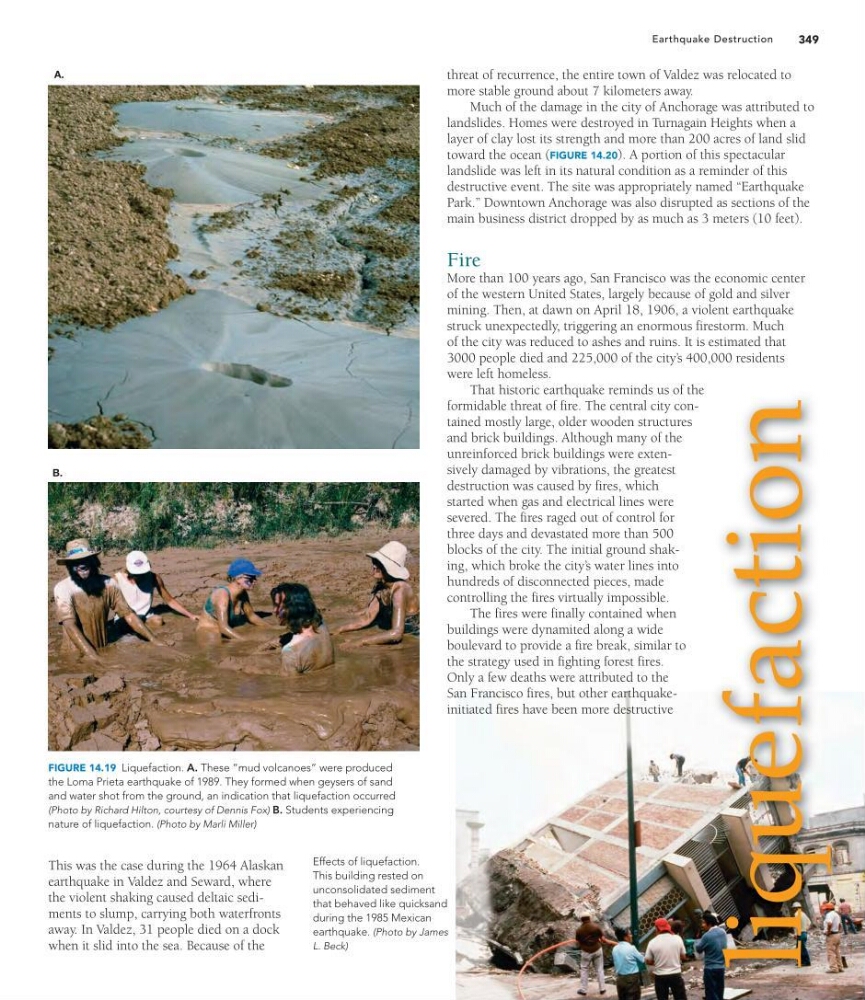
FIGURE 14.19 Liquefaction. A. These “mud volcanoes” were produced by
the Loma Prieta earthquake of 1989. They formed when geysers of sand
and water shot from the ground, an indication that liquefaction occurred.
(Photo by Richard Hilton, courtesy of Dennis Fox) B. Students experiencing the
nature of liquefaction. (Photo by Marli Miller)
liquefaction
A.
B.
threat of recurrence, the entire town of Valdez was relocated to
more stable ground about 7 kilometers away.
Much of the damage in the city of Anchorage was attributed to
landslides. Homes were destroyed in Turnagain Heights when a
layer of clay lost its strength and more than 200 acres of land slid
toward the ocean (FIGURE 14.20). A portion of this spectacular
landslide was left in its natural condition as a reminder of this
destructive event. The site was appropriately named “Earthquake
Park.” Downtown Anchorage was also disrupted as sections of the
main business district dropped by as much as 3 meters (10 feet).
Fire
More than 100 years ago, San Francisco was the economic center
of the western United States, largely because of gold and silver
mining. Then, at dawn on April 18, 1906, a violent earthquake
struck unexpectedly, triggering an enormous firestorm. Much
of the city was reduced to ashes and ruins. It is estimated that
3000 people died and 225,000 of the city’ s 400,000 residents
were left homeless.
That historic earthquake reminds us of the
formidable threat of fire. The central city contained mostly large, older wooden structures
and brick buildings. Although many of the
unreinforced brick buildings were extensively damaged by vibrations, the greatest
destruction was caused by fires, which
started when gas and electrical lines were
severed. The fires raged out of control for
three days and devastated more than 500
blocks of the city. The initial ground shaking, which broke the city’ s water lines into
hundreds of disconnected pieces, made
controlling the fires virtually impossible.
The fires were finally contained when
buildings were dynamited along a wide
boulevard to provide a fire break, similar to
the strategy used in fighting forest fires.
Only a few deaths were attributed to the
San Francisco fires, but other earthquakeinitiated fires have been more destructive
This was the case during the 1964 Alaskan
earthquake in Valdez and Seward, where
the violent shaking caused deltaic sediments to slump, carrying both waterfronts
away. In Valdez, 31 people died on a dock
when it slid into the sea. Because of the
Effects of liquefaction.
This building rested on
unconsolidated sediment
that behaved like quicksand
during the 1985 Mexican
earthquake. (Photo by James
L. Beck)
Earthquake Destruction
FIGURE 14.19 Liquefaction. A. These “mud volcanoes” were produced by
the Loma Prieta earthquake of 1989. They formed when geysers of sand
and water shot from the ground, an indication that liquefaction occurred.
(Photo by Richard Hilton, courtesy of Dennis Fox) B. Students experiencing the
nature of liquefaction. (Photo by Marli Miller)
liquefaction
A.
B.
threat of recurrence, the entire town of Valdez was relocated to
more stable ground about 7 kilometers away.
Much of the damage in the city of Anchorage was attributed to
landslides. Homes were destroyed in Turnagain Heights when a
layer of clay lost its strength and more than 200 acres of land slid
toward the ocean (FIGURE 14.20). A portion of this spectacular
landslide was left in its natural condition as a reminder of this
destructive event. The site was appropriately named “Earthquake
Park.” Downtown Anchorage was also disrupted as sections of the
main business district dropped by as much as 3 meters (10 feet).
Fire
More than 100 years ago, San Francisco was the economic center
of the western United States, largely because of gold and silver
mining. Then, at dawn on April 18, 1906, a violent earthquake
struck unexpectedly, triggering an enormous firestorm. Much
of the city was reduced to ashes and ruins. It is estimated that
3000 people died and 225,000 of the city’ s 400,000 residents
were left homeless.
That historic earthquake reminds us of the
formidable threat of fire. The central city contained mostly large, older wooden structures
and brick buildings. Although many of the
unreinforced brick buildings were extensively damaged by vibrations, the greatest
destruction was caused by fires, which
started when gas and electrical lines were
severed. The fires raged out of control for
three days and devastated more than 500
blocks of the city. The initial ground shaking, which broke the city’ s water lines into
hundreds of disconnected pieces, made
controlling the fires virtually impossible.
The fires were finally contained when
buildings were dynamited along a wide
boulevard to provide a fire break, similar to
the strategy used in fighting forest fires.
Only a few deaths were attributed to the
San Francisco fires, but other earthquakeinitiated fires have been more destructive
This was the case during the 1964 Alaskan
earthquake in Valdez and Seward, where
the violent shaking caused deltaic sediments to slump, carrying both waterfronts
away. In Valdez, 31 people died on a dock
when it slid into the sea. Because of the
Effects of liquefaction.
This building rested on
unconsolidated sediment
that behaved like quicksand
during the 1985 Mexican
earthquake. (Photo by James
L. Beck)