

Thousands of earthquakes occur
around the world every day. Fortunately,
most are so small that they can only be
detected by sensitive instruments. Of
these, only about 75 strong quakes are
recorded each year and many of these
occur in remote regions. Occasionally, a
large earthquake is triggered near a major
population center. Such events are
among the most destructive natural
forces on Earth. The shaking of the
ground, coupled with the liquefaction of
soils, wreaks havoc on buildings, roadways, and other structures. In addition,
when a quake occurs in a populated area, power and gas lines are often ruptured,
causing numerous fires. In the famous 1906 San Francisco earthquake, much of
the damage was caused by fires that became uncontrollable when broken water
mains left firefighters with only trickles of water (FIGURE 14.3).
Discovering the Causes of Earthquakes
The energy released by atomic explosions or by the movement of magma in Earth’ s crust
can generate earthquakelike waves, but these events are generally quite weak. What mechanism produces a destructive earthquake? As you have learned, Earth is not a static planet.
We know that large sections of Earth’ s crust have been thrust upward, because fossils of
marine organisms have been discovered thousands of meters above sea level. Other regions
exhibit evidence of extensive subsidence. In addition to these vertical displacements, offsets
337
What Is an Earthquake?
Seismic
waves
Epicenter
Focus
Fault
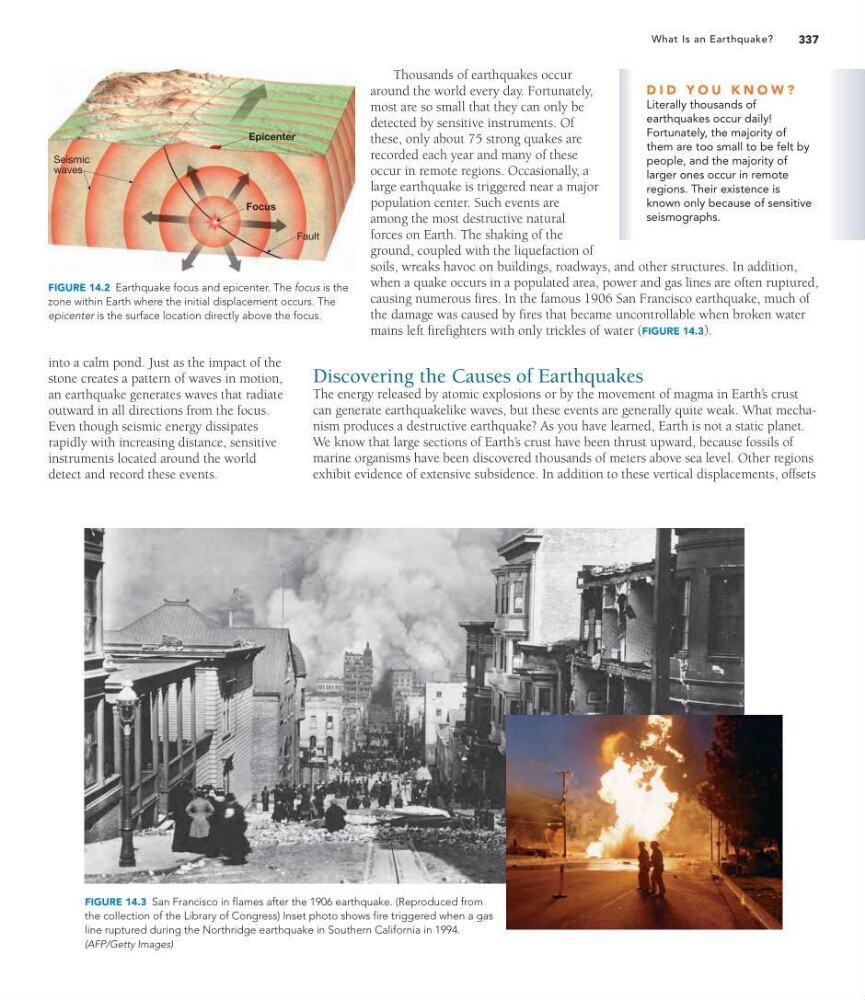
FIGURE 14.2 Earthquake focus and epicenter. The focus is the
zone within Earth where the initial displacement occurs. The
epicenter is the surface location directly above the focus.
into a calm pond. Just as the impact of the
stone creates a pattern of waves in motion,
an earthquake generates waves that radiate
outward in all directions from the focus.
Even though seismic energy dissipates
rapidly with increasing distance, sensitive
instruments located around the world
detect and record these events.
FIGURE 14.3 San Francisco in flames after the 1906 earthquake. (Reproduced from
the collection of the Library of Congress) Inset photo shows fire triggered when a gas
line ruptured during the Northridge earthquake in Southern California in 1994.
(AFP/Getty Images)
D I D Y O U K N O W ?
Literally thousands of
earthquakes occur daily!
Fortunately, the majority of
them are too small to be felt by
people, and the majority of
larger ones occur in remote
regions. Their existence is
known only because of sensitive
seismographs.
around the world every day. Fortunately,
most are so small that they can only be
detected by sensitive instruments. Of
these, only about 75 strong quakes are
recorded each year and many of these
occur in remote regions. Occasionally, a
large earthquake is triggered near a major
population center. Such events are
among the most destructive natural
forces on Earth. The shaking of the
ground, coupled with the liquefaction of
soils, wreaks havoc on buildings, roadways, and other structures. In addition,
when a quake occurs in a populated area, power and gas lines are often ruptured,
causing numerous fires. In the famous 1906 San Francisco earthquake, much of
the damage was caused by fires that became uncontrollable when broken water
mains left firefighters with only trickles of water (FIGURE 14.3).
Discovering the Causes of Earthquakes
The energy released by atomic explosions or by the movement of magma in Earth’ s crust
can generate earthquakelike waves, but these events are generally quite weak. What mechanism produces a destructive earthquake? As you have learned, Earth is not a static planet.
We know that large sections of Earth’ s crust have been thrust upward, because fossils of
marine organisms have been discovered thousands of meters above sea level. Other regions
exhibit evidence of extensive subsidence. In addition to these vertical displacements, offsets
337
What Is an Earthquake?
Seismic
waves
Epicenter
Focus
Fault
FIGURE 14.2 Earthquake focus and epicenter. The focus is the
zone within Earth where the initial displacement occurs. The
epicenter is the surface location directly above the focus.
into a calm pond. Just as the impact of the
stone creates a pattern of waves in motion,
an earthquake generates waves that radiate
outward in all directions from the focus.
Even though seismic energy dissipates
rapidly with increasing distance, sensitive
instruments located around the world
detect and record these events.
FIGURE 14.3 San Francisco in flames after the 1906 earthquake. (Reproduced from
the collection of the Library of Congress) Inset photo shows fire triggered when a gas
line ruptured during the Northridge earthquake in Southern California in 1994.
(AFP/Getty Images)
D I D Y O U K N O W ?
Literally thousands of
earthquakes occur daily!
Fortunately, the majority of
them are too small to be felt by
people, and the majority of
larger ones occur in remote
regions. Their existence is
known only because of sensitive
seismographs.