

CHAPTER 14 Earthquakes and Earth’s Interior
336
Fault
H A I T I
Florida
Jamaica
Hispaniola
Haiti Dominican
Republic
Cuba
Epicenter
Port-auPrince
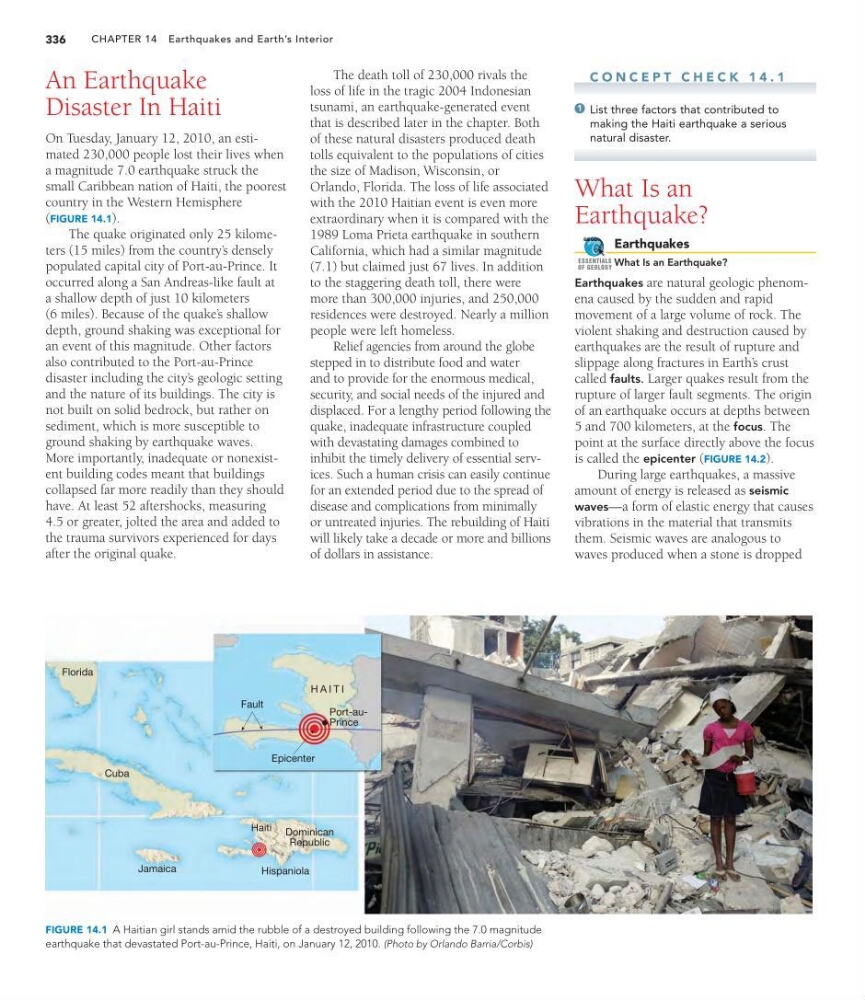
FIGURE 14.1 A Haitian girl stands amid the rubble of a destroyed building following the 7.0 magnitude
earthquake that devastated Port-au-Prince, Haiti, on January 12, 2010. (Photo by Orlando Barria/Corbis)
An Earthquake
Disaster In Haiti
On Tuesday, January 12, 2010, an estimated 230,000 people lost their lives when
a magnitude 7.0 earthquake struck the
small Caribbean nation of Haiti, the poorest
country in the Western Hemisphere
(FIGURE 14.1).
The quake originated only 25 kilometers (15 miles) from the country’ s densely
populated capital city of Port-au-Prince. It
occurred along a San Andreas-like fault at
a shallow depth of just 10 kilometers
(6 miles). Because of the quake’ s shallow
depth, ground shaking was exceptional for
an event of this magnitude. Other factors
also contributed to the Port-au-Prince
disaster including the city’ s geologic setting
and the nature of its buildings. The city is
not built on solid bedrock, but rather on
sediment, which is more susceptible to
ground shaking by earthquake waves.
More importantly, inadequate or nonexistent building codes meant that buildings
collapsed far more readily than they should
have. At least 52 aftershocks, measuring
4.5 or greater, jolted the area and added to
the trauma survivors experienced for days
after the original quake.
The death toll of 230,000 rivals the
loss of life in the tragic 2004 Indonesian
tsunami, an earthquake-generated event
that is described later in the chapter. Both
of these natural disasters produced death
tolls equivalent to the populations of cities
the size of Madison, Wisconsin, or
Orlando, Florida. The loss of life associated
with the 2010 Haitian event is even more
extraordinary when it is compared with the
1989 Loma Prieta earthquake in southern
California, which had a similar magnitude
(7.1) but claimed just 67 lives. In addition
to the staggering death toll, there were
more than 300,000 injuries, and 250,000
residences were destroyed. Nearly a million
people were left homeless.
Relief agencies from around the globe
stepped in to distribute food and water
and to provide for the enormous medical,
security, and social needs of the injured and
displaced. For a lengthy period following the
quake, inadequate infrastructure coupled
with devastating damages combined to
inhibit the timely delivery of essential services. Such a human crisis can easily continue
for an extended period due to the spread of
disease and complications from minimally
or untreated injuries. The rebuilding of Haiti
will likely take a decade or more and billions
of dollars in assistance.
C O N C E P T C H E C K 1 4 . 1
List three factors that contributed to
making the Haiti earthquake a serious
natural disaster.
What Is an
Earthquake?
Earthquakes
What Is an Earthquake?
Earthquakes are natural geologic phenomena caused by the sudden and rapid
movement of a large volume of rock. The
violent shaking and destruction caused by
earthquakes are the result of rupture and
slippage along fractures in Earth’ s crust
called faults. Larger quakes result from the
rupture of larger fault segments. The origin
of an earthquake occurs at depths between
5 and 700 kilometers, at the focus. The
point at the surface directly above the focus
is called the epicenter (FIGURE 14.2).
During large earthquakes, a massive
amount of energy is released as seismic
waves—a form of elastic energy that causes
vibrations in the material that transmits
them. Seismic waves are analogous to
waves produced when a stone is dropped
GEODe
ESSENTIALS
OF GEOLOGY
1
336
Fault
H A I T I
Florida
Jamaica
Hispaniola
Haiti Dominican
Republic
Cuba
Epicenter
Port-auPrince
FIGURE 14.1 A Haitian girl stands amid the rubble of a destroyed building following the 7.0 magnitude
earthquake that devastated Port-au-Prince, Haiti, on January 12, 2010. (Photo by Orlando Barria/Corbis)
An Earthquake
Disaster In Haiti
On Tuesday, January 12, 2010, an estimated 230,000 people lost their lives when
a magnitude 7.0 earthquake struck the
small Caribbean nation of Haiti, the poorest
country in the Western Hemisphere
(FIGURE 14.1).
The quake originated only 25 kilometers (15 miles) from the country’ s densely
populated capital city of Port-au-Prince. It
occurred along a San Andreas-like fault at
a shallow depth of just 10 kilometers
(6 miles). Because of the quake’ s shallow
depth, ground shaking was exceptional for
an event of this magnitude. Other factors
also contributed to the Port-au-Prince
disaster including the city’ s geologic setting
and the nature of its buildings. The city is
not built on solid bedrock, but rather on
sediment, which is more susceptible to
ground shaking by earthquake waves.
More importantly, inadequate or nonexistent building codes meant that buildings
collapsed far more readily than they should
have. At least 52 aftershocks, measuring
4.5 or greater, jolted the area and added to
the trauma survivors experienced for days
after the original quake.
The death toll of 230,000 rivals the
loss of life in the tragic 2004 Indonesian
tsunami, an earthquake-generated event
that is described later in the chapter. Both
of these natural disasters produced death
tolls equivalent to the populations of cities
the size of Madison, Wisconsin, or
Orlando, Florida. The loss of life associated
with the 2010 Haitian event is even more
extraordinary when it is compared with the
1989 Loma Prieta earthquake in southern
California, which had a similar magnitude
(7.1) but claimed just 67 lives. In addition
to the staggering death toll, there were
more than 300,000 injuries, and 250,000
residences were destroyed. Nearly a million
people were left homeless.
Relief agencies from around the globe
stepped in to distribute food and water
and to provide for the enormous medical,
security, and social needs of the injured and
displaced. For a lengthy period following the
quake, inadequate infrastructure coupled
with devastating damages combined to
inhibit the timely delivery of essential services. Such a human crisis can easily continue
for an extended period due to the spread of
disease and complications from minimally
or untreated injuries. The rebuilding of Haiti
will likely take a decade or more and billions
of dollars in assistance.
C O N C E P T C H E C K 1 4 . 1
List three factors that contributed to
making the Haiti earthquake a serious
natural disaster.
What Is an
Earthquake?
Earthquakes
What Is an Earthquake?
Earthquakes are natural geologic phenomena caused by the sudden and rapid
movement of a large volume of rock. The
violent shaking and destruction caused by
earthquakes are the result of rupture and
slippage along fractures in Earth’ s crust
called faults. Larger quakes result from the
rupture of larger fault segments. The origin
of an earthquake occurs at depths between
5 and 700 kilometers, at the focus. The
point at the surface directly above the focus
is called the epicenter (FIGURE 14.2).
During large earthquakes, a massive
amount of energy is released as seismic
waves—a form of elastic energy that causes
vibrations in the material that transmits
them. Seismic waves are analogous to
waves produced when a stone is dropped
GEODe
ESSENTIALS
OF GEOLOGY
1