

CHAPTER 13 Shorelines
328
WIND DAMAGE. Destruction caused by
wind is perhaps the most obvious of the
classes of hurricane damage. Debris such
as signs, roofing materials, and small items
left outside become dangerous flying missiles in hurricanes. For some structures the
force of the wind is sufficient to cause total
ruin. Mobile homes are particularly vulnerable. High-rise buildings are also susceptible to hurricane-force winds. Upper floors
are most vulnerable because wind speeds
usually increase with height. Recent
research suggests that people should stay
below the 10th floor but remain above
floors that are at risk for flooding. In
regions with good building codes, wind
damage is usually not as catastrophic as
storm-surge damage. However, hurricaneforce winds affect a much larger area than
storm surge and can cause huge economic
losses. For example, in 1992 it was largely
the winds associated with Hurricane
Andrew that produced more than $25 billion of damage in southern Florida and
Louisiana.
Hurricanes sometimes produce tornadoes that contribute to the
storm’ s destructive power. Studies have shown that more than half of
the hurricanes that make landfall produce at least one tornado. In 2004
the number of tornadoes associated with tropical storms and hurricanes
was extraordinary. Tropical Storm Bonnie and five landfalling hurricanes—Charley, Frances, Gaston, Ivan, and Jeanne—produced nearly
300 tornadoes that affected the southeast and mid-Atlantic states.
HEAVY RAINS AND INLAND FLOODING. The torrential rains that
accompany most hurricanes represent a third significant threat: flooding. Whereas the effects of storm surge and strong winds are concentrated in coastal areas, heavy rains may affect places hundreds of
kilometers from the coast for up to several days after the storm has lost
its hurricane-force winds.
In September 1999, Hurricane Floyd brought flooding rains, high
winds, and rough seas to a large portion of the Atlantic seaboard. More
than 2.5 million people evacuated their homes from Florida to the Carolinas and beyond. It was the largest peacetime evacuation in U.S. history up to that time. Torrential rains falling on already saturated ground
created devastating inland flooding. Altogether Floyd dumped more
than 48 centimeters (19 inches) of rain on Wilmington, North Carolina;
33.98 centimeters (13.38 inches) in a single 24-hour span.
Another well-known example is Hurricane Camille (1969).
Although this storm is best known for its exceptional storm surge and
the devastation it brought to coastal areas, the greatest number of deaths
associated with this storm occurred in the Blue Ridge Mountains of Virginia two days after Camille’ s landfall. Many places received more than
25 centimeters (10 inches) of rain.
SUMMARY. To summarize, extensive damage and loss of life in the
coastal zone can result from storm surge, strong winds, and torrential
rains. When loss of life occurs, it is commonly caused by the storm surge, which can devastate entire barrier islands or zones within a few blocks of the coast. Although wind damage is usually not as catastrophic as the storm surge, it affects a much larger area. Where
building codes are inadequate, economic losses can be especially severe. Because hurricanes weaken as they move inland, most wind damage occurs within 200 kilometers
(125 miles) of the coast. Far from the coast, a weakening storm can produce extensive
flooding long after the winds have diminished below hurricane levels. Sometimes the damage from inland flooding exceeds storm-surge destruction.
C O N C E P T C H E C K 1 3 . 9
List the three categories of hurricane damage. Which one is responsible
for the greatest number of hurricane-related deaths?
Coastal Classification
The great variety of shorelines demonstrates their complexity. Indeed, to understand any
particular coastal area, many factors must be considered, including rock types, size and
direction of waves, frequency of storms, range between high and low tides, and offshore
topography. In addition, practically all coastal areas were affected by the worldwide rise in
sea level that accompanied the melting of Ice Age glaciers at the close of the Pleistocene
epoch. Finally, tectonic events that elevate or drop the land or change the volume of ocean
basins must be taken into account. The large number of factors that influence coastal areas
make shoreline classification difficult.
1
North Carolina
North Carolina
South South
Carolina Carolina
Georgia Georgia
Florida Florida
S p e e d a n d
S p e e d a n d
d ir e c t io n o f
d ir e c t io n o f
h u r r ic a n e
h u r r ic a n e
m o v e m e n t
m o v e m e n t
5 0 k p h
5 0 k p h
H u r r ic a n e
H u r r ic a n e
m o v e m e n t
m o v e m e n t
5 0 k p h
5 0 k p h
W in d o n
W in d o n
le f t s id e
le f t s id e
1 7 5 k p h
1 7 5 k p h
H u r r ic a n e
H u r r ic a n e
m o v e m e n t
m o v e m e n t
5 0 k p h
5 0 k p h
W in d o n
W in d o n
r ig h t s id e
r ig h t s id e
1 7 5 k p h
1 7 5 k p h
N e t w in d
N e t w in d
1 2 5 k p h
1 2 5 k p h
f r o m
t h e
f r o m
t h e
n o r t h w e s t
n o r t h w e s t
N e t w in d
N e t w in d
2 2 5 k p h
2 2 5 k p h
f r o m
t h e
f r o m
t h e
s o u t h w e s t
s o u t h w e s t
=
=
North Carolina
South
Carolina
Georgia
Florida
S p e e d a n d
d ir e c t io n o f
h u r r ic a n e
m o v e m e n t
5 0 k p h
H u r r ic a n e
m o v e m e n t
5 0 k p h
W in d o n
le f t s id e
1 7 5 k p h
H u r r ic a n e
m o v e m e n t
5 0 k p h
W in d o n
r ig h t s id e
1 7 5 k p h
N e t w in d
1 2 5 k p h
f r o m
t h e
n o r t h w e s t
N e t w in d
2 2 5 k p h
f r o m
t h e
s o u t h w e s t
=
=
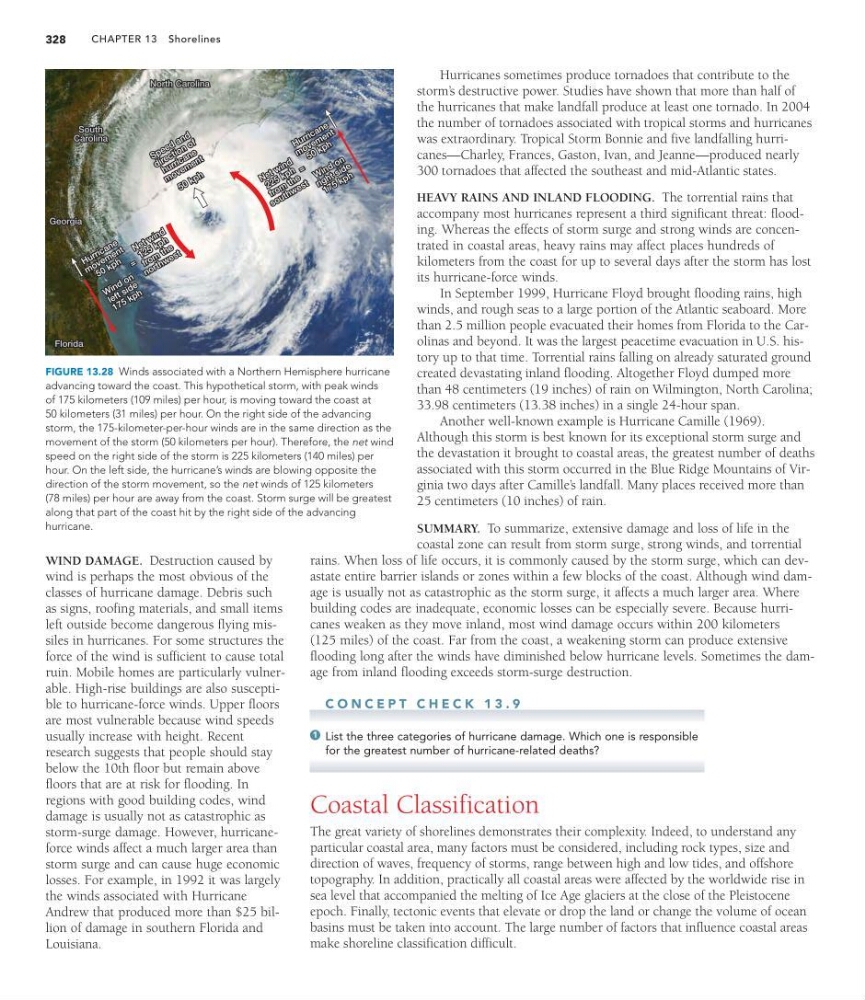
FIGURE 13.28 Winds associated with a Northern Hemisphere hurricane
advancing toward the coast. This hypothetical storm, with peak winds
of 175 kilometers (109 miles) per hour, is moving toward the coast at
50 kilometers (31 miles) per hour. On the right side of the advancing
storm, the 175-kilometer-per-hour winds are in the same direction as the
movement of the storm (50 kilometers per hour). Therefore, the net wind
speed on the right side of the storm is 225 kilometers (140 miles) per
hour. On the left side, the hurricane’s winds are blowing opposite the
direction of the storm movement, so the net winds of 125 kilometers
(78 miles) per hour are away from the coast. Storm surge will be greatest
along that part of the coast hit by the right side of the advancing
hurricane.
328
WIND DAMAGE. Destruction caused by
wind is perhaps the most obvious of the
classes of hurricane damage. Debris such
as signs, roofing materials, and small items
left outside become dangerous flying missiles in hurricanes. For some structures the
force of the wind is sufficient to cause total
ruin. Mobile homes are particularly vulnerable. High-rise buildings are also susceptible to hurricane-force winds. Upper floors
are most vulnerable because wind speeds
usually increase with height. Recent
research suggests that people should stay
below the 10th floor but remain above
floors that are at risk for flooding. In
regions with good building codes, wind
damage is usually not as catastrophic as
storm-surge damage. However, hurricaneforce winds affect a much larger area than
storm surge and can cause huge economic
losses. For example, in 1992 it was largely
the winds associated with Hurricane
Andrew that produced more than $25 billion of damage in southern Florida and
Louisiana.
Hurricanes sometimes produce tornadoes that contribute to the
storm’ s destructive power. Studies have shown that more than half of
the hurricanes that make landfall produce at least one tornado. In 2004
the number of tornadoes associated with tropical storms and hurricanes
was extraordinary. Tropical Storm Bonnie and five landfalling hurricanes—Charley, Frances, Gaston, Ivan, and Jeanne—produced nearly
300 tornadoes that affected the southeast and mid-Atlantic states.
HEAVY RAINS AND INLAND FLOODING. The torrential rains that
accompany most hurricanes represent a third significant threat: flooding. Whereas the effects of storm surge and strong winds are concentrated in coastal areas, heavy rains may affect places hundreds of
kilometers from the coast for up to several days after the storm has lost
its hurricane-force winds.
In September 1999, Hurricane Floyd brought flooding rains, high
winds, and rough seas to a large portion of the Atlantic seaboard. More
than 2.5 million people evacuated their homes from Florida to the Carolinas and beyond. It was the largest peacetime evacuation in U.S. history up to that time. Torrential rains falling on already saturated ground
created devastating inland flooding. Altogether Floyd dumped more
than 48 centimeters (19 inches) of rain on Wilmington, North Carolina;
33.98 centimeters (13.38 inches) in a single 24-hour span.
Another well-known example is Hurricane Camille (1969).
Although this storm is best known for its exceptional storm surge and
the devastation it brought to coastal areas, the greatest number of deaths
associated with this storm occurred in the Blue Ridge Mountains of Virginia two days after Camille’ s landfall. Many places received more than
25 centimeters (10 inches) of rain.
SUMMARY. To summarize, extensive damage and loss of life in the
coastal zone can result from storm surge, strong winds, and torrential
rains. When loss of life occurs, it is commonly caused by the storm surge, which can devastate entire barrier islands or zones within a few blocks of the coast. Although wind damage is usually not as catastrophic as the storm surge, it affects a much larger area. Where
building codes are inadequate, economic losses can be especially severe. Because hurricanes weaken as they move inland, most wind damage occurs within 200 kilometers
(125 miles) of the coast. Far from the coast, a weakening storm can produce extensive
flooding long after the winds have diminished below hurricane levels. Sometimes the damage from inland flooding exceeds storm-surge destruction.
C O N C E P T C H E C K 1 3 . 9
List the three categories of hurricane damage. Which one is responsible
for the greatest number of hurricane-related deaths?
Coastal Classification
The great variety of shorelines demonstrates their complexity. Indeed, to understand any
particular coastal area, many factors must be considered, including rock types, size and
direction of waves, frequency of storms, range between high and low tides, and offshore
topography. In addition, practically all coastal areas were affected by the worldwide rise in
sea level that accompanied the melting of Ice Age glaciers at the close of the Pleistocene
epoch. Finally, tectonic events that elevate or drop the land or change the volume of ocean
basins must be taken into account. The large number of factors that influence coastal areas
make shoreline classification difficult.
1
North Carolina
North Carolina
South South
Carolina Carolina
Georgia Georgia
Florida Florida
S p e e d a n d
S p e e d a n d
d ir e c t io n o f
d ir e c t io n o f
h u r r ic a n e
h u r r ic a n e
m o v e m e n t
m o v e m e n t
5 0 k p h
5 0 k p h
H u r r ic a n e
H u r r ic a n e
m o v e m e n t
m o v e m e n t
5 0 k p h
5 0 k p h
W in d o n
W in d o n
le f t s id e
le f t s id e
1 7 5 k p h
1 7 5 k p h
H u r r ic a n e
H u r r ic a n e
m o v e m e n t
m o v e m e n t
5 0 k p h
5 0 k p h
W in d o n
W in d o n
r ig h t s id e
r ig h t s id e
1 7 5 k p h
1 7 5 k p h
N e t w in d
N e t w in d
1 2 5 k p h
1 2 5 k p h
f r o m
t h e
f r o m
t h e
n o r t h w e s t
n o r t h w e s t
N e t w in d
N e t w in d
2 2 5 k p h
2 2 5 k p h
f r o m
t h e
f r o m
t h e
s o u t h w e s t
s o u t h w e s t
=
=
North Carolina
South
Carolina
Georgia
Florida
S p e e d a n d
d ir e c t io n o f
h u r r ic a n e
m o v e m e n t
5 0 k p h
H u r r ic a n e
m o v e m e n t
5 0 k p h
W in d o n
le f t s id e
1 7 5 k p h
H u r r ic a n e
m o v e m e n t
5 0 k p h
W in d o n
r ig h t s id e
1 7 5 k p h
N e t w in d
1 2 5 k p h
f r o m
t h e
n o r t h w e s t
N e t w in d
2 2 5 k p h
f r o m
t h e
s o u t h w e s t
=
=
FIGURE 13.28 Winds associated with a Northern Hemisphere hurricane
advancing toward the coast. This hypothetical storm, with peak winds
of 175 kilometers (109 miles) per hour, is moving toward the coast at
50 kilometers (31 miles) per hour. On the right side of the advancing
storm, the 175-kilometer-per-hour winds are in the same direction as the
movement of the storm (50 kilometers per hour). Therefore, the net wind
speed on the right side of the storm is 225 kilometers (140 miles) per
hour. On the left side, the hurricane’s winds are blowing opposite the
direction of the storm movement, so the net winds of 125 kilometers
(78 miles) per hour are away from the coast. Storm surge will be greatest
along that part of the coast hit by the right side of the advancing
hurricane.