

A.
B.
309
The Coastal Zone
The Coastal Zone
In general conversation several terms
are used when referring to the boundary between land and sea. In the preceding section, the terms shore,
shoreline, coastal zone, and coast were
all used. Moreover, when many think
of the land–sea interface, the word beach comes to mind. Let’ s take a
moment to clarify these terms and introduce some other terminology used
by those who study the land–sea boundary zone. You will find it helpful
to refer to FIGURE 13.3, which is an idealized profile of the coastal zone.
Basic Features
The shoreline is the line that marks the contact between land and sea.
Each day, as tides rise and fall, the position of the shoreline migrates. Over
longer time spans, the average position of the shoreline gradually shifts as
sea level rises or falls.
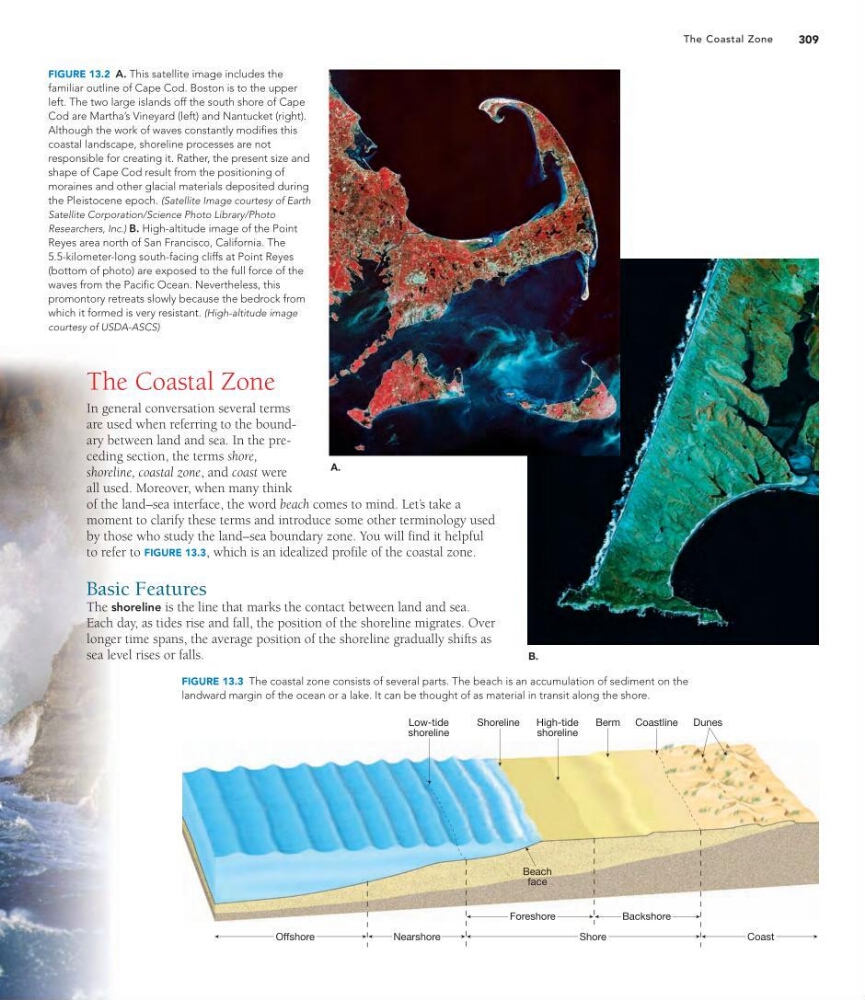
FIGURE 13.2 A. This satellite image includes the
familiar outline of Cape Cod. Boston is to the upper
left. The two large islands off the south shore of Cape
Cod are Martha’s Vineyard (left) and Nantucket (right).
Although the work of waves constantly modifies this
coastal landscape, shoreline processes are not
responsible for creating it. Rather, the present size and
shape of Cape Cod result from the positioning of
moraines and other glacial materials deposited during
the Pleistocene epoch. (Satellite Image courtesy of Earth
Satellite Corporation/Science Photo Library/Photo
Researchers, Inc.) B. High-altitude image of the Point
Reyes area north of San Francisco, California. The
5.5-kilometer-long south-facing cliffs at Point Reyes
(bottom of photo) are exposed to the full force of the
waves from the Pacific Ocean. Nevertheless, this
promontory retreats slowly because the bedrock from
which it formed is very resistant. (High-altitude image
courtesy of USDA-ASCS)
Low-tide
shoreline
High-tide
shoreline
Shoreline
Berm Coastline Dunes
Beach
face
Offshore
Nearshore
Shore
Foreshore
Backshore
Coast
FIGURE 13.3 The coastal zone consists of several parts. The beach is an accumulation of sediment on the
landward margin of the ocean or a lake. It can be thought of as material in transit along the shore.
B.
309
The Coastal Zone
The Coastal Zone
In general conversation several terms
are used when referring to the boundary between land and sea. In the preceding section, the terms shore,
shoreline, coastal zone, and coast were
all used. Moreover, when many think
of the land–sea interface, the word beach comes to mind. Let’ s take a
moment to clarify these terms and introduce some other terminology used
by those who study the land–sea boundary zone. You will find it helpful
to refer to FIGURE 13.3, which is an idealized profile of the coastal zone.
Basic Features
The shoreline is the line that marks the contact between land and sea.
Each day, as tides rise and fall, the position of the shoreline migrates. Over
longer time spans, the average position of the shoreline gradually shifts as
sea level rises or falls.
FIGURE 13.2 A. This satellite image includes the
familiar outline of Cape Cod. Boston is to the upper
left. The two large islands off the south shore of Cape
Cod are Martha’s Vineyard (left) and Nantucket (right).
Although the work of waves constantly modifies this
coastal landscape, shoreline processes are not
responsible for creating it. Rather, the present size and
shape of Cape Cod result from the positioning of
moraines and other glacial materials deposited during
the Pleistocene epoch. (Satellite Image courtesy of Earth
Satellite Corporation/Science Photo Library/Photo
Researchers, Inc.) B. High-altitude image of the Point
Reyes area north of San Francisco, California. The
5.5-kilometer-long south-facing cliffs at Point Reyes
(bottom of photo) are exposed to the full force of the
waves from the Pacific Ocean. Nevertheless, this
promontory retreats slowly because the bedrock from
which it formed is very resistant. (High-altitude image
courtesy of USDA-ASCS)
Low-tide
shoreline
High-tide
shoreline
Shoreline
Berm Coastline Dunes
Beach
face
Offshore
Nearshore
Shore
Foreshore
Backshore
Coast
FIGURE 13.3 The coastal zone consists of several parts. The beach is an accumulation of sediment on the
landward margin of the ocean or a lake. It can be thought of as material in transit along the shore.