

291
Geologic Processes in Arid Climates
Windward
(wet)
Leeward
(dry)
Rainshadow
Wind
Coast Range
Sierra Nevada
Range
Great
Basin
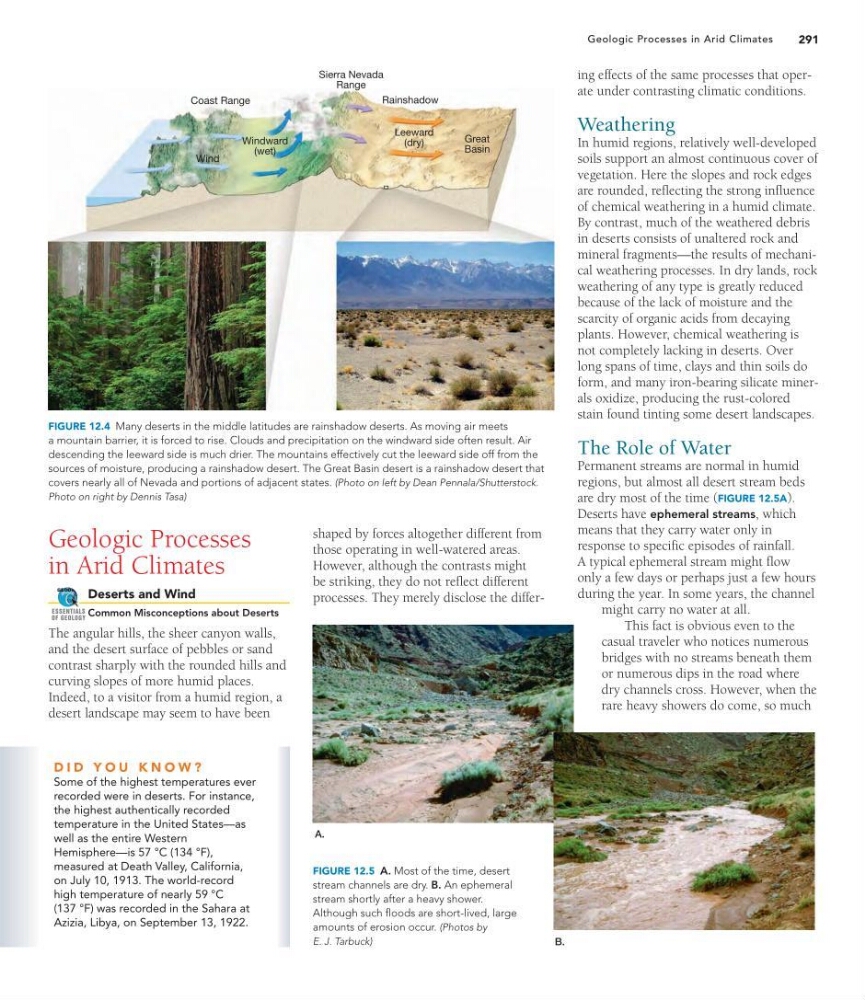
FIGURE 12.4 Many deserts in the middle latitudes are rainshadow deserts. As moving air meets
a mountain barrier, it is forced to rise. Clouds and precipitation on the windward side often result. Air
descending the leeward side is much drier. The mountains effectively cut the leeward side off from the
sources of moisture, producing a rainshadow desert. The Great Basin desert is a rainshadow desert that
covers nearly all of Nevada and portions of adjacent states. (Photo on left by Dean Pennala/Shutterstock.
Photo on right by Dennis Tasa)
D I D Y O U K N O W ?
Some of the highest temperatures ever
recorded were in deserts. For instance,
the highest authentically recorded
temperature in the United States—as
well as the entire Western
Hemisphere—is 57 °C (134 °F),
measured at Death Valley, California,
on July 10, 1913. The world-record
high temperature of nearly 59 °C
(137 °F) was recorded in the Sahara at
Azizia, Libya, on September 13, 1922.
Geologic Processes
in Arid Climates
Deserts and Wind
Common Misconceptions about Deserts
The angular hills, the sheer canyon walls,
and the desert surface of pebbles or sand
contrast sharply with the rounded hills and
curving slopes of more humid places.
Indeed, to a visitor from a humid region, a
desert landscape may seem to have been
GEODe
ESSENTIALS
OF GEOLOGY
B.
A.
ing effects of the same processes that operate under contrasting climatic conditions.
Weathering
In humid regions, relatively well-developed
soils support an almost continuous cover of
vegetation. Here the slopes and rock edges
are rounded, reflecting the strong influence
of chemical weathering in a humid climate.
By contrast, much of the weathered debris
in deserts consists of unaltered rock and
mineral fragments—the results of mechanical weathering processes. In dry lands, rock
weathering of any type is greatly reduced
because of the lack of moisture and the
scarcity of organic acids from decaying
plants. However, chemical weathering is
not completely lacking in deserts. Over
long spans of time, clays and thin soils do
form, and many iron-bearing silicate minerals oxidize, producing the rust-colored
stain found tinting some desert landscapes.
The Role of Water
Permanent streams are normal in humid
regions, but almost all desert stream beds
are dry most of the time (FIGURE 12.5A).
Deserts have ephemeral streams, which
means that they carry water only in
response to specific episodes of rainfall.
A typical ephemeral stream might flow
only a few days or perhaps just a few hours
during the year. In some years, the channel
might carry no water at all.
This fact is obvious even to the
casual traveler who notices numerous
bridges with no streams beneath them
or numerous dips in the road where
dry channels cross. However, when the
rare heavy showers do come, so much
FIGURE 12.5 A. Most of the time, desert
stream channels are dry. B. An ephemeral
stream shortly after a heavy shower.
Although such floods are short-lived, large
amounts of erosion occur. (Photos by
E. J. Tarbuck)
shaped by forces altogether different from
those operating in well-watered areas.
However, although the contrasts might
be striking, they do not reflect different
processes. They merely disclose the differ-
Geologic Processes in Arid Climates
Windward
(wet)
Leeward
(dry)
Rainshadow
Wind
Coast Range
Sierra Nevada
Range
Great
Basin
FIGURE 12.4 Many deserts in the middle latitudes are rainshadow deserts. As moving air meets
a mountain barrier, it is forced to rise. Clouds and precipitation on the windward side often result. Air
descending the leeward side is much drier. The mountains effectively cut the leeward side off from the
sources of moisture, producing a rainshadow desert. The Great Basin desert is a rainshadow desert that
covers nearly all of Nevada and portions of adjacent states. (Photo on left by Dean Pennala/Shutterstock.
Photo on right by Dennis Tasa)
D I D Y O U K N O W ?
Some of the highest temperatures ever
recorded were in deserts. For instance,
the highest authentically recorded
temperature in the United States—as
well as the entire Western
Hemisphere—is 57 °C (134 °F),
measured at Death Valley, California,
on July 10, 1913. The world-record
high temperature of nearly 59 °C
(137 °F) was recorded in the Sahara at
Azizia, Libya, on September 13, 1922.
Geologic Processes
in Arid Climates
Deserts and Wind
Common Misconceptions about Deserts
The angular hills, the sheer canyon walls,
and the desert surface of pebbles or sand
contrast sharply with the rounded hills and
curving slopes of more humid places.
Indeed, to a visitor from a humid region, a
desert landscape may seem to have been
GEODe
ESSENTIALS
OF GEOLOGY
B.
A.
ing effects of the same processes that operate under contrasting climatic conditions.
Weathering
In humid regions, relatively well-developed
soils support an almost continuous cover of
vegetation. Here the slopes and rock edges
are rounded, reflecting the strong influence
of chemical weathering in a humid climate.
By contrast, much of the weathered debris
in deserts consists of unaltered rock and
mineral fragments—the results of mechanical weathering processes. In dry lands, rock
weathering of any type is greatly reduced
because of the lack of moisture and the
scarcity of organic acids from decaying
plants. However, chemical weathering is
not completely lacking in deserts. Over
long spans of time, clays and thin soils do
form, and many iron-bearing silicate minerals oxidize, producing the rust-colored
stain found tinting some desert landscapes.
The Role of Water
Permanent streams are normal in humid
regions, but almost all desert stream beds
are dry most of the time (FIGURE 12.5A).
Deserts have ephemeral streams, which
means that they carry water only in
response to specific episodes of rainfall.
A typical ephemeral stream might flow
only a few days or perhaps just a few hours
during the year. In some years, the channel
might carry no water at all.
This fact is obvious even to the
casual traveler who notices numerous
bridges with no streams beneath them
or numerous dips in the road where
dry channels cross. However, when the
rare heavy showers do come, so much
FIGURE 12.5 A. Most of the time, desert
stream channels are dry. B. An ephemeral
stream shortly after a heavy shower.
Although such floods are short-lived, large
amounts of erosion occur. (Photos by
E. J. Tarbuck)
shaped by forces altogether different from
those operating in well-watered areas.
However, although the contrasts might
be striking, they do not reflect different
processes. They merely disclose the differ-