

CHAPTER 1 An Introduction to Geology
6
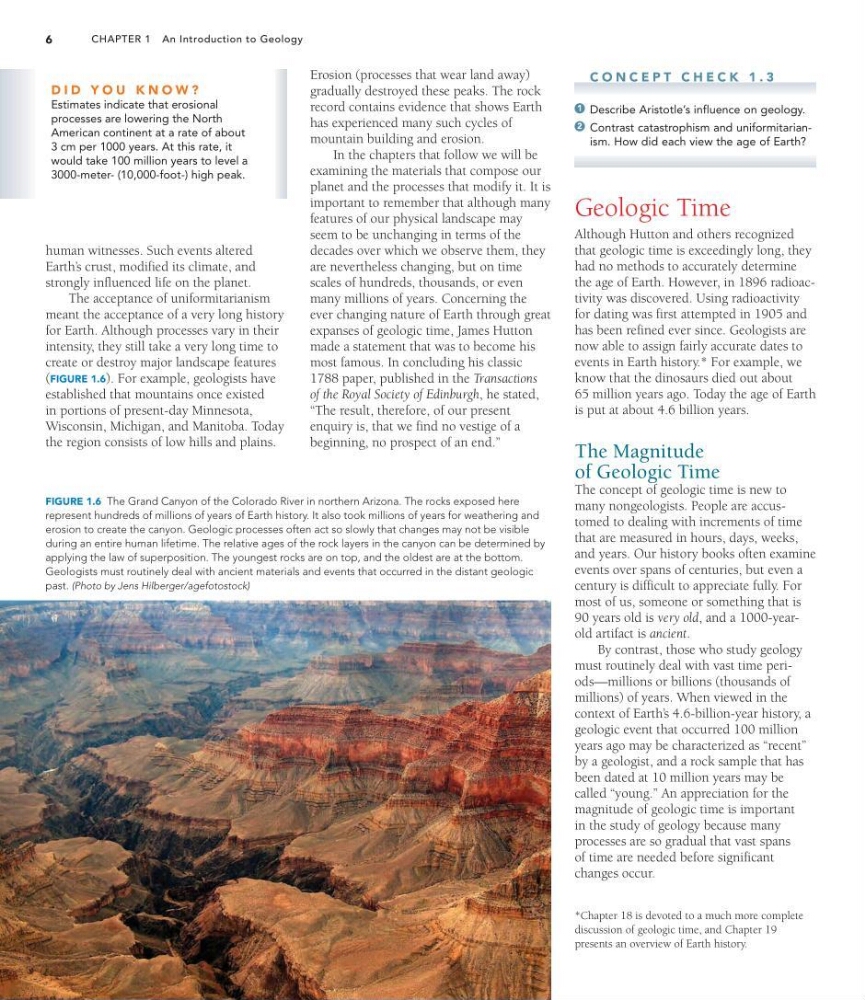
FIGURE 1.6 The Grand Canyon of the Colorado River in northern Arizona. The rocks exposed here
represent hundreds of millions of years of Earth history. It also took millions of years for weathering and
erosion to create the canyon. Geologic processes often act so slowly that changes may not be visible
during an entire human lifetime. The relative ages of the rock layers in the canyon can be determined by
applying the law of superposition. The youngest rocks are on top, and the oldest are at the bottom.
Geologists must routinely deal with ancient materials and events that occurred in the distant geologic
past. (Photo by Jens Hilberger/agefotostock)
human witnesses. Such events altered
Earth’ s crust, modified its climate, and
strongly influenced life on the planet.
The acceptance of uniformitarianism
meant the acceptance of a very long history
for Earth. Although processes vary in their
intensity, they still take a very long time to
create or destroy major landscape features
(FIGURE 1.6). For example, geologists have
established that mountains once existed
in portions of present-day Minnesota,
Wisconsin, Michigan, and Manitoba. Today
the region consists of low hills and plains.
C O N C E P T C H E C K 1 . 3
Describe Aristotle’s influence on geology.
Contrast catastrophism and uniformitarianism. How did each view the age of Earth?
Geologic Time
Although Hutton and others recognized
that geologic time is exceedingly long, they
had no methods to accurately determine
the age of Earth. However, in 1896 radioactivity was discovered. Using radioactivity
for dating was first attempted in 1905 and
has been refined ever since. Geologists are
now able to assign fairly accurate dates to
events in Earth history.* For example, we
know that the dinosaurs died out about
65 million years ago. Today the age of Earth
is put at about 4.6 billion years.
The Magnitude
of Geologic Time
The concept of geologic time is new to
many nongeologists. People are accustomed to dealing with increments of time
that are measured in hours, days, weeks,
and years. Our history books often examine
events over spans of centuries, but even a
century is difficult to appreciate fully. For
most of us, someone or something that is
90 years old is very old, and a 1000-yearold artifact is ancient.
By contrast, those who study geology
must routinely deal with vast time periods—millions or billions (thousands of
millions) of years. When viewed in the
context of Earth’ s 4.6-billion-year history, a
geologic event that occurred 100 million
years ago may be characterized as “recent”
by a geologist, and a rock sample that has
been dated at 10 million years may be
called “young.” An appreciation for the
magnitude of geologic time is important
in the study of geology because many
processes are so gradual that vast spans
of time are needed before significant
changes occur.
2
1
*Chapter 18 is devoted to a much more complete
discussion of geologic time, and Chapter 19
presents an overview of Earth history.
Erosion (processes that wear land away)
gradually destroyed these peaks. The rock
record contains evidence that shows Earth
has experienced many such cycles of
mountain building and erosion.
In the chapters that follow we will be
examining the materials that compose our
planet and the processes that modify it. It is
important to remember that although many
features of our physical landscape may
seem to be unchanging in terms of the
decades over which we observe them, they
are nevertheless changing, but on time
scales of hundreds, thousands, or even
many millions of years. Concerning the
ever changing nature of Earth through great
expanses of geologic time, James Hutton
made a statement that was to become his
most famous. In concluding his classic
1788 paper, published in the Transactions
of the Royal Society of Edinburgh, he stated,
“The result, therefore, of our present
enquiry is, that we find no vestige of a
beginning, no prospect of an end.”
D I D Y O U K N O W ?
Estimates indicate that erosional
processes are lowering the North
American continent at a rate of about
3 cm per 1000 years. At this rate, it
would take 100 million years to level a
3000-meter- (10,000-foot-) high peak.
6
FIGURE 1.6 The Grand Canyon of the Colorado River in northern Arizona. The rocks exposed here
represent hundreds of millions of years of Earth history. It also took millions of years for weathering and
erosion to create the canyon. Geologic processes often act so slowly that changes may not be visible
during an entire human lifetime. The relative ages of the rock layers in the canyon can be determined by
applying the law of superposition. The youngest rocks are on top, and the oldest are at the bottom.
Geologists must routinely deal with ancient materials and events that occurred in the distant geologic
past. (Photo by Jens Hilberger/agefotostock)
human witnesses. Such events altered
Earth’ s crust, modified its climate, and
strongly influenced life on the planet.
The acceptance of uniformitarianism
meant the acceptance of a very long history
for Earth. Although processes vary in their
intensity, they still take a very long time to
create or destroy major landscape features
(FIGURE 1.6). For example, geologists have
established that mountains once existed
in portions of present-day Minnesota,
Wisconsin, Michigan, and Manitoba. Today
the region consists of low hills and plains.
C O N C E P T C H E C K 1 . 3
Describe Aristotle’s influence on geology.
Contrast catastrophism and uniformitarianism. How did each view the age of Earth?
Geologic Time
Although Hutton and others recognized
that geologic time is exceedingly long, they
had no methods to accurately determine
the age of Earth. However, in 1896 radioactivity was discovered. Using radioactivity
for dating was first attempted in 1905 and
has been refined ever since. Geologists are
now able to assign fairly accurate dates to
events in Earth history.* For example, we
know that the dinosaurs died out about
65 million years ago. Today the age of Earth
is put at about 4.6 billion years.
The Magnitude
of Geologic Time
The concept of geologic time is new to
many nongeologists. People are accustomed to dealing with increments of time
that are measured in hours, days, weeks,
and years. Our history books often examine
events over spans of centuries, but even a
century is difficult to appreciate fully. For
most of us, someone or something that is
90 years old is very old, and a 1000-yearold artifact is ancient.
By contrast, those who study geology
must routinely deal with vast time periods—millions or billions (thousands of
millions) of years. When viewed in the
context of Earth’ s 4.6-billion-year history, a
geologic event that occurred 100 million
years ago may be characterized as “recent”
by a geologist, and a rock sample that has
been dated at 10 million years may be
called “young.” An appreciation for the
magnitude of geologic time is important
in the study of geology because many
processes are so gradual that vast spans
of time are needed before significant
changes occur.
2
1
*Chapter 18 is devoted to a much more complete
discussion of geologic time, and Chapter 19
presents an overview of Earth history.
Erosion (processes that wear land away)
gradually destroyed these peaks. The rock
record contains evidence that shows Earth
has experienced many such cycles of
mountain building and erosion.
In the chapters that follow we will be
examining the materials that compose our
planet and the processes that modify it. It is
important to remember that although many
features of our physical landscape may
seem to be unchanging in terms of the
decades over which we observe them, they
are nevertheless changing, but on time
scales of hundreds, thousands, or even
many millions of years. Concerning the
ever changing nature of Earth through great
expanses of geologic time, James Hutton
made a statement that was to become his
most famous. In concluding his classic
1788 paper, published in the Transactions
of the Royal Society of Edinburgh, he stated,
“The result, therefore, of our present
enquiry is, that we find no vestige of a
beginning, no prospect of an end.”
D I D Y O U K N O W ?
Estimates indicate that erosional
processes are lowering the North
American continent at a rate of about
3 cm per 1000 years. At this rate, it
would take 100 million years to level a
3000-meter- (10,000-foot-) high peak.